
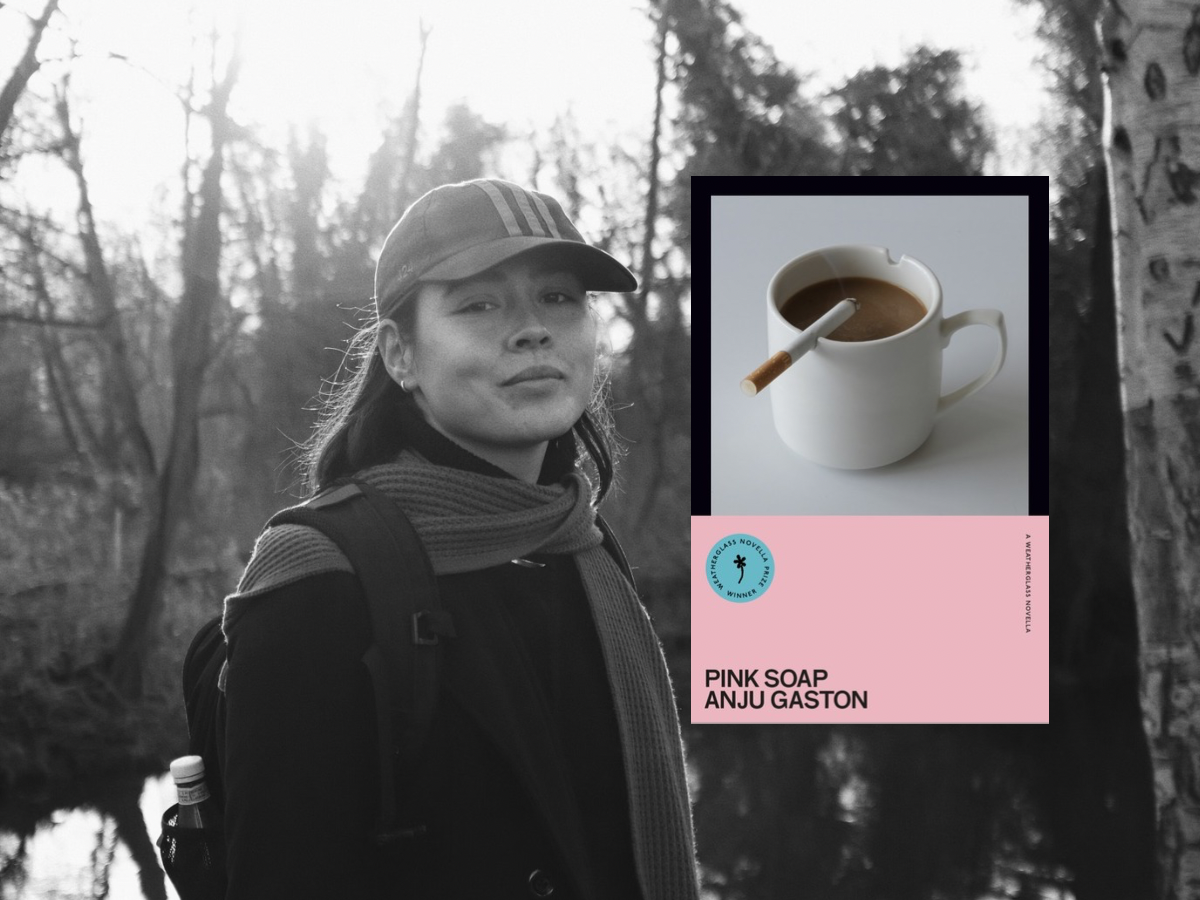
Anju Gaston publishes Pink Soap, her debut novella, with the bare minimum of public profile or tangible online paper trail. Should this excellent, empathetic work find the audience its contents warrant, this state of affairs will struggle to hold. After all, as readers we’re entitled to our intrigue over how her 32-word endpaper biography seems to echo that of Pink Soap’s narrator: a woman in her thirties who is attempting to rebuild her life after a psychotic episode and time spent in a mental institution.
Those latter details, to be clear, do not feature in the Gaston micro-bio, but the author, like her protagonist, is engaged in a PhD, attended school in the Westcountry and is of Anglo-Japanese parentage. That latter detail shapes the second half of Pink Soap, as the narrator visits her father in Japan – a dual attempt to escape the terrain of her breakdown, and build a stronger bond with a mostly absent parent.
Her time in Japan, much like in the UK, is a patchwork of small mundanities and moments which hint at snowballing into large, pivotal events but remain tethered to routine: the inference, I think, is that some combination of medication, therapy and intense willpower is flattening the protagonist’s emotions. Through this, and the first-person, diaristic manner in which Pink Soap is written, we are gifted her – Gaston’s – uncannily astute powers of observation and exquisite, perversely quotable sentences, often on matters you have likely never had cause to ponder. (“After some time, he places three swordfish on the grill. I wonder whether they ever crossed paths before they ended up lying dead and parallel to one another.”) The banality of madness is by no means uncharted fictional territory, but this is a vital addition to the corpus; publishers Weatherglass deliver Pink Soap as the joint winner of their Novella Prize, and judge Ali Smith has chosen wisely here.

