
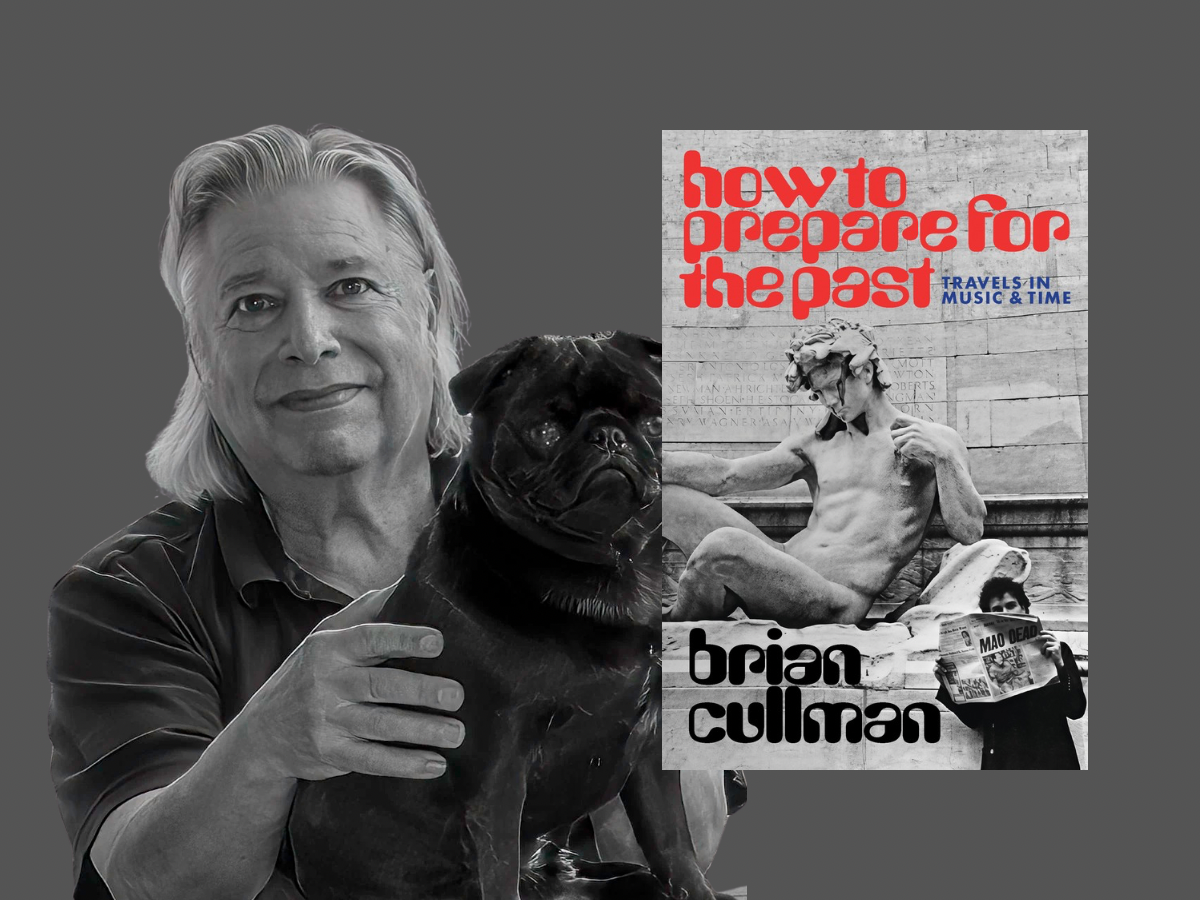
Asked, in the course of an anecdote which pops up in this memoir, to name his favourite song, Brian Cullman replies, “The radio.” The author – a renowned writer for Rolling Stone and the Village Voice and a musician to boot, based variously in New York and France – goes on to describe the medium as a transmitter for “the dreams of the dead, the regrets of the living, stolen prayers from the broken church where God & The Devil relax after work and trade places.”
This is just the tip of the How To Prepare For The Past iceberg: in toto, an unputdownable feast of humour, observation and razor-sharp prose that documents Cullman’s life from the 1960s to the 2000s. It begins on East 59th Street in New York, where a teenage Cullman and his father are having their shoes shined. Their afternoon peace is abruptly disturbed when TV host Ed Sullivan enters the picture. “I will never have the Beatles on again. Never!” he rants. “Now they’re saying they are bigger than God!” Cullman, who describes Sullivan as smelling like “hand cream and luncheon meat,” demurred: the Beatles were one mid-60s pop act who had given him a sense of belonging.
How To Prepare For The Past is broken down into nifty, thrifty chapters which come on like scenes from a yet-to-be-made Coen Brothers movie. One chapter sees Cullman pay a visit to Elektra records executive Danny Fields, who’s pals with Cullman’s buddy Lillian Roxon. This transports us to an apartment filled with burning candles, where Warhol protégé Edie Sedgwick sits in a corner, Jim Morrison snores away on a couch and Fields takes a call from Leonard Cohen, who’s searching for Nico. Cullman, for his part, is playing the assembled some of his songs on guitar in the enthusiastic hope of getting a response.
Nick Drake, Miles Davis and Bo Diddley all make appearances in these pages too, among many other wild mavericks, misfits and outsiders. A pivotal moment for Cullman came in 1970, when he was working in a dull clerical position for a film company, and took a call from New York rock magazine Crawdaddy. Barry Miles, their London correspondent, was leaving; would Cullman like to replace Miles as the mag’s man on the ground? It proved the perfect gig to set him on his way as a scribe and musician, and what an incredible journey it’s been.

