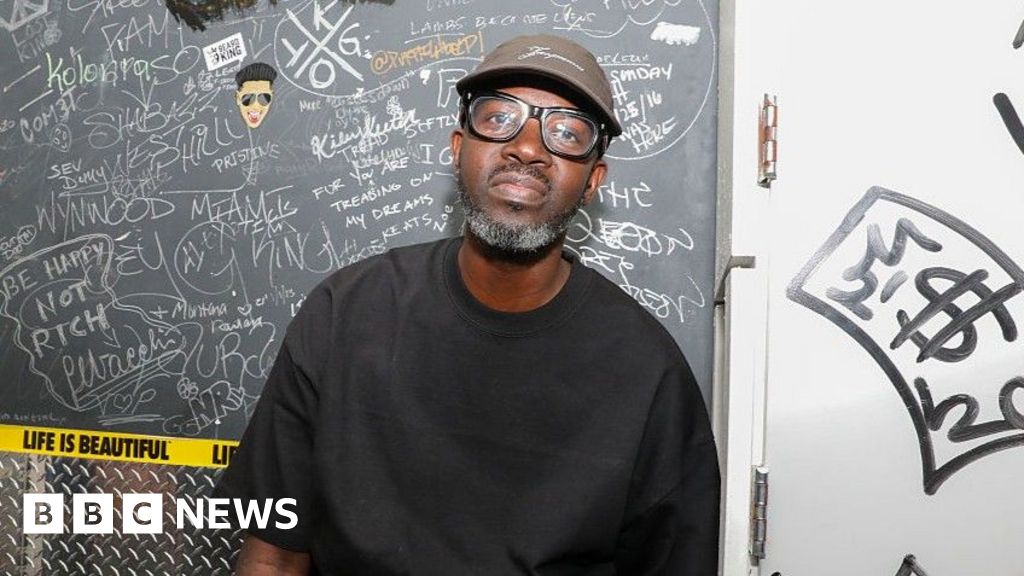
In London for one night only ahead of his Ibiza residency, this sell-out show represented far more than just a performance.
All Right Reserved. Designed and Developed by Martyn Jones.
In London for one night only ahead of his Ibiza residency, this sell-out show represented far more than just a performance.
21:34, 24 May 2026Updated 21:34, 24 May 2026

Traffic is likely due to the closures (Image: John Myers)
Get daily breaking news updates on your phone by joining our WhatsApp community here. We occasionally treat members to special offers, promotions and ads from us and our partners. See our Privacy Notice
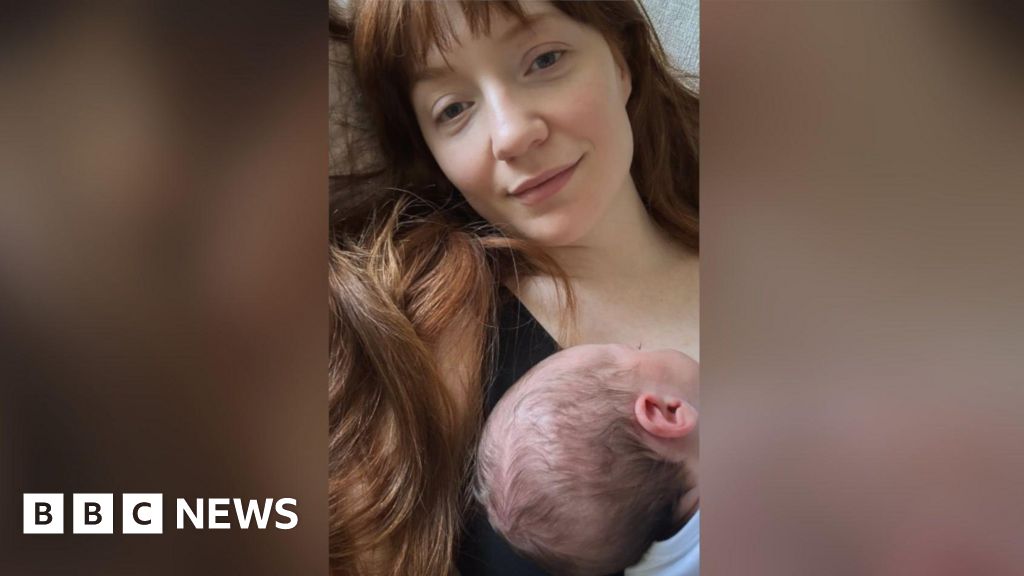
The Girls Aloud singer said in an Instagram post that becoming a mother was “heaven on earth”.
The video game presents a young Bond before he has earned his “00” spy status.
“Yet this seems like an unnecessary pause for everyone involved,” he wrote. “Given how difficult it is for any piece of culture, let alone books, to get more than fleeting attention, it seems baffling that publishers first offer up the least accessible version.”
The star says a surge in new productions is driving growing interest in musical theatre across Scotland.
In the reunion episode, which followed straight after the final airing on BBC One, Kush talked about seeing a counsellor to “help process my emotions and it’s really, really helped”, adding: “The one thing the race did teach is that it’s ok to ask for help.”
Sunderland’s Herrington Country Park buzzes with festival energy for the last Big Weekend day.
For more than a decade, Kendall Platt worked as a crime scene forensic investigator – a job she found rewarding but also intensely stressful.
The 40-year-old mother of two says she would often lie awake at night thinking about the horrific images she had seen that day. Her sleep, unsurprisingly, suffered.
‘I would have bad dreams most nights and wake up sweating,’ says Kendall, from Reading. ‘And once that happened, I’d struggle to get back to sleep.’
So when, last year, Kendall changed career to become a professional gardener – offering what she describes as horticultural therapy to women – she expected her sleep to improve.
Moreover, desperate for a better night’s rest, Kendall also cut down on the amount of sugar she consumed and stopped looking at her phone in the hour before bedtime.
However, these changes did not have the effect she had hoped.
‘I was still waking up at 3am and lying awake for hours,’ she says. ‘Then the kids would wake up at 6am and I’d be up again, meaning I was getting very little sleep.’
Then, Kendall says she found a solution: a daily 10p dose of the vitamin magnesium.
Experts say magnesium is one of the most important nutrients our bodies need – but around one in six Britons do not get enough.

For more than a decade, Kendall Platt worked as a crime scene forensic investigator – a job she found rewarding but also intensely stressful
And, increasingly, magnesium tablets have been touted as a sleep-boosting supplement, leading to an explosion in its popularity, with this rising interest driven primarily by social media.
However, many doctors now also recommend magnesium for patients with sleep problems – based on what they believe is growing evidence that the supplement has a profound effect on rest and energy levels.
Kendall says she first learned about the sleep benefits of magnesium through social media. As a result, two months ago, she decided to give it a go, buying effervescent magnesium tablets from her local supermarket. The tablets contain a particular form called magnesium glycinate, which is thought to be most effective at improving sleep quality.
Kendall would place one of the tablets in water and drink it an hour before going to bed.
The effect was immediate. ‘I started waking up refreshed,’ she says. ‘My sleep has been consistently good for two months now.
‘I do occasionally wake up in the night, but I can easily drop off back to sleep in a way that I could not before.
‘I have more energy in the morning when I’m getting the kids ready for school. And I’ve got way more energy at work too.’
However, not everyone agrees that magnesium is a panacea for poor sleep.
In fact, some experts believe that the supplement has no effect at all.
So, do magnesium supplements really improve sleep – and should you be taking one?
The need for more sleep remedies is clear. Studies suggest that around a third of Britons suffer from insomnia – meaning they struggle to sleep. Meanwhile a quarter of people say they feel tired most of the time, regardless of how much sleep they get.
Experts say that it is this energy level crisis that has spurred the increasing popularity of magnesium.
Magnesium is found in leafy green vegetables as well as cashew nuts, beans and wholemeal bread. It is crucial for the muscles, immune system, bone strength and blood sugar levels.

Experts say magnesium is one of the most important nutrients our bodies need – but around one in six Britons do not get enough

Magnesium’s effect was immediate. ‘I started waking up refreshed,’ she says. ‘My sleep has been consistently good for two months now’
In 2021, a major review of dozens of magnesium sleep studies concluded that patients with higher levels in their blood tended to sleep for longer and have more energy – though the effect was small.
Dr Oliver Bernath, a consultant neurologist at Guy’s and St Thomas’ Hospital and the Reborne Longevity clinic, both in London, argues that magnesium’s profound effect on sleep is that it boosts levels of a chemical called gamma-aminobutyric acid, which has a calming effect on the brain.
‘I’ve seen the really positive effect that magnesium can have for my patients with sleeping issues,’ he says.
Not all scientists agree. Dr John O’Neill, a biologist at the Laboratory of Molecular Biology in Cambridge, says that the only patients likely to benefit from taking magnesium supplements are those who have markedly low levels of the nutrient.
‘Your body can only hold so much magnesium,’ he says. ‘If a patient has normal levels and they take a supplement, then that extra magnesium will just be peed out.’
Instead, Dr O’Neill claims that it is more likely that patients who find their sleep improves after taking magnesium are experiencing the placebo effect – where they believe their symptoms have improved despite the medicine having no impact.
‘Most sleep issues are down to the stresses and anxieties of life, rather than vitamin deficiencies,’ he says.
‘A placebo can often be a very powerful treatment. Magnesium is also cheap and very safe, so there are few harms in taking it.’
Kendall says she doesn’t care whether or not her magnesium tablets are a placebo.
‘The effect is clear to me – it works and other steps haven’t,’ she says. ‘So to me, it’s worth it.’
Gemma Farquhar will always remember the exact ages of her children in April 2020: four and six.
‘I remember them distinctly because I thought, “I’m never going to see another milestone,”‘ she tells the Daily Mail.
At the time, Gemma was 35 with a busy but happy life and a successful career in human resources. That all changed when she received a devastating prognosis.
After visiting her doctor with complaints of ‘excruciating pain’ in her abdomen, she was sent for a CT scan and, within an hour, received a call from her doctor.
‘She called me and said, “You need to go to the hospital, you’ve got colon cancer,”‘ says Gemma. Her children were playing in the other room with their babysitter, the sound of cartoons and laughter in the background.
‘My whole world just ripped apart,’ recalls the Sydney mother, who was told the cancer was stage four and given an estimated life expectancy of 12 months.
‘I was working, successful, leading a fulfilling life. It’s the last thing on your mind, and you just think you’re going to die,’ she says.
Six years later, her journey has been far from easy, including repeated surgeries to first remove 13 centimetres of her bowel.

Gemma Farquhar’s daughters were six and four years old when she was diagnosed with stage four bowel cancer

Gemma (right, with a friend) says her ‘whole world just ripped apart’ when she received the devastating news at 35
This was followed by chemotherapy and then more surgery after it was discovered the cancer had spread to her ovary.
‘I had what they call a peritonectomy. They open your abdomen from the top to the pelvis,’ she explains.
This highly invasive procedure involves removing the lining of the abdominal cavity, the peritoneum.
After this came HIPEC (hyperthermic intraperitoneal chemotherapy), a specialised cancer treatment that combines surgery with heated chemotherapy.
‘It’s like hot chemotherapy that they flush through you – a massive 10-hour surgery,’ says Gemma.
For most people, her experience is unimaginable; however, her diagnosis is increasingly common.
Early-onset bowel cancer is rising at an alarming rate, with cases in Australians under 50 climbing from eight per cent to 13 per cent since 2000, according to data from the Australian Institute of Health and Welfare.
Rates have more than doubled in people aged 20–29, and tripled in those aged 30–39, while deaths in younger Australians have risen by 35 per cent.

Gemma had 13cm removed from her bowel followed by chemotherapy. Later, she found the cancer had spread to her ovary

Despite being given just 12 months to live, Gemma is still fighting six years later
Behind the statistics are lives being abruptly upended: young Australians navigating cancer while building careers, raising families and planning their futures, often facing delayed diagnoses in a system designed for older patients.
Gemma had been experiencing symptoms – including vomiting, pain and blood in her stools – for months before waking up in excruciating pain that couldn’t be ignored.
‘Over and over again, I would see different doctors or get referrals to experts, and not once did [bowel cancer] even come up as a possibility,’ she says. ‘There were absolutely symptoms beforehand. I just didn’t realise that it was this bad.’
From day one of her diagnosis, she chose to be honest with her children.
‘I told them, “Mummy has to go to hospital. They found a tumour inside of me”,’ she says.
‘They didn’t understand really at the time. They understand more now because it’s been part of their lives for the past six years. Mummy’s still in treatment, and mummy’s got a scan coming up, and mummy might be a little bit stressed waiting for the results.
‘I’ve always been honest and trying to educate them too around cancer and around your body.’
Her husband, Richard, has been by her side the whole time.
When asked the secret to surviving cancer as a couple, she credits her ‘positive outlook’ and how she approaches cancer like a home-renovation project.
‘By nature, I feel like I need to manage my own cancer,’ she says.
‘I know what’s happening, I speak to my doctors, I do my research. I make sure I give [Richard] the key highlights so he can at least understand.’
Six years on, she realises that her survival is ‘pretty amazing’, despite a setback in 2021, when doctors discovered the cancer had spread to her lungs.
‘I try to focus on the positives,’ she says.
‘I’m still on treatment – a targeted therapy – but it allows me to live a full life. I’m on four tablets a day and I’m also on another drug, which I have fortnightly as an infusion.’

‘I try to focus on the positives. I’m still on treatment – a targeted therapy – but it allows me to live a full life,’ Gemma tells the Daily Mail. (Gemma pictured with her daughters)
Since moving from chemotherapy to this targeted treatment plan – a type of drug treatment that attacks specific cancer cell features, known as molecular targets, to stop the cancer growing – on an average day, she feels ‘great’.
‘While on the chemo, I couldn’t have worked and felt like I wasn’t participating in life,’ she says. ‘But I’m back working full time. Most people wouldn’t even know I’ve got cancer.’
Today, Gemma is passionate about spreading awareness about colorectal cancer – cancers that start in the colon (large intestine) or the rectum (the end of the digestive tract).
She is a member of the Community Advisory Panel for GI Cancer Trials – a network of clinicians, researchers and advocates who work together to deliver clinical trials, with a focus on gastrointestinal (GI) cancers.
In May 2026, GI Cancer Trials announced it was working to fully fund a new trial, the ORBIT trial, which aims to deliver more flexible, patient-centred care through telehealth and after-hours treatment, alongside improved access to specialised services including fertility preservation, genetic testing, psychosocial support and mental health care.
The trial will also establish a national biobank to better understand and combat the rise of early-onset GI cancers.
Professor Lorraine Chantrill is a medical oncologist and the Chair of GI Cancer Trials. She says Australia is now seeing some of the highest rates of early-onset GI cancers in the world.
‘We still don’t fully understand why this is happening, and that’s one of the biggest concerns,’ says Professor Chantrill.
‘What we do know is that more young Australians are being diagnosed, and many of them are in the middle of their lives, working, raising children and planning for the future, when suddenly they are faced with a cancer diagnosis.’
The hope is trials like this will fill ‘gaps’ in the healthcare system for younger patients.
‘Our healthcare systems are very good, but they’ve traditionally been designed around older patients because most cancers do still occur in people over 60,’ says Professor Chantrill.
‘The reality is younger patients have very different needs. They’re trying to balance treatment with careers, study, parenting and financial pressures, while also dealing with issues like fertility, mental health and survivorship.’
Many cancer services still operate in a ‘Monday to Friday, nine to five’ way, says Professor Chantrill, which isn’t always practical for younger people who are working or caring for families.
The ORBIT trial is designed to pilot a new kind of care model specifically for younger adults with GI cancers. It includes more flexible, patient-centred support, including telehealth, out-of-hours appointments and access to multidisciplinary care teams that can help with fertility, genetics, mental health and maintaining quality of life during treatment.
‘We want to make it easier for young people to access the right support in the most efficient and practical way possible,’ she adds.
For cancer patients like Gemma, the trial offers hope; however, she adds, ‘I do want the research to move faster.’
In the meantime, she is focused on spreading awareness, even when it means leaning into uncomfortable conversations.
‘I’m always the one talking about toilets with my friends,’ she laughs.
‘When you have kids, you talk about their poo all the time. What colour is it? What’s the texture like? But you’ve got to check your own body, and be okay talking about this, too.’
As she nears the six-year anniversary of starting cancer treatment, she tears up as she thinks of the advice she would give her 35-year-old self.
‘I would never have thought I’d be here that long, to make it to 40,’ she admits.
‘I would reassure myself that it’s going to be really hard and really tough, but you will build resilience and networks along the way. I would tell myself: just hang in there.’

Help us create an environment in which people fifty and over can fulfill their aims and objectives in life. Fight age discrimination and help preserve and promote the independence, dignity and positive image of people fifty and over and work to ensure that they have appropriate and adequate public care provision.
All Right Reserved. Designed and Developed by Martyn Jones.