Blanchett will be the new Visiting Professor of Contemporary Theatre at St Catherine’s College.

Blanchett will be the new Visiting Professor of Contemporary Theatre at St Catherine’s College.

He wants to get his fitness levels back up (Image: PA Real Life)
A duathlete who was rushed to hospital with brain inflammation so severe he described it as feeling like there was “an alien trying to get out” of his head has opened up about what it was like to receive his rare diagnosis of tick-borne encephalitis. Bill Lankford, 62, a retired scientist living in Cambridge, said his sudden cold-like symptoms of fatigue, muscle ache and fever began after he completed a 50km ultra-distance swim-run across Scandinavia with his wife, Christina Lankford, 60, in August 2025.
After roughly a week, Bill said he appeared to “feel a bit better” before he started experiencing headaches and flu-like symptoms, leading him to take a Covid-19 test that returned a negative result. Bill said he visited his GP within two and a half weeks owing to “quite bad headaches”, but they were unable to account for his symptoms.
The following day, Bill made his way to hospital, where doctors suggested the cause might be tick-borne Lyme disease. He was prescribed antibiotics and told he “should be feeling better” within days.
However, Bill described the next three days as ones for which “there are no words in the English language to describe how painful” they were, as he endured crippling headaches, disrupted sleep, problems with balance, blackouts, and sensitivity to “flickering lights and fast-moving images”. He returned to hospital and underwent what he described as “hundreds” of tests — including cerebrospinal fluid sampling — before receiving a diagnosis of tick-borne encephalitis in September 2025, at the age of 61.
Bill said: “It’s quite difficult for medical staff to diagnose. I was basically tested for everything from Aids to Zika… it’s only when they did a spinal tap of the cerebrospinal fluid that they found the virus.
“But due to the illness and brain pressure, I don’t remember any of the discussions about the diagnosis while in the hospital. I think for anyone who’s going through anything to do with encephalitis, you don’t take it all in.”

Bill and Christina after a swim-run (Image: PA Real Life)
Tick-borne encephalitis is a viral infection transmitted through tick bites that can trigger flu-like symptoms, loss of consciousness, severe headache, memory difficulties, emotional or behavioural changes and seizures, according to Encephalitis International. Prior to his diagnosis, Bill described himself as being in “very good shape” and enjoying a “happy and healthy life” alongside his wife Christina, particularly since the couple began taking part in swim-run events from 2016 onwards.
Bill explained that each race involved swimming and running across archipelagos or through lake districts while wearing a “wetsuit and shoes” throughout. In August 2025, the pair flew to Stockholm and completed several practice swim-runs with friends ahead of the main event on August 9 on the Aland archipelago, situated halfway between Sweden and Finland.
Bill said: “You’re running through the forests, cliffs and beaches and swimming across the bays and in between the islands. It was about 10km of swimming and just over 40km of running.”
Despite the event being “quite hardcore”, Bill maintained a “steady pace” and felt “really good” from start to finish, completing the course within 11 hours. The couple then took time to unwind afterwards, enjoying tubs and saunas as well as camping and sightseeing, during which Bill noticed what he believed to be red midge and mosquito bites on his body.
According to the NHS, tick bites are not usually painful, but they can cause a red lump to develop, as well as swelling, itchiness, blistering and bruising. It is important to remove ticks quickly and carefully with tweezers to gently grip it as close to the skin as possible and pull steadily away without crushing it.

Bill did his first swim-run since his diagnosis at the weekend (Image: PA Real Life)
It was during the journey back to the UK, approximately five days after completing the race, that Bill recalled beginning to experience what he believed was a “cold coming on”, with symptoms including fatigue, muscle ache and fever.
He said: “I completely rationalised it, with all of the transport we took and people from different countries. Of course I might get a cold because my immune system is probably a bit depressed from the event.”
After roughly a week, Bill noticed his symptoms beginning to ease, only for a persistent headache and flu-like symptoms to take hold. By the time he consulted a doctor around two-and-a-half weeks after first falling ill, Bill said his headache had deteriorated, yet his GP was unable to identify the cause and advised him to monitor his condition and attend hospital should it fail to improve.
This led to Bill being prescribed antibiotics for suspected Lyme disease, but after just three days of treatment, his debilitating headaches intensified dramatically.
Bill said: “Now my headache is like an alien trying to get out of my head. There are no words in the English language to describe how painful it is.”
Despite taking paracetamol and ibuprofen, Bill found himself only able to sleep in 20-minute intervals due to the severity of his pain. He also experienced problems with his balance and coordination, an inability to lift his feet properly, a heightened sensitivity to bright lights and moving images, and what he described as “momentary blackouts”.
He made his way to A&E by taxi, where he was admitted and placed on an IV drip of “antivirals, antifungals and antibacterials”. Over the course of three days, Bill underwent a battery of tests ranging from “Aids to Zika”, yet doctors initially had “no idea” what was wrong, as tick-borne encephalitis is regarded as rare in the UK, according to Encephalitis International.
Taking into account his recent travels to Scandinavia, medical staff carried out cerebrospinal fluid sampling, which confirmed the diagnosis. Bill remained in hospital for a week, during which the IV treatment began to show signs of improvement, though his recovery proved to be a lengthy process.
Bill said: “Without anyone at home, I couldn’t have looked after myself. It’s a bizarre thing where you come out of hospital in a wheelchair and then go to your bed and just tough it out.”
According to the UK Government, there is no specific treatment for tick-borne encephalitis, though a preventative vaccine does exist. Bill urged “anyone who is active” in tick-prone areas to “consider” getting vaccinated.

Bill was diagnosed with tick-borne encephalitis at 61 (Image: PA Real Life)
In the immediate aftermath of his diagnosis, Bill revealed he could not “walk more than 500 metres” at a time and was forced to rely on a walking stick owing to problems with balance and coordination.
He has also endured spontaneous muscle tremors, difficulties with spatial awareness, nightmares, chronic fatigue, emotion regulation issues, anxiety, and short-term memory loss. Nine months on from his diagnosis, Bill said he has gradually rebuilt his physical fitness by incrementally extending his dog walks, embarking on short bicycle rides, and taking up pilates.
This past weekend, he managed to complete his first swim-run event since contracting tick-borne encephalitis — a gruelling 22km course in Dorset.
Reflecting on the progress he has made, Bill said: “In terms of physical fortitude, I’m pretty proud. I would never be able to do the long distance events that we did – that’s clearly off the table – but I’m able to do much shorter events. It’s not perfect, but I’m really pleased with that.”
For more information about Encephalitis International, visit its website.

Holidaymakers are being urged to carry out a simple check ahead of their holiday. And with June and July being peak times for flying due to the summer holidays and kids being off school, it’s not one to skip.
Experts at Compare the Market not only urge people to take out travel insurance, but also insurance against gadgets. But it’s not as simple as taking out any policy. The comparison specialists explain that many travellers assume that their travel insurance covers mobile phones and other gadgets as standard.But this isn’t always the case, and a simple check of this could save you hundreds, and maybe thousands, in the long run.
It notes: “Not all travel insurance policies include gadget cover. And travel insurance payouts for valuables are often low – as little as £200 for one item or £500 in total.”
Warning that standard travel insurance often won’t cover expensive gadgets like smartphones or laptops adequately if they’re lost, stolen, or damaged, it advises that seperate gadget travel insurance is ideal as it can provide higher cover limits, typically ranging from £1,000 to £3,000 depending on the policy.
Options include:
Gadget travel insurance can cover your:
It notes that there may be a limit on the number of gadgets your policy covers. There may also be a limit on the total amount it will pay out.
Cover varies among insurance providers, but a good policy will usually include:
You typically won’t be covered if:
Before taking out gadget travel insurance, it’s worth checking whether you’re already covered through home contents insurance, mobile phone insurance, or a bank account package before buying extra cover.
It warns: “You should also check the excess. This is the amount you’ll have to pay towards any claim.
“Some policies don’t include ‘new for old’ cover. If your gadget isn’t brand new, your insurance provider might only offer a refurbished replacement of a similar age.
“Always read your policy before buying gadget travel insurance, so you know exactly what’s covered, along with any excesses, limits and exclusions.”
Concluding its advice, the comparison experts advise holidaymakers to think carefully about which gadgets they really need to take away, and whether they could manage without their most expensive devices for a week or two.
Travellers are also urged to back up their phones and laptops to the cloud before departure and to continue saving photos during their trip to avoid losing memories if devices are lost or stolen. Security experts also recommend keeping gadgets locked in hotel safes when not in use, staying vigilant when using smartphones in public, and never leaving devices unattended in places like cars or on the beach, as insurers are unlikely to pay out in cases of negligence.
Experts at Money Saving Expert (MSE), which is founded by Martin Lewis, suggest using a free complaints tool. It writes: “The insurance industry doesn’t have the best customer-service reputation and while a provider may be good for some, it can be hell for others.
“Common problems include claims either not being paid out on time or at all, unfair charges, or exclusions being hidden in small print. It’s always worth trying to call your provider first, but, if not, then you can use free complaints tool Resolver.
“The tool helps you manage your complaint, and if the company doesn’t play ball, it also helps you escalate your complaint to the free Financial Ombudsman Service.”

The new bridge will be built at Cathays railway station(Image: TfW)
A new railway bridge is being built at Cathays railway station in Cardiff. It will mean step-free lift access for wheelchair users, improved walkways, and direct access to the Cardiff University’s Centre for Student Life.
The first stage of work is starting in mid-June but the project will take place in phases with the main construction starting in autumn 2026. Transport for Wales said it will be completed in 2027 with more detailed information shared as work progresses
The ‘access for all’ (AFA) footbridge will provide better accessibility and help modernise the station to a safer transport hub. Transport for Wales will issue regular updates and communications at each key stage – particularly on any impacts on residents, businesses or road users.
Dan Tipper from Transport for Wales said: “This investment is an important step in our ongoing work to improve accessibility and modernise stations across Wales. The new footbridge will make Cathays station safer, easier to navigate, and more welcoming for everyone who uses it.
“We’re working closely with Cardiff University and other local businesses to ensure the project supports the needs of the student and surrounding communities, and are looking forward to seeing it develop.” For our free daily briefing on the biggest issues facing the nation, sign up to the Wales Matters newsletter here
Senior project manager Alex Phillips said: “As we move into this first phase, our teams will begin setting up the site, implementing pedestrian diversions, and carrying out initial excavation and cable works.
“These are important enabling works for the wider project, and our focus is on delivering them efficiently while ensuring the station continues to operate as normal.”

Calls for a new negotiating body for school support staff, and an end to term-time only pay, has been backed in the Senedd.
A motion, put forward by Labour’s education spokesperson Lynne Neagle, was supported by Senedd Members on Wednesday June 10.
Ms Neagle said support staff “build strong relationships with children and young people, which are crucial for their wellbeing, so that they can learn and reach their potential”.
Pointing to the fact support staff are now the majority of the school workforce in Wales, Ms Neagle said: “Our schools simply couldn’t function without them. They are quite simply the glue that holds our schools together.”
The Sir Fynwy Torfaen MS highlighted the extent of in-work poverty facing support staff, referencing a Unison survey of more than 1,400 school support staff showing 8% of support staff take home less than £1,000 a month.
Ms Neagle also described it as an equality issue, noting more than 90% of support staff are women.
Concluding her speech to the Siambr, Ms Neagle called on the Plaid Cymru government to commit to bringing forward new legislation and to end term-time only pay for school support staff – a pledge featured in the Labour election manifesto.
She said: “Our calls are supported by the Welsh trade union movement, including Unison Cymru and the GMB. But valuing school support staff is not just the right thing to do for the staff; it’s the right thing to do for our schools, our communities and every learner in Wales.”
Paul Rock, Green Party MS for Caerdydd Fynnon Taf MS, supported the motion, and spoke of the “tireless dedication” provided by school support staff.
Mr Rock, whose wife works as a teaching assistant, said: “I don’t need to remind members of the important work that school support staff do: one-to-one interventions to support children with additional learning needs or children who are simply falling behind.
The motion was agreed with 17 in favour, 74 abstentions, and none against.
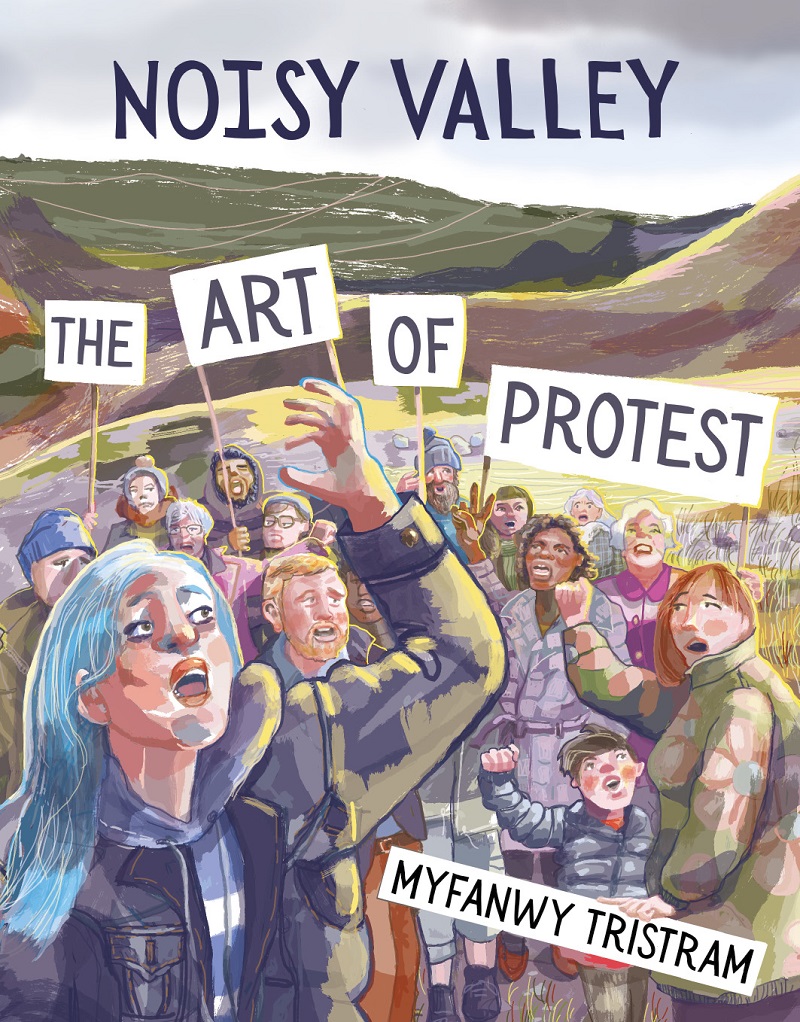
Myfanwy Tristram’s recently published book Noisy Valley is an illustrated account of her time spent talking to people in the Rhondda about their history of and experience with protesting against the powers that be. Ben Woolhead spoke to her about it.
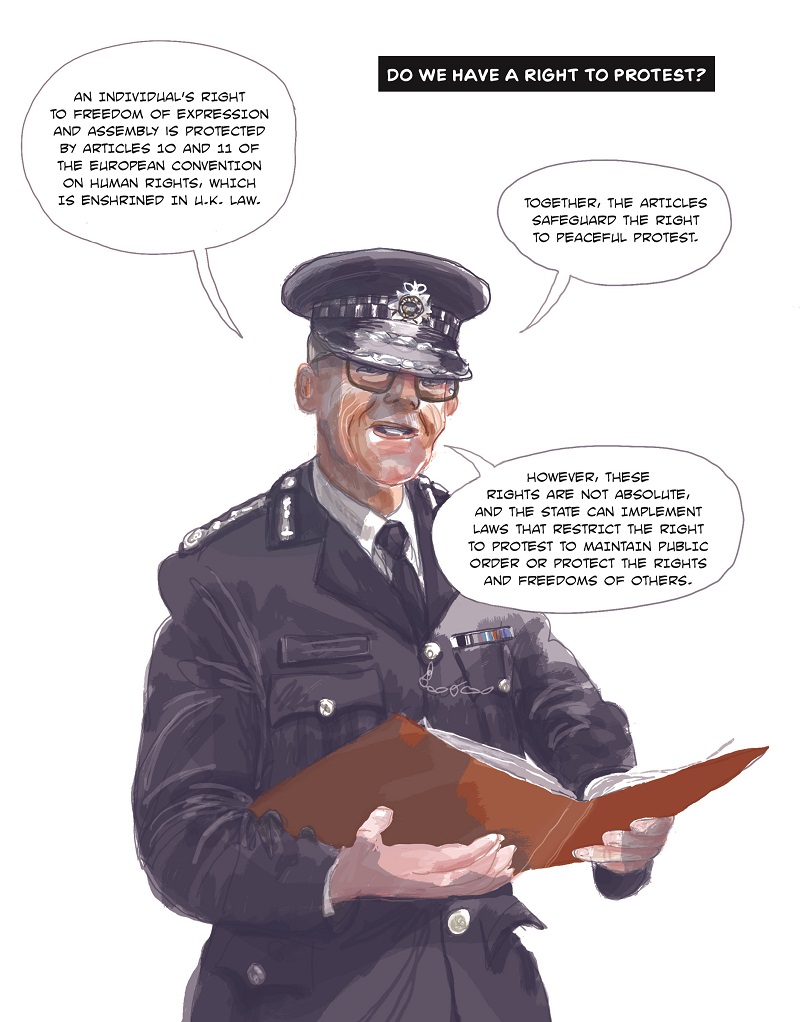
Noisy Valley is a “documentary comic” (to use author Myfanwy Tristram’s term) that taps into the Rhondda’s proud and rich tradition of dissent. It tells the stories of a host of local people with personal experience of standing up (or sitting down) and speaking out against everything from nuclear weapons at Aldermaston and Greenham Common to pit and hospital closures, environmental destruction and toxic landfill sites closer to home. A celebration of people power’s capacity to bring about change (and to create community and forge connections even when it doesn’t), the book is a robust defence of the right to peaceful protest – and a reminder of the restrictions that have been insidiously imposed on that right in recent years.
The seeds for Noisy Valley were sown in 2022, when you were invited to exhibit your work at the Workers Gallery in Ynyshir. What were your first thoughts when the invitation came through?
My first thought was that I was very pleased indeed. I’d never had a solo exhibition before, so it was a thrill to be asked. And then my second thought was that the pictures they’d asked me to exhibit – images of protesters – had originally been drawn for Instagram, so they were quite small! I was worried they might not blow up to a decent size for an actual gallery wall. But it was OK – we got them to an A4 size without losing too much sharpness.
You initially intended to make a zine, but then it blossomed into a much bigger project. How did it develop, and how did the deal with publisher SelfMadeHero come about?
Yes – I travelled down to see the exhibition and I thought that while I was there, it’d be nice to use my time productively. I planned to ask local folk to share their memories of protest, and then I’d draw them up. I remember thinking I wanted it to be a quick project, so I’d do it in the zine aesthetic – quick, loose and scribbly.
But then once I actually heard the stories, I realised I needed to give them the time and attention they deserved – they were too rich and meaningful to draw sloppily. So I put aside the project I’d been working on (a graphic memoir of my teen years as a goth) and dedicated proper time to this. But still at this point I thought I’d be self-publishing, which is really common in comics, and is what I’d done with most of my work before this.
There’s a competition called the First Graphic Novel Award, and when the opening date rolled around, I thought I might as well submit what I had so far – just for affirmation as much as anything else. The first prize is a publishing deal with SelfMadeHero and I didn’t win, but I was shortlisted. That’s when I was approached by my agent Corinne Pearlman, and it was she who sent the book around – eventually, as it happened, placing it with SelfMadeHero.
I’d assumed that, as I hadn’t won, that door was closed, but it turned out not to be the case, and I was really pleased to have an offer from one of the UK’s few dedicated graphic novel publishers. They’ve published some of my favourite books over the years, as well.
How many stories did you have to leave out? How did you decide which ones to include?
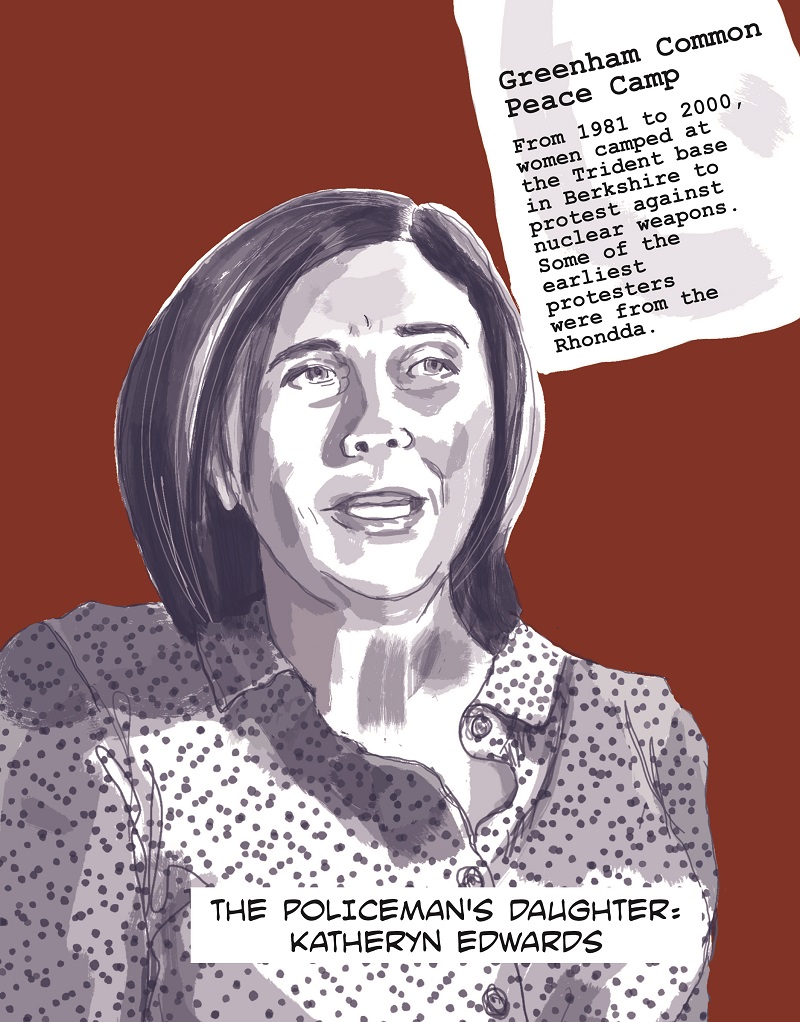
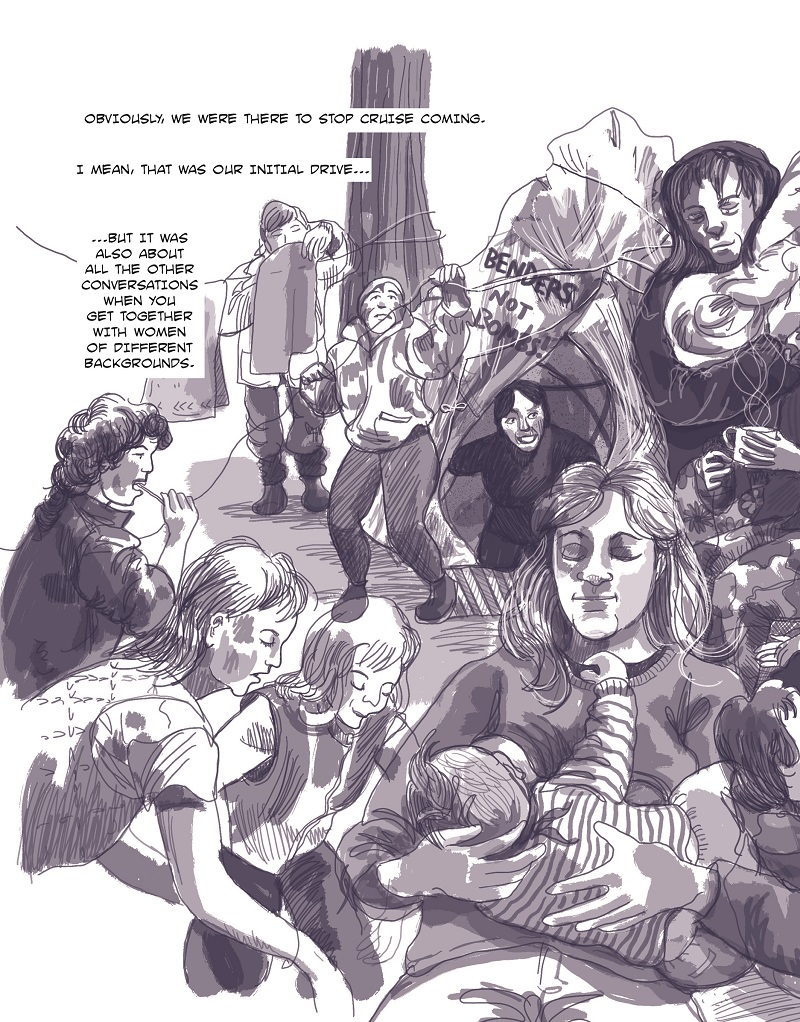
I think it might have been three or four that didn’t make the cut in the end, and that wasn’t because they weren’t good stories. Gayle Rogers from the Workers suggested that we keep the project as local as possible, and that was a good instinct. That’s not to say all the stories happened in the Rhondda (for example, there’s one about Greenham Common and another about the Aldermaston marches), but their storytellers all live in the region.
It’s given the book some coherence, a sense of place. People told me that it’s not just the history of the Rhondda that has shaped the people (though with it being such a militant holdout during the miners’ strike, of course, that is a huge factor), but the geography as well. When you’re surrounded by those steep mountains, communities become tighter, more contained. I heard that accents change markedly between valleys that are only a couple of miles from one another as the crow flies, because actually moving from one to the other involves either a very steep climb or taking the long way round by road!
In the book, you defend the right to protest on general principle, and one of the featured people, Tracey Leonard, talks about feeling a sense of duty as a protest photographer to cover all protests, whether she believes in the cause or not. Would you have included stories about causes you don’t believe in or are even opposed to?
That’s a very astute question. Obviously, in recent years, we’ve seen protests that I don’t feel very comfortable with, but which could certainly be described as people rising up and exercising their right to be heard – like the storming of the US capitol or, closer to home, extreme-right rallies. There are also protests based on complete misinformation, like those against the 15-minute city.
You can draw a moral line. On the one hand, there are protests that cause injury and even deaths, plus those that are based on lies and intended to create societal disharmony. On the other, we might see non-violent direct action, where instigators are keen to make their fact-based point as strongly as possible, without ever tipping over into violence.
As for the stories I heard for Noisy Valley, it’s true that, not being from the area, I wouldn’t necessarily have both sides of every story – though it seems pretty clear cut that, for example, where industry is causing pollution that raises the rate of birth defects in the area, it’s reasonable to push back. Most of the protests depicted in the book show people valuing the things that make life precious – nature, health, security, equality – over the interests of big business or the state.
The only one that might not be seen as entirely black and white is the Northern Meadows protest, which saw protesters trying to protect a piece of ancient meadowland, and all the birds, animals and flowers that flourished there. But the planned development was for a cancer hospital. At first hearing, you think this might be a difficult one. But then you hear the arguments about why that’s not an ideal place for that particular facility, and the corporate interests behind it. Ultimately, though, it’s not really my place to judge. I’ve told the story of people who believed passionately that the hospital should have been built elsewhere, and acted on it. That’s good enough for me – just to depict an act of non-violent protest that comes from a deeply held conviction.
And, as with the story of the Nantygwyddon tip, as the story progresses, you learn that the “small” people in the community are being intimidated by all the levers of the law, from massive, unpayable fines to injunctions that prevent you from talking in public about the issue – and even imprisonment. It feels important to depict that.
How was the experience of launching the book at the Hay Festival and at the Workers? What has the response been like?
It’s been amazing. The two events were quite different, as you might expect. It was my first visit to Hay, and I was so impressed by how well it’s run. As a speaker, they really make you feel like a VIP! We had a great, totally engaged audience, and then a signing afterwards. I believe we sold out of Noisy Valley – everyone there was a book lover and they’d all come ready to buy books, which is of course very gratifying for an author.
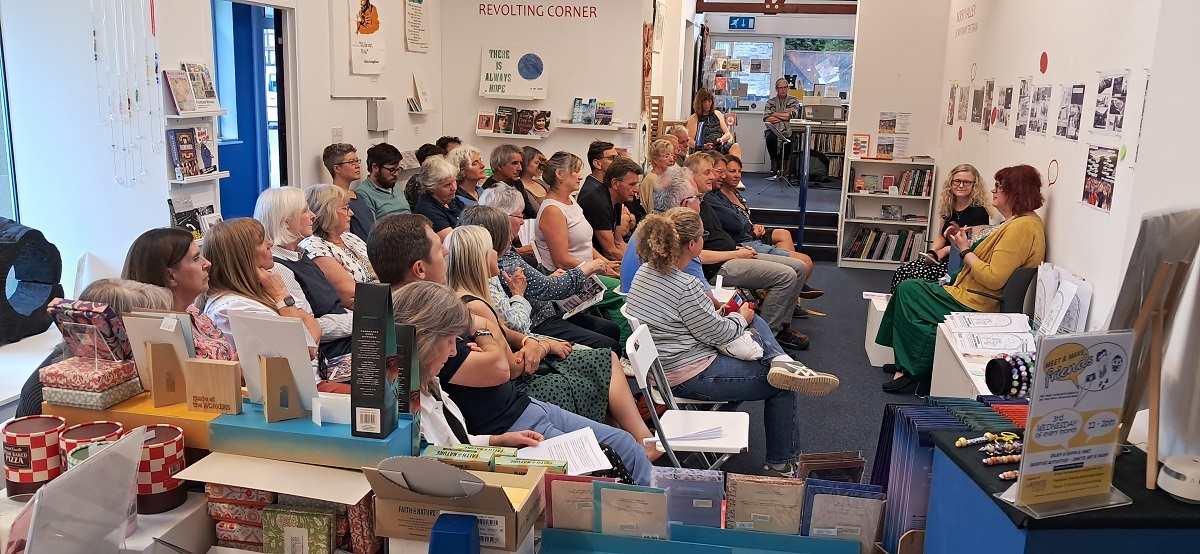
A couple of days later, I was down at the Workers, where to be honest, the event was a lot more emotional. We’d invited some of the people featured in the book to stand up and speak, and that was so moving. Not only were they talking about the importance of protest, and how their own experiences had shaped their lives and had an effect on local history, but also about how glad they were to have had these stories carried beyond the Rhondda and into the wider world.
Absolutely everyone featured in the book has been so generous, not just sharing their time and their memories, but giving me the licence to represent them and trusting me to tell stories that are, in most cases, very personal. The Workers has been amazing too, supporting me throughout – without them, the book would clearly never have happened.
As you point out in the book, the right to protest has been eroded in recent years – what can we do to protect what we have left?
What I really hope Noisy Valley will do is to reshape the concept of protest away from the current media and government narrative where it’s painted as something sinister, unwelcome, even illegal, and remind us of all the positives. Protest is a creative act and a way of making community. It’s somewhere where people sing, dance, stitch and paint beautiful banners. And protest is also a vital part of a functioning democracy – without it, we have no lever to push back when we don’t like the moves our governments are making.
So, within the current laws of the land and the way that our democracy operates, we can write to our political representatives to tell them how and why we have protested in the past, and why it’s vital that we be able to in the future. Write To Them is an easy way to do that. Personal stories always have power.
And it’s important to say that it’s not illegal to protest at all; the new laws restrict things like the time and location of marches, and give police more powers of arrest. So, if you feel strongly about an issue, my advice is to make sure you know precisely what is allowed, and act within the law. The website of the human rights charity Liberty is a good place to find up-to-date guidelines.
You’ve previously mentioned that the experience of creating Noisy Valley has changed the way you work specifically, and indeed your whole life – in what ways? What do you feel you’ve learned about yourself and your artistic practice?
It’s the format of the book that really changed the way I work. This was the first longform graphic novel I’d made that was based on interviews with real people, not changing their words, and just depicting their memories as faithfully as I could. I’ve learned so much – but I think the most important learning is that once you start inquiring into a topic, or a neighbourhood, whatever or wherever it may be, you will find fascinating stories that need to be told. My only issue now is that life is short and there are so many more to discover and draw!
What causes inspire you to protest?
There’s so much to rail against at the moment, isn’t there? As a creative artist, the rise of generative AI, which sucks up our work with no recognition or recompense, while also taking away so many job opportunities and also destroying the environment, has to be pretty high up there.
But generally, it’s wherever there is injustice. If I can’t join a march, I might email my MP. Or if I have the time available, I might draw a comic! Marches are fantastic for showing strength in numbers, but only for a single day. At least a comic or graphic novel can go out into the world – into shops, libraries and people’s homes – and continue to share its message for years to come.
Noisy Valley is published via SelfMadeHero. Info: here
The Noisy Valley exhibition is at the Workers Gallery, Ynyshir until Sat 15 Aug. Info: here
words BEN WOOLHEAD

Coconut oil ha been hailed a miracle cure; antimicrobial, antibacterial and anti-inflammatory, with devotees adding it to everything from their morning coffee to their oral hygiene routine.
But is coconut oil really the healthiest fat? And is there any real evidence it can help lower cholesterol and keep infections at bay?
Sales of coconut oil continue to surge in the UK, with over £16m spent on the trendy product each year.
Celebrity endorsements have, of course, helped fuel its popularity, but registered nutritionist Grace Kingswell says the reality is more nuanced than the hype suggests.
When it comes to so-called superfoods, coconut oil ticks all the boxes – but it is extremely high in saturated fat and is nowhere near as anti-inflammatory as olive oil.
In fact, the American Heart Association even warned that butter and lard are better options, given just how much artery-clogging saturated fat the oil contains.
But where it lacks in polyphenols and healthy fats, it is packed full of brain boosting compounds, research shows.
So, who is right? Even if coconut oil really is oozing saturated fat, is that necessarily a bad thing? And should we consider swapping out our cooking oils?
Coconut oil may be high in saturated fat – but experts say this isn’t necessarily a bad thing
It’s great brain fuel
Coconut oil is perhaps best known for its anti-inflammatory properties, but according to Kingswell, one of its biggest health benefits is often overlooked.
‘Coconut oil has a unique fatty acid profile in that it contains medium-chain triglycerides (MCTs) which bypass normal digestion and go straight to the liver, where they are rapidly converted into energy.’
These MCTs are converted into ketones, which can then be used as an energy source by the brain.
While no studies have yet found they can prevent dementia, some evidence suggests there may be short-term cognitive benefits from taking MCTs – including for patients with dementia – and coconut oil has them in abundance.
Coconut oil can increase cholesterol
The glossy white oil may have myriad health benefits, but according to one leading Harvard professor, Dr Karin Michels, it’s ‘one of the worst foods you can eat.’
Her reasoning for such a bold claim is that research shows the oil not only increases ‘good’ cholesterol, which can help clear the arteries of LDL cholesterol – which can break off and form a clot – it also drives up bad cholesterol.
Hi, I’m Emma Bardwell, a nutritionist with more than 15 years’ experience helping people improve their health and lose weight.

I’ve been there. I was overweight, unhappy with my skin and stuck in a rut. Then I changed the way I eat. You can now do the same with my tried-and-tested healthy eating plan. And for DailyMail+ subscribers, it’s completely free.
With saturated fat levels around a third higher than butter, the trendy oil could contribute to heart disease risk, she warns.
There’s also little evidence that the rise in good HDL cholesterol outweighs the rise in the bad stuff.
While Kingswell doesn’t subscribe to labelling cholesterol as ‘good’ and ‘bad’ – as it massively depends on an individual’s other health markers – she agrees that we need to be mindful of how much saturated fat we are consuming.
‘Coconut oil is a saturated fat,’ she says, ‘which is why I probably wouldn’t add it to something like coffee, but it’s not inherently bad.
‘We don’t need to make an exception for coconut oil – other than to say in its virgin, organic form, it’s definitely going to be more pro-health than a heavily refined or partially hydrogenated fat.
‘But used in moderate amounts, in cooking or baking is absolutely fine – and in some cases may be preferable to other fats.’
Yes it’s a saturated fat, but that makes it great for cooking at high temperatures
The world of cooking oils is a confusing one, with even familiar oils embroiled in controversy.
While unsaturated fats such as olive oil are generally considered healthier, saturated fats like coconut oil are more chemically stable.
‘Coconut oil is one of the safest oils to cook with, especially at high temperatures,’ Kingswell explains.
‘Its chemical structure makes it really robust and safe to cook with, because even at high temperatures it’s structure doesn’t change.
‘By comparison, when we cook with something like olive oil – which contains a very volatile double bond – the fats in the oil start to break down.’
Studies have shown that heating oil above their smoke point – around 180 degrees Celsius for olive oil – can release toxic chemical by-products, so not only will it taste bitter, it could be detrimental for your health.
But Kingswell says a lot of it comes down to personal preference.
‘To get the best benefits in terms of anti-oxidants, you want to use cold pressed olive oil, in its most organic form. Budget also plays a role, with extra-virgin olive oil often a lot more expensive than regular olive oil and is true that some of its flavour and health benefits start to diminish when it’s subjected to high temperatures.
‘For this reason, coconut oil is a really nice alternative to cook with.’
It could give you a better smile and boost your oral hygiene


Gwyneth Paltrow is a fan of ‘oil pulling’ (left); while Sofia Vergara uses the oil as a moisturiser
Oil pulling – where people swill liquid oil around their mouths – has taken the wellness world by storm, and has been crowed about by the likes of Gwyneth Paltrow and .
But is there actually any evidence that the ancient practice helps to draw out harmful bacteria and toxins?
‘Oil pulling is something I’m a big fan of,’ says Kingswell.
‘Coconut oil contains lauric acid, known for its antimicrobial and antibacterial properties, so when we swish it around our mouth, it really helps to control the balance of bacteria in there.
‘We now know just how important the oral microbiome is for systemic health. The mouth is the gateway to the entire gastrointestinal tract, so we can’t ignore what’s going on in our mouths if we want to support our gut.’
One study found that people with gum disease who oil-pulled with coconut oil for 30 days were able to reduce the amounts of plaque in their mouth, while showing overall improvements in gum health.
Given coconut oil’s anti-inflammatory properties, experts say it’s plausible that it may help alleviate the symptoms of gingivitis – like sore, bleeding gums – by reducing inflammation.
Either way, Kingswell concluded: ‘It’s really important to keep on top of our oral hygiene and coconut oil pulling is a really addition to a good oral hygiene routine, alongside brushing twice a day and flossing.’
And that’s not its only beauty benefit. Actress Sofia Vergara claims that she uses it as a moisturiser and hair conditioner.
Adding coconut oil to coffee isn’t a health hack

The aim of ‘bulletproof coffee’ is to bulletproof your body against fatigue, flab and chronic disease. But according to Kingswell there is little to no evidence to back this up
Cast your mind back a decade or so and you might remember where you were when ‘bulletproof coffees’ went mainstream.
The wellness trend involves adding tablespoons of fat – usually in the form of coconut oil or grass-fed butter – to your coffee, turning it into a ‘fat black’, or ‘bulletproof’ coffee.
Proponents of the trend claim it can help you lose weight, allowing you to maintain a state of ketosis – where you body is forced to burn fat instead of carbohydrates for energy – without eating anything.
But Kingswell is sceptical.
‘Ultimately, there is no benefit to adding tablespoons of fat to your coffee,’ she says.
‘The idea is that the fat can help the body absorb certain nutrients better. But for this to happen you would need to be eating those nutrients alongside it, rather than drinking it on an empty stomach.
‘The bottom line is, you’re going to get way more from a lovely plate of food that’s colourful and diverse than you are from replacing your breakfast with a fatty coffee.’
Savage will open in Leicester in February 2027 and visit cities including Liverpool and Birmingham.

With many of the Take That fans being of a certain age – no judgement, this writer is exactly that age – preparations for this gig will have been set in stone and managed to the nth degree yonks ago.
But, just in case you need a reminder on what you can take in, bag-wise, we’ve got you covered.
While the stadium advises it’s better not to bring a bag at all, you will be permitted to take small bags and handbags in with you. Small bags are classed as no larger than 35cm x 40cm x 19cm or standard handbags. There are no bag storage facilities available at the stadium.
Also, large bags are not permitted.

Teddy Picton, 20, of Cog Road, Sully pleaded guilty to causing death by dangerous driving after 72-year-old Brad Craven, from Roath, Cardiff, passed away in 2025.
Mr Craven died in hospital on Friday, June 20 last year, five weeks after an incident on Dunleavy Drive in the Grangetown area of Cardiff at around 8.40am on Saturday, May 17.
The defendant entered his guilty plea at Cardiff Crown Court.
His case was adjourned to Wednesday, July 15 for the preparation of a pre-sentence report.
Judge Lucy Crowther made Picton the subject of an interim disqualification and granted him unconditional bail.
Mr Craven’s family described the retired social worker at Llandough Hospital as a “very thoughtful and caring man” who will be “remembered by all”.
The “confident” and “experienced” cyclist was with his brother on their usual route when the crash took place, according to his family.
In a statement issued through South Wales Police, his family said: “Brad was a confident and experienced cyclist and was with his brother on their usual morning cycle when he suffered fatal injuries and did not regain consciousness following a head-on collision.
“Brad, a retired social worker at Llandough Hospital, will be remembered by all, as a very thoughtful and caring man who always put the welfare of others before his own.”