Vale 50+ Strategy Forum
  • Home
  • Activities
  • Blog
  • Groups
    • Arts, Crafts & Leisure
    • Black Minority Ethnic
    • Climate Change
    • Health and Social Care
    • Housing
    • Transport
  • Money
  • Newsletter
    • Forum Newsletter
    • Weekly Email Newsletter
  • Podcasts
  • Scams
  • Calendar
  • Help
    • About Us
    • Contact Us
    • Documentation
    • Herald
    • Join the Forum !
    • News
    • Privacy Policy
    • Statistics
    • Useful Links
    • Vale of Glamorgan 50 Plus Safeguarding Policy
    • Members
Vale 50+ Strategy Forum
  • Home
  • Activities
  • Blog
  • Groups
    • Arts, Crafts & Leisure
    • Black Minority Ethnic
    • Climate Change
    • Health and Social Care
    • Housing
    • Transport
  • Money
  • Newsletter
    • Forum Newsletter
    • Weekly Email Newsletter
  • Podcasts
  • Scams
  • Calendar
  • Help
    • About Us
    • Contact Us
    • Documentation
    • Herald
    • Join the Forum !
    • News
    • Privacy Policy
    • Statistics
    • Useful Links
    • Vale of Glamorgan 50 Plus Safeguarding Policy
    • Members
Monday, October 12, 2026
Vale 50+ Strategy Forum
  • Home
  • About Us
  • Contact Us
Copyright 2021 - All Right Reserved
Local newsRecent Post

Barry Dock RNLI heat warning for coastal dog walkers

by David Jones 24/06/2026
written by David Jones

Barry Dock RNLI issued the warning as warmer weather draws more people and their pets to the coastline.

The advice follows incidents involving dogs getting into difficulty near cliffs, rocks or the water’s edge.

A spokesman for Barry Dock RNLI said: “Heading for a walk along the coast with your dog this week?

“With the warm weather bringing more people to the coastline, Barry Dock RNLI is reminding dog owners to stay safe near cliffs, rocks and the water’s edge.

“Every year, lifeboat crews and coastguard teams are called to incidents involving dogs that have got into difficulty along the coast.

“And what’s the dog that gets into difficulty the most around our UK coastline According to the Dog’s Trust, it’s a Springer Spaniel!”.

Barry Dock RNLI recommends keeping dogs on leads near cliff edges and fast-moving water, avoiding walks during the hottest part of the day, bringing fresh water, and checking for beach restrictions.

Barry Dock RNLI are advising people that if their dog gets in trouble, they should not go into the water or climb down cliffs after them. 

They should, however, call 999 or 112 and ask for the coastguard. 

A spokesperson said: “If your dog gets into trouble, don’t go into the water or climb down cliffs after them. Call 999 or 112 and ask for the Coastguard.

“We love our dogs and a few simple steps can help keep you and your four-legged friend safe.

“Keep dogs on a lead near cliff edges and fast-moving water; be aware of incoming tides and changing conditions; take fresh water for your dog and avoid walking them during the hottest part of the day; check local beach restrictions before visiting.

“Enjoy the sunshine safely and help us keep everybody safe along the coast this summer”.

As the Vale of Glamorgan is hit by a red weather warning for extreme heat, Barry Dock RNLI are also advising people not to walk their dogs during the hottest part of the day.

Source link

24/06/2026 0 comments
0 FacebookTwitterPinterestEmail
Health newsRecent Post

Surgeon’s ‘rule of six’ to do during UK heatwave

by David Jones 24/06/2026
written by David Jones

Surgeon’s ‘rule of six’ to do during UK heatwave

Dehydration can cause various problems (Image: Prasert Kunanuphanchai via Getty Images)

When most people consider the hazards of a heatwave, their minds typically turn to sunburn, heat exhaustion or dehydration. Yet, according to surgeon and joint preservation specialist Professor Paul Lee, one frequently overlooked risk is the effect dehydration can have on the body’s joints and cartilage.

As temperatures climb across the UK, Professor Lee is urging the public to pay greater attention to their hydration levels, cautioning that cartilage relies significantly on water to function correctly.

He said: “Most people think about dehydration in terms of feeling thirsty, tired or dizzy. What they often don’t realise is that cartilage is approximately 70% to 80% water. It relies on hydration and movement to maintain joint health.”

Unlike many other tissues in the body, cartilage lacks a direct blood supply. Instead, it obtains nutrients through fluid movement within the joint. When dehydration sets in, this process can become considerably less efficient.

Professor Paul Lee

Professor Paul Lee (Image: Professor Paul Lee/Newspage)

Professor Lee said: “Cartilage behaves a little like a sponge. It needs hydration and movement to help nutrients circulate through the joint. If the body is dehydrated, the environment the cartilage depends on becomes less favourable.”

To assist people in maintaining proper hydration during spells of hot weather, Professor Lee recommends adhering to what he describes as the “rule of six”.

Do not go more than six hours without drinking water during the day

Do not go more than six hours without passing urine while awake

If your urine is darker than a pale straw colour, increase your fluid intake

Drink more if you are sweating heavily

Avoid excessive alcohol consumption during hot weather

Seek medical advice if you become dizzy, confused or stop passing urine normally

Professor Lee said: “I often tell patients to protect their cartilage with the 6×6 rule. Stay hydrated enough to pass pale urine at least every six hours. It’s a simple way to monitor whether your body is getting enough fluid.”

This guidance is especially crucial for older individuals, those living with arthritis and anyone spending extended periods outside during the heatwave. While staying hydrated alone won’t prevent joint issues entirely, Professor Lee maintains it remains one of the most straightforward measures people can take to support their body’s natural processes.

He added: “We often focus on exercise, treatments and medications, but basic hydration is one of the foundations of healthy joints. During a heatwave, people should not wait until they feel thirsty.

“By then, dehydration may already be affecting how the body functions. Looking after your joints can be as simple as making sure you’re drinking enough water and paying attention to the signals your body is giving you.”

Source link

24/06/2026 0 comments
0 FacebookTwitterPinterestEmail
Art Craft and Leisure newsRecent Post

Get to the New Theatre for Greek-themed comedy Thespians

by David Jones 24/06/2026
written by David Jones

Have you ever heard 9-5 in Greek? How about The Final Countdown? I hadn’t either – until I sat down for the Thespians pre-show. Mischief Comedy’s latest show, and first musical, takes us back to Ancient Greece: a cross between Horrible Histories, pantomime and early 2000s pop musical, Thespians is what Mischief does best, borrowing from other forms of theatre to make something uniquely their own.

The show centres on Thespis and the inhabitants of the impoverished island that he lives on. The rain has not fallen for five months, and in order to avoid a revolt the Tyrant decides that people from all parts of Greece must come to Athens and compete in a prayer-writing competition, to win over the God Dionysus and bring the wet weather back.

Together, Thespis and his friends and family invent a new form of prayer, and theatre is born. Fame is a dangerous thing, however, and the group face difficulties after people discover their new artform.

Rhys Taylor in Thespians - credit Mark Senior
Rhys Taylor – credit Mark Senior

There are not enough words allowed in this article to describe how utterly delightful the cast for this show are. First up, we have some fantastic homegrown talent: Claire-Marie Hall shines as Thespis’ clever but self-doubting sister, Poly, and Rhys Taylor stuns as the panto-esque villain Tyrant. If any of your little ones are wondering what’s possible to achieve if you’re from Wales, take them to see this show.

The Mischief veterans are also a complete joy. Matt Cavendish and Allie Dart bring a fantastic BBC sketch comedy vibe to narrators Bard and Rhapsodes. Matt Pickering is hysterical as the over-inflated Adonis, Mia Jerome brings a wonderfully chaotic grounding energy as village elder Melampus, and James Spence and Luke Latchman bring a gorgeous softness as lovers Thespis and Atlas.

The cast of Thespians - credit Mark Senior
The cast of Thespians – credit Mark Senior

The show’s cast are fantastic and it’s great to see live musicians onstage. However, the fairly obvious use of AI-generated images for banners and side props (which I’m far from the first person to pick up on) soured the experience for me somewhat; we waited for a tongue-in-cheek reference to it, but none came. Sure, AI can be a useful tool in the creation of work, and support artists doing complex things in short amounts of time. Using it instead of paying illustrators, renting sets or simply doing without isn’t a great look for a company built on the skill and technical precision of its human team.

With that being said, that is a small part of what is clearly a very human show, with a very talented human cast and creative team. Jonathan Sayer and Ed Zanders have collaborated to write a musical with heart, wit and charm; Zanders’ music is particularly strong, and it leaves you with a feelgood energy that lasts well after you leave.

Thespians, New Theatre, Cardiff, Tue 23 June

On until Sat 27 June. Tickets: from £21.50. Info: here

words HARI BERROW

Source link

24/06/2026 0 comments
0 FacebookTwitterPinterestEmail
Local newsRecent Post

Barry Island sea swim sparks RNLI water safety warning

by David Jones 24/06/2026
written by David Jones

It came after a group of experienced swimmers completed a recent point swim around Barry Island, highlighting safe swimming practices which involves planning in advance, assessing conditions and looking out for each other before getting in the water.

A spokesperson for Barry Dock RNLI said: “There’s nothing quite like local knowledge, experience and confidence in the water.

“One of our RNLI Lifeguard Support Team, Sarah, shared this brilliant insight into a recent point swim around Barry Island and we thought it was a really good example of how experienced sea swimmers plan, assess conditions and look out for each other before getting in the water”.

Their first point swim of the year took place at low tide to ensure the tide aided their route.

Swimmers were supported by a spotter and photographer, Julie, a volunteer from the National Coastwatch Institution at Nell’s Point.

Despite swimmers’ experience and preparation, the return to shore at Jackson’s Bay proved challenging.

Sarah told Barry Dock RNLI: “Getting into Jackson’s however was hard work. Getting into any of our local bays is always a slog but this was hard and the water turned very dark as soon as we turned in.

“The lovely Jackson’s mud, we tried to avoid it by heading diagonally in to the rocks but there was no escaping the sludge on our exit.

“Once we looked back there was in fact hardly any water but we all knew we had a decent swim”.

The RNLI is reminding those new to sea swimming to approach the activity with caution and advice, and to go with experienced swimmers at first.

The spokesperson for Barry Dock RNLI said: “If you’re thinking of getting into sea swimming, take time to build confidence gradually and always think about safety before getting in the water.

“Wear a brightly coloured swim hat so you can be seen easily; use a tow float to help increase your visibility; have a spotter on shore keeping an eye on you where possible, and carry a means of calling for help.

“Wear the right kit for the conditions, including a wetsuit if you feel the cold and wim with others and choose conditions suitable for your ability”.

In an emergency on the coast, dial 999 or 112 and ask for the Coastguard.

Source link

24/06/2026 0 comments
0 FacebookTwitterPinterestEmail
Health newsRecent Post

Ebola confirmed in France: Officials report first case of eye-bleeding disease after doctor returning from Democratic Republic of Congo tests positive

by David Jones 24/06/2026
written by David Jones

France has confirmed its first Ebola case linked to the current outbreak after a doctor tested positive for the deadly virus.

Health officials said the medic had returned from a humanitarian mission in the Democratic Republic of Congo (DRC) – which has been the epicentre of the current outbreak – before the positive test.

The patient, who is in mainland France, is said to be in a stable condition but has been isolated to prevent a spread of the virus – caused by the rare Bundibugyo strain – that has killed close to 300 people since May.

Officials maintain that the risk to the general European population is low, however contact tracing efforts are underway as they scramble to identify anyone who may have been exposed through contact with the doctor.

The outbreak in the DRC was declared an international health emergency by the World Health Organisation on May 17. Since then, this is the second time a patient has been treated for the virus in Europe, after an American doctor who contracted Ebola in the DRC was flown to Berlin for treatment in May.

The spread has been largely restricted to the DRC and neighbouring Uganda, with official figures showing there have been more than 1,000 cases and more than 260 deaths recorded.

However Oxfam warned last week the true scale of the outbreak could be far greater than these numbers suggest amid fears the virus is spreading ‘undetected’. 

While the exact numbers remain disputed, the charity said that a lack of resource in Ituri – the region in northwestern DRC with one of the highest number of cases in the outbreak – may be allowing the virus to spread without detection. 

Ebola confirmed in France: Officials report first case of eye-bleeding disease after doctor returning from Democratic Republic of Congo tests positive

A health worker in personal protective equipment (PPE) stands near displaced people in Bunia, eastern Democratic Republic of Congo, June 18, 2026

The current outbreak is one of the fastest-spreading since the 2014 outbreak which was linked to more than 28,000 cases and 11,000 deaths across West Africa. 

WHO director-general Dr Tedros Adhanom Ghebreyesus warned last month that the health response was not keeping pace with the speed of the outbreak.

He said: ‘We are urgently scaling up operations, but at the moment the epidemic is outpacing us.’

The first case was detected in May but there are fears that it may have been circulating for months beforehand.

All flights to and from Bunia, the capital of the Ituri region, have been grounded, though travel in and out of some other parts of the DRC is still permitted.

The Foreign Office advises against travelling to large parts of the DRC, particularly eastern provinces – such as Ituri – affected by the Ebola outbreak and conflict which has raged since 2022.

Experts believe the virus may have already spread to other nearby nations, such as South Sudan, though there have been no official cases reported.

In previous Ebola outbreaks, the virus has killed more than half of those infected, many of whom died due to internal bleeding and organ failure. 

It is feared that the Bundibugyo strain, which currently has no vaccine, can kill at a similar rate. Experts have warned that without protection, the virus will almost certainly continue to spread and kill.

Oxfam warned just one in five health facilities in Ituri has access to the necessary amount of clean water, which is ‘the first line of defence against transmission’ of the virus.

Oxfam said this raises ‘fears that the true scale of the outbreak is underestimated’.

On top of this, they claimed frontline health workers also cannot access ‘basic protective equipment’ – adding that these ‘conditions are hampering efforts to contain the spread of the virus’.

Manel Rebordosa, a field response coordinator for Oxfam in Ituri, said: ‘Water – the absolute first line of defense in any public health emergency – is simply not available.’

Oxfam’s concerns also stretched to the lack of contact tracing in the region. In the current outbreak, contact tracing is reaching just 43 per cent of known contacts, almost half the rate of the 2018 to 2020 Ebola outbreak in the same region. 

There are also troubling statistics surrounding access to healthcare in eastern DRC. The charity claim that more than 70 facilities have been destroyed, leaving just 0.2 doctors for every 1,000 people. 

Worryingly, the situation shows no signs of improving, as global funding to the DRC has been cut by almost half to around £1billion – the lowest figure in a decade.

For weeks there have been concerns that the virus could become a global issue.

Before the case was recorded in France, fears were sparked when suspected cases appeared in Brazil, Italy and Austria in recent weeks – though those tests ultimately came back negative.

The US’s health protection agency declared that the current outbreak could become the largest on record, while NHS staff have also been told to prepare for a potential outbreak on British shores.

A doctor wearing personal protective equipment (PPE) stands near an ambulance in Bunia, eastern Democratic Republic of Congo, June 15, 2026

A doctor wearing personal protective equipment (PPE) stands near an ambulance in Bunia, eastern Democratic Republic of Congo, June 15, 2026

Earlier this month, the UK Health Security Agency (UKHSA) urged hospitals, GPs and frontline services to ensure they are ready to rapidly identify and isolate suspected Ebola patients, warning that while the risk to Britain remains low, imported cases are possible.

Healthcare providers have also been instructed to check they have adequate supplies of personal protective equipment (PPE) and ensure staff are trained in its use, alongside clear protocols for managing suspected cases.

Elsewhere, clinicians were being reminded to consider Ebola in any patient who is acutely unwell with a fever and has travelled from affected regions within the past 21 days – the virus’s incubation period.

Under the guidance, suspected cases must be treated urgently, with patients isolated immediately and assessed by staff using protective measures.

Strict infection control procedures are required, and cases must be escalated rapidly to specialist public health teams, as Ebola is a notifiable disease in the UK.

Ebola killed 11,000 people in West Africa between 2014 and 2016. However, unlike that outbreak, the current crisis is caused by the Bundibugyo virus.

Symptoms remain the same across all Ebola variants, starting with a flu-like fever, headache, muscle pain, vomiting and diarrhoea before progressing to internal bleeding, organ failure and death.

The origin of the Bundibugyo variant is unknown but some researchers believe it was passed on to humans by fruit bats.

Scientists at Oxford University are racing to develop a vaccine, but warn that it will take two to three months before the jab can be tested on humans, meaning it is unlikely patients in Africa will get the drug within the next six months.

A successful vaccine would likely protect patients from severe illness and death as well as limit the spread of the virus. However, there is also no guarantee that the jab will be effective.

Experts say that the Bundibugyo strain is not new, but it is rare. The variant was first recorded in 2007 and takes its name from the area of western Uganda where it was spotted.

It then arose for a second time in the DRC in 2012. However, both outbreaks were limited in size – with just over 200 combined confirmed and probable cases and around 66 deaths.

It is thought to spread through direct contact with the blood or bodily fluids of a person who is sick or has died from the virus, or through contact with contaminated surfaces.

Patients can carry the virus for up to 21 days before symptoms begin, which is when experts believe they become infectious.

Source link

24/06/2026 0 comments
0 FacebookTwitterPinterestEmail
Climate ChangeRecent Post

Europe heatwave live: UK issues rare red heat warning as record-breaking temperatures in France bring power outages | Europe weather

by David Jones 24/06/2026
written by David Jones

Rare red heat warning kicks in the UK with temperatures expected to get near 40C

A rare red heat warning has kicked it at 9am London (10am Europe) for large parts of England and Wales, just for the second time ever, with temperatures expected to get close to 40C in some parts of the country.

Europe heatwave live: UK issues rare red heat warning as record-breaking temperatures in France bring power outages | Europe weather
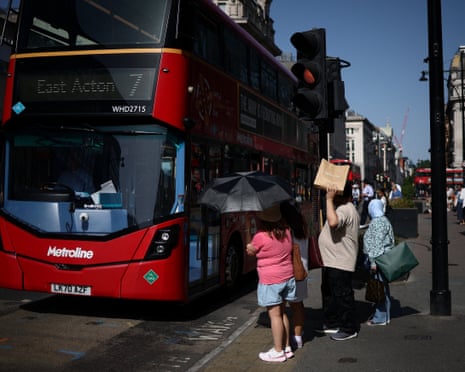
People use umbrellas and shopping bags to shield themselves from the sun while waiting to cross Oxford Street as Britain experiences record temperatures disrupting schools and transport networks, in London, Britain. Photograph: Guglielmo Mangiapane/Reuters

The warning covers an area stretching from London to Swansea and Somerset to Birmingham, and is due to last until 9pm on Thursday, PA news agency reported.

Meteorologist are expecting that during the peak of the heatwave, the temperature could come close to the UK’s all-time high of 40.3C from July 2022.

Gulp. Stay safe everyone.

Share

Key events

94 million Europeans to experience temperatures above 35C today, AFP estimates show

Jakub Krupa

Jakub Krupa

To quantify it for you, at least 94 million people in Europe are expected to experience temperatures above 35C today, most of them in France and Spain, according to AFP estimates.

Cardinals shield themselves from the sun with umbrellas during Pope Leo XIV’s weekly general audience at St Peter’s Square in The Vatican. Photograph: Filippo Monteforte/AFP/Getty Images

More than 350 million people will experience temperatures above 30C.

That’s two-third of the continent’s population – and we are only in June!

Share

It’s time to update our weather forecast for today.

As you can see, large parts of western and central Europe are going to see high 30s and low 40s today.

Weather forecast for Europe

And if anyone further east, say in Berlin, Prague or Warsaw is tempted to think: oh, that’s not affecting me then – you just wait for the weekend, when central and eastern Europe is about to be hit with the same heatwave as it moves eastwards.

Berlin is set to top 40C on Sunday, while Warsaw and Prague are both expected to see temperatures hit 39C.

Share

‘I don’t get paid if I don’t work’

Nicola Slawson

Nicola Slawson

Maria*, 43, a self-employed sewing teacher originally from Spain who now lives in Amsterdam, has decided not to teach a six-hour class in Utrecht in the Netherlands on Friday because of concerns about the extreme heat.

Temperatures are expected to reach tropical levels across the Netherlands in the coming days. Photograph: Anadolu/Getty Images

She teaches in a former shop unit with large windows, no blinds and no air conditioning. Temperatures are forecast to reach 40C in Utrecht.

“It was really hard for me because I’m a people pleaser. I felt bad saying, ‘I’m sorry, but this is too much for my body.’ But I stuck with that feeling and I’m proud of myself for that.”

As a freelancer, cancelling work means losing income.

“I was going to work for six hours and if I don’t work, I don’t get paid,” she says. “If you’re self-employed and you don’t take care of your health, nobody else will.”

Maria believes many people in northern Europe are still underestimating how much the climate is changing.

“When you talk to people, they say, ‘Oh, but it’s only a few days.’ But it isn’t really only a few days any more. It’s getting hotter and hotter.”

Having lived in London for 11 years before moving to the Netherlands, she says she has watched summers become noticeably hotter.

“My first summer in London felt like there was no summer at all,” she says. “Then, year by year, it got hotter. Now London has summers that feel much more like Spain, and places like the Netherlands are getting temperatures that used to be associated with southern Europe.”

She worries that buildings, workplaces and public transport systems are not adapting quickly enough.

“I think people are closing their eyes to what is happening,” she says.

“It’s obvious that climate change is here. Hopefully more measures will be put in place in the future.”

*Name has been changed

Share

‘I know what the weather should be like in Paris, and it is not this’

Jane Clinton

Clara, 31, a librarian from Paris, France, says she would like to see a law passed to ensure workers can stop working when temperatures get too high.

At present, there are no maximum temperature thresholds in France.

A tourist is fanned by friends at the Palais-Royal gardens as temperatures are expected to reach record highs in Paris, France. Photograph: Michel Euler/AP

“I work in an old, unrenovated building, which is south-facing, with poor insulation,” she says. “There’s no air conditioning, and as it is a public building, we of course cannot leave the windows open at night to help cool it down.”

She says they have small plastic fans, but once she steps away from them, the heat hits her, making it difficult to work. Getting to and from work is also uncomfortable.

Clara says train services have been reduced “because the heat is damaging the rails and carriages”. She describes her commute to work as “boiling” and says she has felt unwell while travelling.

Clara, who lives in a south-facing “old apartment” with poor insulation, says the temperature in her home has reached 30C.

“I know it is likely to get higher until the end of the heatwave, which causes me great anxiety as I struggle to ventilate it and can’t sleep at night because it’s too warm. I don’t have A/C, just a fan, but that overheats as I have it on so much.”

Clara, who was born in Paris, says she is very worried about the wider picture concerning the extreme heat.

“I know what the weather should be like in Paris, and it is not this,” she says.

“We are hearing everywhere that this is an unprecedented event and likely to get worse, but my government is doing nothing. The only advice we’ve received is to drink more water. There are few other official guidelines, and no set temperature at which work is cancelled. Everything is offloaded on individuals; it’s on us to do the right thing and protect ourselves while the country burns around us.”

Share

‘It’s dangerous’: how UK schools, care homes and other workplaces are coping in soaring heat

Patrick Butler, Richard Adams, Andrew Gregory, Amelia Hill, Steven Morris, Gwyn Topham and Matthew Weaver

With temperatures in the UK approaching record levels for June, people are being advised to avoid exercise and unnecessary travel.

So how do you even work in this heat?

A person goes past a sign warning passengers of the hot weather on the London Underground as the UK is set to experience its hottest June day on record during a heatwave in London, Britain. Photograph: Tolga Akmen/EPA

We look at how various sectors of the economy are coping with unprecedented temperatures, and how working practices will have to adapt to increasingly frequent heatwaves that are predicted to be longer and more intense owing to the global climate emergency.

For example, school leaders say it is lucky the heatwave arrived after the summer GCSE and A-level exam season, just as May’s heatwave coincided with most schools being closed for half-term.

“We’re dodging a few bullets, but I’m not sure how much longer we can keep dodging,” said Jo Rowley, a deputy headteacher in Stafford..

Share

Red alert for 16 cities in Italy as extreme temperatures expected today

Italy’s health ministry issued “red alerts” for 16 cities on Wednesday with major cities such as Rome, Milan, Florence and Turin affected, AP reported.

People use umbrella to protect themselves from the sun during heatwave in Florence, Italy. Photograph: Anadolu/Getty Images

The “bollino rosso” red alert signals emergency conditions that can affect not only vulnerable people but also healthy adults.

Temperatures could reach highs of 41C in Florence and 38C in Milan, while Rome and Naples are forecast to remain below 36C.

Share

It’s not even midday in continental Europe, and some parts of France are already reporting temperatures above 36C (Bordeaux) and even near 38C (Nantes).

Paris is reporting 35C.

A man browses electric fans on display at a supermarket during a heatwave in Bordeaux, south-western France. Photograph: Philippe Lopez/AFP/Getty Images
Share

‘The heat was at a different level’

Jane Clinton

Alex*, 37, who works in EU institutions in Brussels and is from Spain, says that while he is used to high temperatures, he has seen how other countries are struggling with insufficient infrastructure to cope with extreme heat.

People enjoy the Parc du Cinquantenaire while hiding from the direct rays of the sun on June 23, 2026 in Brussels, Belgium. Photograph: Thierry Monasse/Getty Images

He says temperatures of “38C, 39C, even 40C are not unheard of in Southern Spain in July and August”.

“I have lived in Northern Europe, and these regions are definitely not used to these temperatures,” he says.

“I think it is a big shock for the local population, and for the infrastructure too. It’s just not adapted to this heat. Air conditioning in restaurants and shops is not as common as it is in Spain, so 40C in Spain to me feels relatively manageable, also, because I think the climate is drier, whereas 40C, 42C, as we had in France, is very difficult.”

Alex was on holiday in Madrid over the weekend and drove back to Brussels with his A/C “on full power”.

“I drove through western France, and all the road informational screens recommended rest and hydration,” he says. “This level of heat is something that I think, particularly in central and southern Spain, we are more or less used to, at least in my lifetime.”

He says he did the same journey “a few years ago” in July and was able to stop off and climb the Grande Dune du Pilat in the Arcachon Bay area, south west France. This time, however, the heat was so intense that they had to wait several hours before they could make the climb.

“I remember going up there in July, and it was beautiful,” he says.

“This year I had to wait until sunset until 9.30pm because of the heat – it wasn’t safe to go there at 5pm, which was my original intention. Compared to other trips, the heat was at a different level this year.”

*Name has been changed

Share

Updated at 11.42 CEST

Jakub Krupa

Jakub Krupa

The Guardian’s Jane Clinton has been speaking to some people affected by the heatwave.

Let’s check what they’re saying.

Share

Lib Dems urge government to open ‘cool hubs’ to help vulnerable people at UK braces for extreme heat

Over in the UK, the Liberal Democrats have called for the government to immediately open air-conditioned public buildings as “cool hubs” for vulnerable people during the heatwave, PA news agency reported.

A view of the City of London skyline and financial in a heat haze this morning as the Met Office issue a red extreme heat warning. Photograph: Amer Ghazzal/Shutterstock

They said gyms, leisure centres, libraries and other buildings could offer relief for those particularly at risk from the extreme heat.

The party also urged ministers to urgently prepare the country for more extreme temperatures by investing in cooling for hospitals, care homes and schools – echoing a call by the independent advisory Climate Change Committee on helping the UK adapt to global warming, PA said.

Earlier, the UK Met Office warned that a combination of extreme heat and humidity could have an impact on public health, infrastructure, power and water supplies.

Share

Updated at 11.27 CEST

Europe heatwave ‘putting people’s health at risk,’ WHO chief warns

Head of the World Health Organization, Tedros Adhanom Ghebreyesus, warned that Europe’s heatwave is “putting people’s health are risk.”

Here is his message this morning:

“Europe’s heatwave is closing schools and putting people’s health at risk.

The data are clear: temperatures across Europe are rising at roughly twice the global average rate, increasing the likelihood and severity of extreme heat in the future.

We cannot afford further delay. Leaders must prioritise investment in climate-resilient health systems, while also accelerating #ClimateAction and mitigating the drivers of the climate crisis.”

Share

Europe battles record-breaking heat: is this the new normal? – The Latest

Europe is dealing with a debilitating heatwave, with schools closed, trains cancelled and France holding an emergency meeting after heat-related deaths.

And António Guterres, the UN chief, is urging the world to act on fossil fuels as the continent braces for record-breaking heat.

Lucy Hough speaks to Europe environment correspondent Ajit Niranjan about the extraordinary heatwave hitting the continent this week.

Europe battles record-breaking heat: is this the new normal? – The Latest

Share

Heat-related incident leaves 68,000 households with no electricity in northern France

Meanwhile in France, the heatwave caused the country’s first major power outage of the latest bout of extreme weather, AFP reported.

A heat-related incident with a transformer left around 68,000 households on Wednesday without electricity in the northwestern Finistere department, the authorities said.

Share

Rare red heat warning kicks in the UK with temperatures expected to get near 40C

A rare red heat warning has kicked it at 9am London (10am Europe) for large parts of England and Wales, just for the second time ever, with temperatures expected to get close to 40C in some parts of the country.

People use umbrellas and shopping bags to shield themselves from the sun while waiting to cross Oxford Street as Britain experiences record temperatures disrupting schools and transport networks, in London, Britain. Photograph: Guglielmo Mangiapane/Reuters

The warning covers an area stretching from London to Swansea and Somerset to Birmingham, and is due to last until 9pm on Thursday, PA news agency reported.

Meteorologist are expecting that during the peak of the heatwave, the temperature could come close to the UK’s all-time high of 40.3C from July 2022.

Gulp. Stay safe everyone.

Share

Spare a though all key workers who have no choice but have to work physically and outdoors in this weather.

Here is a postal worker from Paris (33C at the moment, but expected to get to 39C later).

A postal worker drinks water during a delivery round in Paris, France. Photograph: Adil Benayache/SIPA/Shutterstock

And a construction worker in London (28C at 9:15am, but going up to 35C later).

A construction worker standing on scaffolding on a hot morning as the Met Office issue a red extreme heat warning in London and south England. Photograph: Amer Ghazzal/Shutterstock
Share

Updated at 10.24 CEST

The French city of Bordeaux is one of those expected to be most severely hit by extreme temperatures today.

It’s 33C there and it’s only 10am, and Météo France is expecting the temperatures of up to… 42C later today.

Tourists and residents cool off at Miroir d’Eau in front of the Place de la Bourse in Bordeaux, France. Photograph: Le Gonidec Margot/ABACA/Shutterstock
Share

Updated at 10.03 CEST

So here is your weather forecast for today, with some of the key European cities:

Paris 41C
Bordeaux 39C
Madrid 38C
Frankfurt 37C
Brussels 36C
Rome 35C
Bologna 35C
London 34C
Amsterdam 34C
Zurich 32C
Prague 32C
Berlin 31C
Barcelona 31C

Essentially, if you are anywhere between Lisbon (24C) and Warsaw (27C), it will be super hot.

Meteo France is showing that all of France is expected to go well above 30C this morning, with two-thirds of the country covered by a red weather alert.

Share
Jakub Krupa

Jakub Krupa

It’s Jakub Krupa here, taking over from Taz Ali.

With the heatwave dominating the headlines across Europe, we will run a special edition of our daily Europe Live blog today focused just on this issue.

I will bring you all the latest here. Good morning.

A Frankfurt Zoo worker sprays alpacas with water during a severe heatwave in Germany. Photograph: Matías Basualdo/ZUMA Press Wire/Shutterstock
Share

The French environment minister, Monique Barbut, said the heatwave in France could continue until 14 July.

“Next week should see a relative pause,” she told the French radio channel France Inter.

“But Météo-France tells us there is a strong likelihood that, from the following week onwards, we will see a return to extreme heat, which could last until 14 July.”

People swim at Canal Saint-Martin to cool off during heatwave in Paris, France. Photograph: Anadolu/Getty Images
Share

Updated at 08.53 CEST

Source link

24/06/2026 0 comments
0 FacebookTwitterPinterestEmail
Art Craft and Leisure newsRecent Post

Jesy Nelson ‘outraged’ after MPs debate screening for muscle condition that affects her twins

by David Jones 24/06/2026
written by David Jones

Speaking about the debate, which she attended, Nelson said she was devastated that the issue wasn’t being tackled with more urgency.

“I cannot tell you how heartbreaking it is to know that my children’s lives could have looked completely different,” she said, fighting back tears.

“They could have been walking by now. They didn’t have to be on breathing machines.

“I have to give them medicine every four hours. I have to turn them every two hours, because they can’t do that themselves. I have to make sure they’re not choking… because this disease has affected their muscles with their swallowing.

“To know that there are people that are literally making this decision to make children suffer… I have no words.”

The singer also recounted showing Hodgson a video after the debate, featuring two sisters living with SMA – one who received treatment, and one who did not.

“One is in a wheelchair, the other is running along, pulling her sister along,” she said.

Nelson claimed Hodgson was surprised by the video, admitting she hadn’t realised the full extent of early treatment’s impact.

“How do we have the health minister standing up in parliament arguing why this should not be rolled out across the whole of England, when she doesn’t even know how life-changing this treatment is?” Nelson asked.

The charity Muscular Dystrophy UK welcomed Monday’s debate, saying it was “encouraging and moving to hear many MPs speaking passionately about SMA newborn screening”.

However, it added: “We’ll continue to push the UK government to roll out screening in every part of the UK. No more postcode lottery.”

Source link

24/06/2026 0 comments
0 FacebookTwitterPinterestEmail
Housing newsRecent Post

1.6m get lower Tesco prices from today as it changes Clubcard rule

by David Jones 24/06/2026
written by David Jones

The new rule is in force from Wednesday and applies at every branch in the country

Neil Shaw Assistant Editor

10:19, 24 Jun 2026Updated 10:19, 24 Jun 2026

Millions of people can get lower prices at Tesco from today as the supermarket changes Clubcard rules in every branch in teh country. Tesco has today launched a version of its Tesco Clubcard for 16 and 17-year-olds – giving younger customers access to thousands of Clubcard Prices deals for the first time.

The new ‘Clubcard for 16-17s’ will allow teenagers in that age group to sign up for a Tesco Clubcard that enables them to access Clubcard Prices in Tesco stores and collect Clubcard points that can be converted into vouchers for money off at the checkout.

To join Clubcard for 16-17s the teenager must be invited to join from the Clubcard account of a parent or guardian. Tesco Group Membership & Loyalty Director Shama Wilson said: “We are delighted to be giving younger customers access to Tesco Clubcard for the first time, and we have no doubt that it will prove popular with 16 and 17-year-olds, whether they are shopping in one of our ‘big Tesco’ or ‘little Tesco’ stores.

“From today our new Clubcard for 16-17s members will not only be able to get Clubcard Prices in-store, including our iconic Tesco lunchtime meal deal for just £3.85, but also collect points that they can turn into vouchers for money off their in-store shopping.”

The new digital Clubcard for 16-17s is only available through the Tesco app or website. There are 1.63million 16 and 17 year olds in the UK.

The easiest way to access the new Clubcard for 16-17s is for a parent or guardian to click on the identity icon in the top corner of their Tesco app, which allows them to access their account settings. In the account settings section, they can then click on the ‘Invite to Clubcard’ button and choose the option to send a sign-up link to their 16 or 17-year-old.

The ‘Invite to Clubcard’ button will only be visible to Clubcard members using the latest version of the app, so Clubcard members are advised to update their app if it is not showing.

Tesco Clubcard is the most popular supermarket loyalty scheme in the UK and has been running for more than 30 years. Today more than 24m UK households have a Tesco Clubcard, with a Clubcard used in more than 80% of sales at Tesco and thousands of Clubcard Prices offers in Tesco stores each week.

Source link

24/06/2026 0 comments
0 FacebookTwitterPinterestEmail
Local newsRecent Post

Penarth RNLI issue stark warning amind extreme heat warning

by David Jones 24/06/2026
written by David Jones

RNLI Penarth Lifeboat Station have issued the warning in light of the recent drownings, which have highlighted the dangers between rising temperatures and an increased drowning risk.

A spokesperson for the Lifeboat Station said: “The hot weather forecast for today and the coming days means we are likely to see a significant increase in the number of people visiting coastal and inland waters and entering the water.

“Recent hot weather periods have sadly highlighted the link between rising temperatures and increased drowning risk”.

Advice has been issued regarding cold water shock, offshore winds and inflatables, and inflatable stand up paddleboards.

The spokesperson for Penarth RNLI said: “While it may be hot on land, the water can still be cold enough to trigger cold water shock.

“There are periods this week where offshore or partially offshore winds are forecast across sections of the Wales and West coastline, increasing the risk of inflatables and stand-up paddleboards being blown away from shore.

“Extreme heat can cause the glue [on inflatable stand up paddleboards] to melt and debond.

“[We’ve] seen a number of posts about exploding iSUPs recently, and whilst you may think it’s because of increased pressure, it’s actually down to a failure of the glue and bonding under heat exposure.

“Couple that with their inflation pressure, and you can guess the rest!”.

Despite the hot weather, Penarth RNLI have warned that the water is still very cold, and people could be at risk of cold water shock. 

The signs include: rapid uncontrollable breathing; sudden involuntary gaps which can increase the risk of inhaling water; racing heat and a sharp rise in blood pressure; as well as panic, fear and confusion.

As well as the hot weather, offshore winds are forecast which increases the risk of people using inflatables in the water being blow away from shore.

Scorching temperatures are set to hit the Vale of Glamorgan this week, as a red weather warning for extreme heat comes into place, and while it can be tempting to cool off in the water, it’s important to do it safely.

Source link

24/06/2026 0 comments
0 FacebookTwitterPinterestEmail
Health newsRecent Post

Anyone keeping statins on bedside table given urgent alert

by David Jones 24/06/2026
written by David Jones

Anyone keeping statins on bedside table given urgent alert

People who take regular medication should be aware of this advice (Image: Getty)

People are being urged to move their medication during hot weather, as some common pills may become useless if exposed to the heat for too long. Across the UK, the hot weather is baking parts of the country, with temperatures expected to reach 40°C, sparking multiple health warnings.

The UK Health Security Agency (UKHSA) has issued red heat health warnings, covering the West Midlands, East Midlands, South East, South West, London, and East of England. People outside the weather warning zones should still take precautions, especially if they take medicine like statins.

An estimated seven to eight million adults in the UK take statins, making them one of the most commonly prescribed medications. Most medicines need to be stored at temperatures below 25°C, or their active ingredients may break down, rendering the pills useless.

This can be a dangerous situation for someone relying on cholesterol-lowering medication, as it can lead to undetected rises in low-density lipoprotein (LDL) cholesterol. If the medication stops working, people could unknowingly be at risk of potentially fatal heart issues.

Because statins must not be refrigerated due to moisture damage, people who rely on this medication have to find the naturally coolest areas in their home to keep their pills in working order. Avoid leaving them on windowsills or bedside tables as direct sunlight through glass creates a greenhouse effect, raising the temperature of the medicine box well above the room’s actual temperature.

The room you choose might also make a difference, as places with constant temperature changes, like the kitchen or bathroom, may ruin the medication through exposure to humidity from showers or cooking appliances like ovens, hobs, and air fryers that generate ambient heat.

People should opt for places that do not experience major temperature changes and can handle the general heatwave. Places like drawers, wardrobes, cupboards and pantries are ideal options – especially during the next few days.

Picking a low-level drawer in the bedroom or hallway could be one option, as cool air naturally sinks to the floor. Using spare space in your wardrobe or storage cupboards also stays cooler for longer, especially if they do not share a wall with the outside.

Pharmacist Finding Prescription For A Customer

People need to be aware during the hot weather (Image: Getty)

Keeping your medicine in the pantry or larder might sound strange, but the dark, cool storage space (especially on the ground floor) usually maintains a lower, more stable temperature than the rest of the house. Be sure to keep any medicine properly labelled and out of reach if children are about.

How to tell if statins have been heat-damaged?

It is almost often impossible to tell if a statin tablet has been heat-damaged just by looking at it, as active ingredients can degrade without changing the tablet’s appearance. Check for any crumbly, chalky texture or abnormal discolouration.

Blister packs that have melted, warped, or become brittle are clear signs of excessive heat exposure. If you suspect your statins have been heat-damaged, do not take the risk and contact your pharmacist to confirm whether the medication is safe to use or if a replacement is needed.

Source link

24/06/2026 0 comments
0 FacebookTwitterPinterestEmail
Newer Posts
Older Posts

Recent Posts

  • Sixth measles death recorded in America as outbreak spirals… as US records worst case count in 35 years
  • Update on DWP bank account monitoring for PIP, Child Benefit, Carer’s Allowance
  • Dozens sickened at Walmart distribution center with ‘possible food-related illness’
  • People affected by huge wildfire can now claim from £20,000 support fund
  • 8 foods you should eat every day to give you the best chance of living to 100

Recent Comments

No comments to show.

Help us create an environment in which people fifty and over can fulfill their aims and objectives in life. Fight age discrimination and help preserve and promote the independence, dignity and positive image of people fifty and over and work to ensure that they have appropriate and adequate public care provision.

Facebook Twitter

Useful Links

    • Contact Us
    • Privacy Policy
    • Terms of Use
    • Help & Support

Edtior's Picks

Sixth measles death recorded in America as outbreak spirals… as US records worst...
Update on DWP bank account monitoring for PIP, Child Benefit, Carer’s Allowance
Dozens sickened at Walmart distribution center with ‘possible food-related illness’

Latest Articles

Sixth measles death recorded in America as outbreak spirals… as US records worst case count in 35 years
Update on DWP bank account monitoring for PIP, Child Benefit, Carer’s Allowance
Dozens sickened at Walmart distribution center with ‘possible food-related illness’
People affected by huge wildfire can now claim from £20,000 support fund

All Right Reserved. Designed and Developed by Martyn Jones.

  • Home
  • About Us
  • Contact Us
Vale 50+ Strategy Forum
  • Home
  • Activities
  • Blog
  • Groups
    • Arts, Crafts & Leisure
    • Black Minority Ethnic
    • Climate Change
    • Health and Social Care
    • Housing
    • Transport
  • Money
  • Newsletter
    • Forum Newsletter
    • Weekly Email Newsletter
  • Podcasts
  • Scams
  • Calendar
  • Help
    • About Us
    • Contact Us
    • Documentation
    • Herald
    • Join the Forum !
    • News
    • Privacy Policy
    • Statistics
    • Useful Links
    • Vale of Glamorgan 50 Plus Safeguarding Policy
    • Members
Vale 50+ Strategy Forum
  • Home
  • Activities
  • Blog
  • Groups
    • Arts, Crafts & Leisure
    • Black Minority Ethnic
    • Climate Change
    • Health and Social Care
    • Housing
    • Transport
  • Money
  • Newsletter
    • Forum Newsletter
    • Weekly Email Newsletter
  • Podcasts
  • Scams
  • Calendar
  • Help
    • About Us
    • Contact Us
    • Documentation
    • Herald
    • Join the Forum !
    • News
    • Privacy Policy
    • Statistics
    • Useful Links
    • Vale of Glamorgan 50 Plus Safeguarding Policy
    • Members
@2021 - All Right Reserved. Designed and Developed by PenciDesign