
Rebecca Keating has worked at the BBC for 20 years and calls her new role an “immense privilege”.
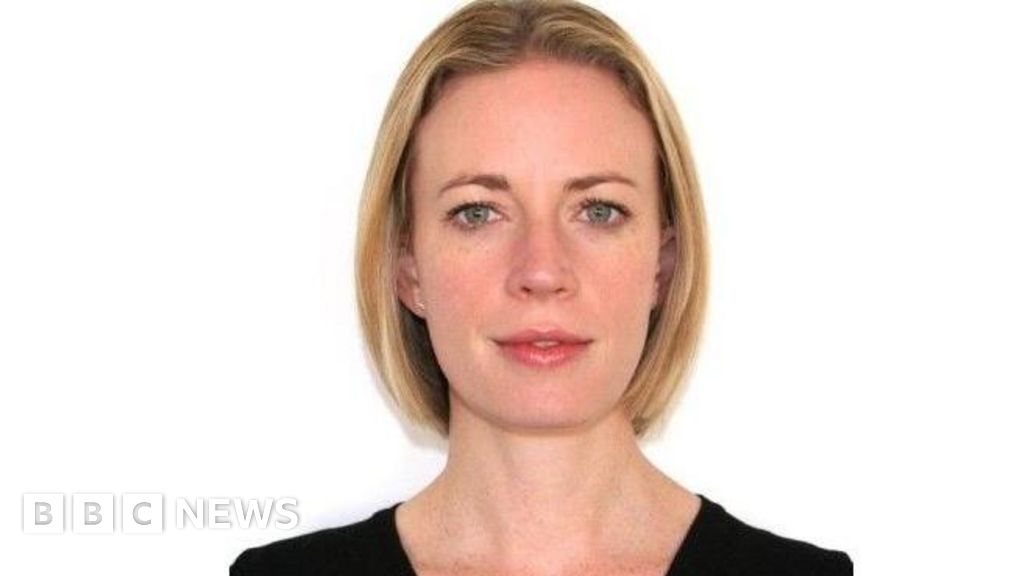
Rebecca Keating has worked at the BBC for 20 years and calls her new role an “immense privilege”.

Taylor Edmonds has compiled a compelling collection of essays from across Wales on the importance of water. Contributors to The Waters That Raised Us draw from their own reservoirs of personal reflection, mythology, and history, underlining water’s significance amid the chaos of climate change.
When I think of my home in Wales, the first images that come to mind are of nature: the reserve a stone’s throw from my door, farmland hills dotted with sheep, and long hikes up steep slopes towards Twmbalrwm (its summit nicknamed the ‘Pimple’, or ‘Nipple’, depending on who you ask). My vision of Wales, of home, has become synonymous with the natural world – and as a Pisces, that love naturally extends to its waters. This booktaps into this connection and, through nine Welsh writers, deepens it.
Each essay is distinct, as an anthology should be, yet they resonate with one another to create a cohesive whole. Together they explore the cultural, environmental, and historical significance of water in Wales, from the drowned village of Capel Celyn (Francesca Reece), to the polluted River Wye (Kandace Siobhan Walker), to the ways water can shape personal identity (Durre Shahwar). As a reader, you can’t help but to reflect on your own relationship to water.
In ‘On Returning’, CJ Wagstaff uses water to examine his journey as a trans man, revealing both its personal and universal qualities. Across the collection, themes of climate activism and restoration intertwine with anti-colonial, feminist and queer perspectives that I found crucially enlightening.
Ultimately, these stories ask us to humanise our lakes and reservoirs; beaches and oceans; rivers and waterfalls as we would each other. They ask us to dream of a future wherein all these things have a right to exist and to flourish.

The fashion designer and her husband plan to build the house overlooking a sea loch in the Highlands.
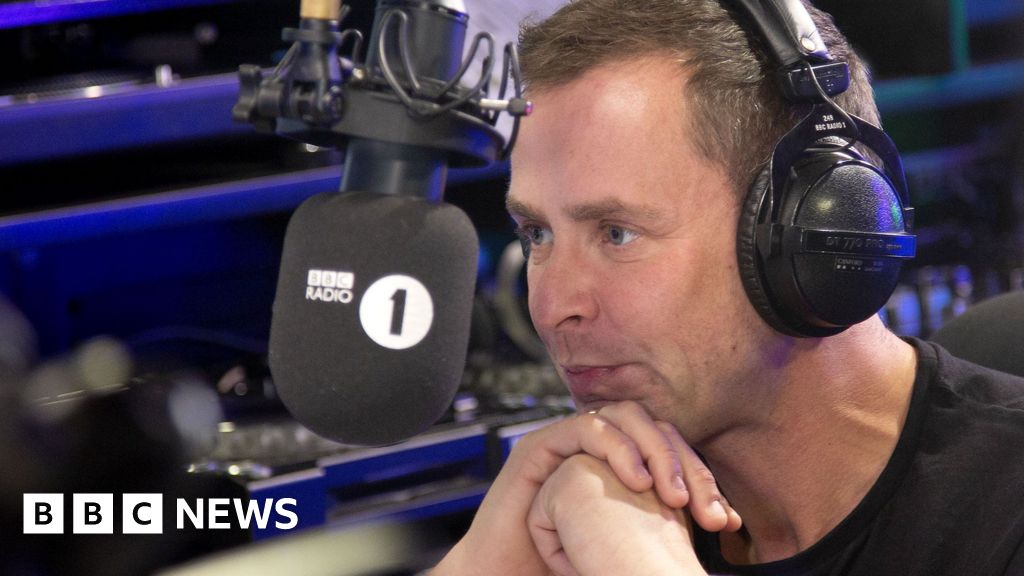
It comes as Mills released a statement saying he had “fully cooperated and responded” with the police investigation in 2018.

A decade since his last novel, The High Mountains Of Portugal, Yann Martel returns to action with the highly-anticipated Son Of Nobody. Harlow Donne, a Canadian classical academic, relocates to Oxford, leaving his wife and daughter. He’s there to study ancient, previously unseen texts which set out the tale of a common Greek soldier, Psoas – the son of nobody – whose perspective on the Trojan War is presented by Donne as The Psoad, an imagined accompaniment to The Iliad.
It’s a fascinating approach, viewing a version of history through the lens of one of its usually bypassed actors in a manner reminiscent of Madeline Miller’s The Song Of Achilles. And Martel’s ambitious approach to the novel’s structure elevates what could have been a derivative – if well-executed – work.
Donne is tormented by the distance between his new life and his daughter, Helen: “I failed you as a father, Helen, and I failed your mother as a husband.” Writing in the footnotes of his emergent epic, he begins a letter to her, which takes flight throughout Son Of Nobody. His words to Helen are interwoven with Psoas’ tale, presented in flowing, scholarly language; the two men’s perspectives converge to demonstrate a shared humanity, despite millennia of separation.

Reviews are in for the sequel to the mega-successful Super Mario Brothers Movie, but not everyone is convinced.
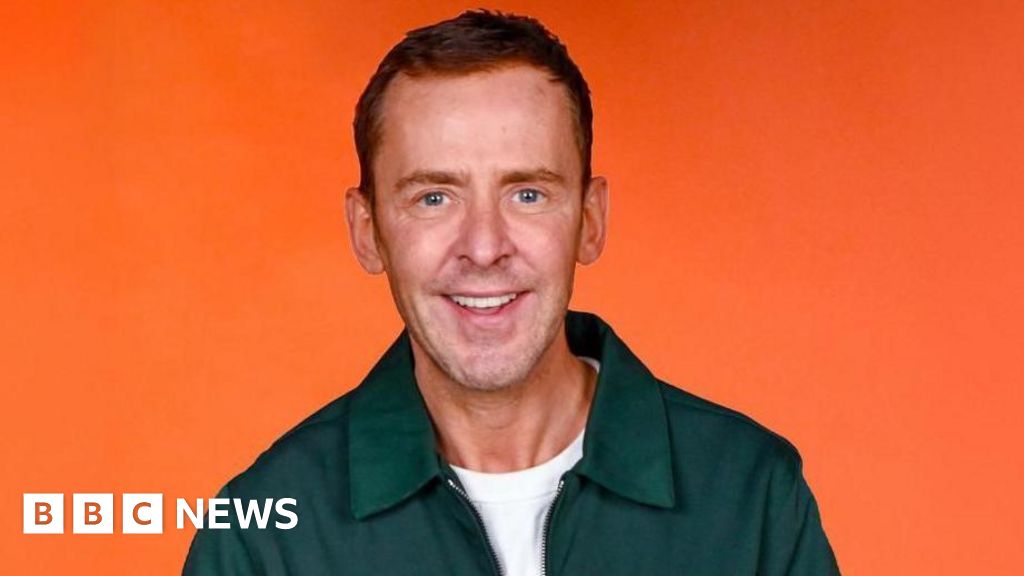
The spokesperson added: “Separately, we can confirm the BBC was made aware in 2017 of the existence of an ongoing police investigation, which was subsequently closed in 2019 with no arrest or charge being made. We are doing more work to understand the detail of what was known by the BBC at this time.”

Heartache, hopelessness, regret: all are grist to Mancunian band Wyatt’s mill. The foursome’s home city might be most often celebrated for postpunk, baggy and Britpop (excessively and tediously, some might say), but this foursome cook up another music in a different kitchen, an alt-country Keith Floyd drunk on the likes of Bright Eyes and Silver Jews.
Vocalist/guitarist and lead songwriter Harvey O’Toole boasts the impassioned, tremulous holler of former Black Country, New Road frontman Isaac Wood, while trumpet player Emily Mason plays more than merely a bit-part role, fully integrated in the sound and often lighting the way. A song early in the set finds O’Toole reflecting “I was never what you wanted me to be” – but Wyatt seem primed to exceed rather than dash expectations.
On a similarly upward trajectory is Tasmin Stephens, aka TTSSFU. Stephens first came to prominence playing guitar with post-punkers Duvet, and her solo project is a comfort blanket of sorts, albeit one that often has the scouring and exfoliating properties of wire wool. The set flits between fragility and ferocity – from the cooing, shoegazey fuzz-pop of Forever, which is like being caught up in a candyfloss hurricane, via the marvellously titled Cat Piss Junkie, to closer I Hope You Die, which lashes out with the bitter venom of vintage Hole.
Between songs, however, Stephens is a different person – all smiles and laughter. When someone requests Weekend, she initially demurs, branding it “too depressing”, before relenting and chastising herself for being too bratty: “How rude to say ‘I’m not playing THAT!’” Moreover, she’s backed by a band who are clearly also having the time of their lives, and the performance cannot be derailed by either rogue feedback or a faulty guitar requiring a swift switcheroo just in the nick of time for a solo.
“I can’t believe people are missing football to watch this!” Stephens exclaims at the outset. By the end, it’s not a belief shared by anyone in the audience.
TTSSFU + Wyatt, Clwb Ifor Bach, Cardiff, Thurs 26 Mar
words BEN WOOLHEAD
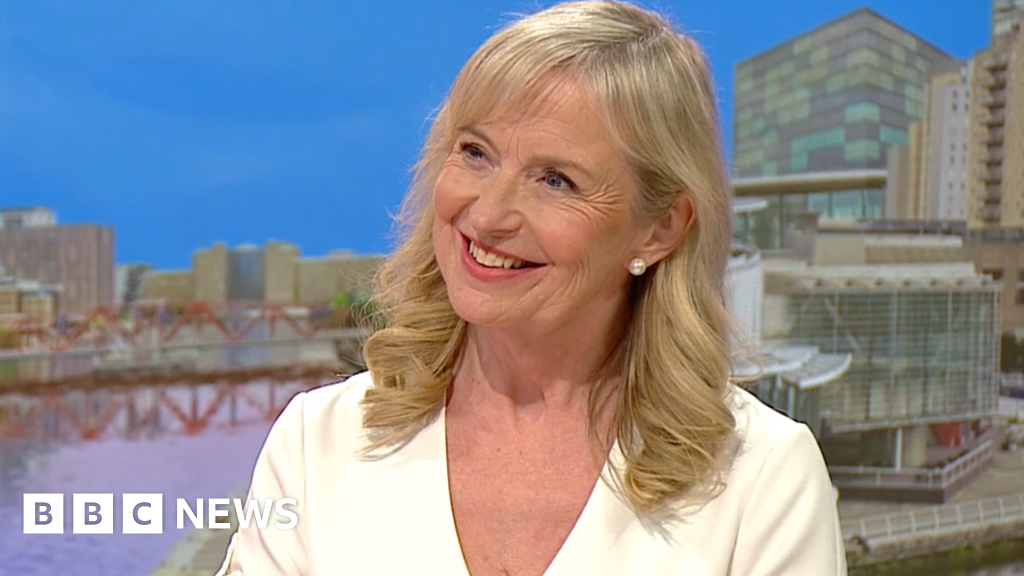
The weather presenter was blown away as viewers and colleagues paid tribute to her after 25 years.

Port Talbot, where Jon Doyle is from and where his debut novel Communion is set, has its own lore, iconography and peculiarities, like most towns. Doyle’s success – one of many, actually – is to hone in on those and simultaneously capture the discord felt around the UK, probably elsewhere too, by the continuing onset of post-industrialism.
He builds a world using fictionalised versions of two real-life Port Talbot events. One is the swingeing job cuts at the town steelworks, which employs nearly all of Communion’s male characters. Mack, the novel’s protagonist, strikes alongside his colleagues; his employment terms as a security guard mean he’s technically not obliged to, but as someone who’s returned to town after leaving in a chequered attempt to become a priest, he’s enough of an awkward outsider already.
The other is an immersive, town-wide drama about Christ’s final days, clearly based on National Theatre Wales’ The Passion from 2011 but in Communion an annual Port Talbot tradition of decades standing. It’s an ironic distraction from the townsfolk’s real-life problems – one strong scene finds Mack, late at night, having to talk down a suicidal proselytiser whom he initially assumes to be doing some method acting.
And then there’s Siwan, a friend from Mack’s teens for whom he evidently carries a torch of sorts, and who is plotting some sort of terrible criminal act. We are not let in on what or why, indeed it’s not clear that Mack is either, yet he’s dog-loyal as her plan builds momentum. A pivotal character of few words, Siwan’s presence in Communion doesn’t so much advance the plot as cloud the picture, but Doyle uses her deftly to weigh the strange vagaries of old friendships and how, in a close-knit community, it can be hard for a life to truly be private.
