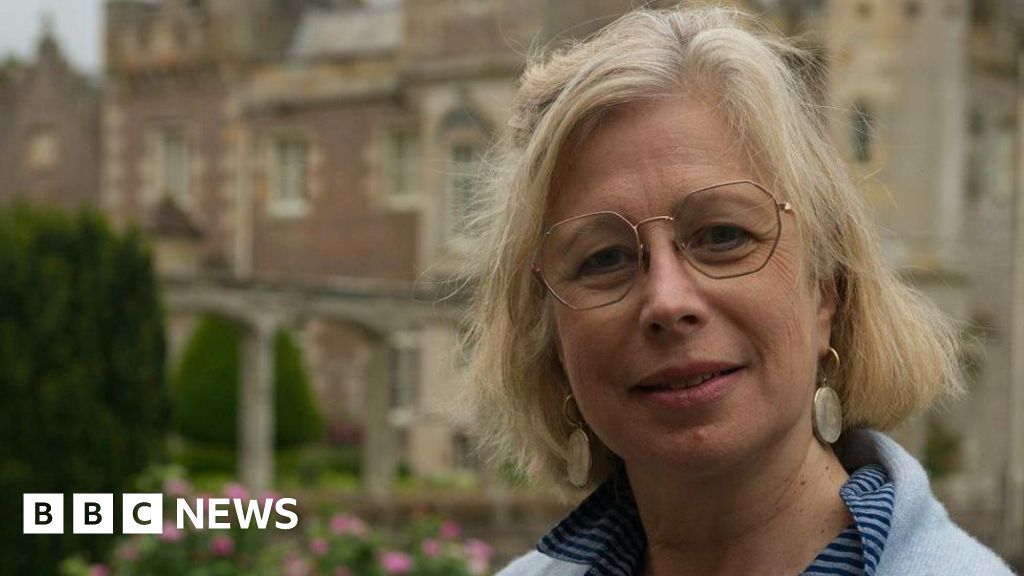
Lianne Kaye says performing with the singer was “honestly unbelievable”.
All Right Reserved. Designed and Developed by Martyn Jones.
Lianne Kaye says performing with the singer was “honestly unbelievable”.
Teacher Craig Mather says he had never seen the play or met the cast before taking to the stage.
The Rolling Stone frontman was spotted at the Half Moon in St Clements.
Following the award-winning success of her debut The Rice Paper Diaries, Francesca Rhydderch returns with It Might Not Be True, a beautiful memoir of life, love and everything in between. Most prominently, it’s about the author’s health: Rhydderch wants to dance, run, laugh, smell and touch, but instead she is plagued by tremors, shakes, stumbles and a lack of balance.
Increasingly unable to walk any further than the end of the street, her certainty of her own chronic illness is backed up, she thinks, in the eyes of passers-by as she fights to put one foot in front of the other. And yet, the doctors still can’t diagnose her. All the while, in It Might Not Be True Rhydderch evokes memories from the recesses of her past – reflecting on family life, her childhood spent in Wales, and most poignantly her parents, two remarkable characters whose presence is still felt long after their passing.
Delicately weaving together memories of the distant and recent past to make sense of an uncertain future, Rhydderch paints a visceral picture of living with chronic illness, exploring a difficult truth: there is no magical solution to life’s challenges, but there is always hope.
The actress is best known for her role as Stacey Slater on EastEnders, the BBC One soap she joined in 2004.
We talk condescendingly about “the folly of youth” – but what about the energy, the passion, the conviction, the ambition of youth? Köln 75 is a sparkling hymn to all of those qualities, exemplified in abundance by German teenager Vera Brandes as portrayed by Mala Emde.
Brandes’ refusal to accept impossibility or defeat gave rise to the remarkable true tale told by Ido Fluk’s film. Growing up in a stiflingly conservative family, she’s a free-spirited wild child, drawn to resistance and rebellion in politics and art. When a local DJ dismisses jazz as “museum music” – polite, stuffy, staid – Brandes insists otherwise, as someone who revels in the charged intensity and revolutionary fervour of sweaty, late-night Cologne clubs. Through force of personality, charm, chutzpah and lying about her age, she talks her way into booking a tour for Ronnie Scott and is soon regularly promoting shows.
One astonishing performance in Berlin by Keith Jarrett (played by John Magaro) convinces her to bring Miles Davis’ former pianist to Cologne’s cavernous Opera House, at great financial risk to herself. A knackered, out-of-tune piano threatens to derail Brandes’ dream, and tension over whether the notoriously exacting Jarrett will consent to play mounts as the film builds to its crescendo.
In many ways, Fluk’s protagonists Brandes and Jarrett are polar opposites: she is enthused, effervescent and idealistic, whereas he is lethargic, jaded and world weary. And yet they are connected through a mutual compulsion to wing it (Jarrett as a solo improviser, Brandes as a promoter). While Jarrett appears crushed by the fear of potential failure, Brandes is driven by it, determined to prove her uncomprehending patriarch of a father wrong.
Providing occasional fourth-wall-breaking commentary – including a splendidly succinct history of the development of jazz – is the movie’s third principal character, Michael Watts (Michael Chernus): a US journalist trying in vain to conduct an interview with Jarrett, or at least coax him into some comments that aren’t immediately declared off the record.
For a film about a now-legendary improv concert, it’s fitting that Fluk had to find creative ways around not having the rights to any of Jarrett’s music. In those circumstances, to endeavour to make the movie at all suggests Brandes-like levels of bravado and audacity on the part of the director. Where Köln 75 could perhaps be criticised is the jarring shift of tone and pace in the middle third, in which Brandes disappears offstage so that the focus can temporarily fall on Jarrett, an artist tortured by both performance anxiety and his own failing body. And yet, while this renders the snappy feelgood vibes of the trailer somewhat unrepresentative of the film as a whole, it does ultimately lend what might otherwise be a fluffy flick greater depth and weight.
This funny, sharp, smartly directed movie brings to mind Good Vibrations, Lisa Barros D’Sa and Glenn Leyburn’s superlative film about record shop proprietor/label manager Terri Hooley in Troubles-torn 1970s Belfast. Brandes, like Hooley, is a charismatic dreamer with a vision who strives to triumph in adversity – and both films warmly celebrate the power of music to transport, connect, energise and nourish.
Dir: Ido Fluk (15, 112 mins)
words BEN WOOLHEAD
“But in order to set the show up for future series, it was decided that, rather than bridge the gap with a one off special, we are choosing to push forward to invest in the long-term future of the show which ensures that when the Tardis lands once more, it does so in all its glory.”
Antonia LeVay sits down with Conal Dodds, founder of Crosstown Concerts, as the company marks a decade of independence and prepares for their Bristol Sounds series of outdoor gigs this month.
A man responsible for promoting some 600 live music events annually, when Conal Dodds tells me, “I’ve got faith in my ears,” it might just explain his career better than any official biography ever could.
Even now, after nearly 40 years in the live industry, Dodds doesn’t talk like a corporate executive – rather, someone who still can’t quite believe he gets paid to spend his life around music. After all, his story starts not with a business plan, but with a hitchhiked trip to Monmouth to knock on Robert Plant’s front door.
“I was 22 and living in Hereford. Me and my mate had watched [1980s Khmer Rouge docu-drama] The Killing Fields and ended up going to this Oxfam talk about Cambodia because it was free. They were trying to raise money to build a well, and my mate just said, ‘Robert Plant lives in Monmouth, why don’t we get him to do a gig?’ We literally went around Monmouth asking in pubs if anybody knew where he lived. Eventually we found his bass player, who told us where the house was. We kept going back because he wasn’t in… then one Saturday morning he invited us in.”
That became Dodds’ first promoted show: a Robert Plant benefit gig at Monmouth Leisure Centre, in 1989. “We had absolutely no idea what we were doing! But afterwards one of the guys said to me, ‘You’re good at this – you should be a promoter or a manager.’ I didn’t even know those jobs existed.”
It was a moment which proved to be the catalyst for his future career. (“Life swings on tiny little hinges,” he says later in the conversation. “Every single day something can change your direction.”) At the time, though, it simply felt exciting, and soon Dodds started promoting gigs at Newport TJ’s, helped by owner John Sicolo.
“They were incredibly welcoming – John said, ‘Bring the bands, bring a PA, you can have the venue.’ It was all very DIY back then.” That spirit hasn’t left Dodds, either: despite the scale of Crosstown now, there’s still a deep affection for independence and community things he worries can easily disappear when industries become too corporate.

After COVID, in particular, that independence became fragile. “There were definitely moments where smaller promoters felt vulnerable,” he says. “We knew the bigger companies were circling because independents had taken such a financial hit.”
During lockdown, a network of promoters regularly spoke online about protecting themselves and the wider live ecosystem. “People like Stuart Galbraith at Kilimanjaro did amazing work lobbying the government,” Dodds says; “the Culture Recovery Fund genuinely saved businesses. It saved mine! It kept people employed.” Here, the tone briefly shifts from warm nostalgia into something more serious – behind the romance of live music lies a difficult industry, one built on risk, exhaustion, financial pressure and instinctive decision-making.
As Dodds notes, “There’s still a dark side to the music business – people who are only interested in money.” But he remains idealistic about the good side of it too: “I’m a bit of a hippie really!”
Crosstown recently celebrated 10 years in business, having been founded on St David’s Day 2016. Dodds has also bought out the company’s original investor and began transitioning the business into an employee benefit trust, effectively giving staff ownership within the company. “It just feels like the right thing to do,” he says. “The people who work here help build everything. It shouldn’t just belong to one person.”
He still does around 95% of Crosstown’s booking himself – “that’s still the bit I love” – and his personal tastes and instincts are reflected in the annual lineup of Bristol Sounds. Held on Bristol’s harbourside each summer, the event has become one of southwest England’s most distinctive music festivals over the past decade, prioritising atmosphere, setting and curation over gimmicks or upscaling.
“It’s such a special site,” Dodds says. “You can see Bristol’s history all around you – the cranes, the industrial buildings, and St Mary Redcliffe Church lit up at night. It’s a proper backdrop.” He’s been a Bristol resident for 30 years now.
“When I first started promoting there in the early 90s, it wasn’t necessarily seen as this massive musical hub – but it became this really creative city where lots of promoters figured out how to coexist. There might be 20 gigs a night happening there at different levels. Lots of independent promoters, lots of venues, but people generally find their niche.”
This year’s Bristol Sounds lineup includes Wales’ own Super Furry Animals – long-awaited by many after a decade dormant, and by no-one more than this promoter. “The Beatles and the Furries!” he says, by way of contextualising it all. “Obviously The Beatles don’t exist anymore, so I get to promote the best band in the world.”
Despite having worked with the band since the mid-90s, Dodds certainly sounds more like an excited lifelong fan than a promoter when he gets to wax lyrical about SFA. “The breadth of what they do is astonishing – they can go from folk music to baroque stuff to complete psychedelic techno madness! They’re humble people. Genuine people. They don’t really realise how good they are.”
That human connection seems central to how Dodds approaches artists generally: he repeatedly returns to the idea that the best musicians often remain grounded despite success, using Paul Weller as an example. “He still gets nervous before every single gig. His dressing room will be full of people until half an hour before stage time, because he needs distraction. He cares about doing a good job.”
For Dodds, those are the artists worth working with – talented people who never lose the emotional connection to what they do – and the same probably applies to him too. After decades in the music biz he still sounds faintly amazed by certain moments, talking about seeing old touring crews reunited, musicians chatting in hotel bars after shows and fans unexpectedly crossing paths with bands they love.
“There’s a real extended family feeling in live music,” he adds. “A lot of touring people don’t necessarily live near their actual families, so those relationships become incredibly important.”
Dodds turns 60 next year, and a sense of longevity and memory clearly means more to him as he gets older (“I love having all those memories and experiences”); he jokes about eventually retiring, but there’s little sense he truly wants to step away. Especially not from the thing that still excites him most: discovering artists and sharing them with audiences. “That’s always been my thing – finding quality.”
Bristol Sounds, Canons Marsh Amphitheatre, Bristol, Tue 23-Sun 28 June.
Tickets: prices vary per event. Info: bristolsounds.co.uk / crosstownconcerts.com
words ANTONIA LEVAY
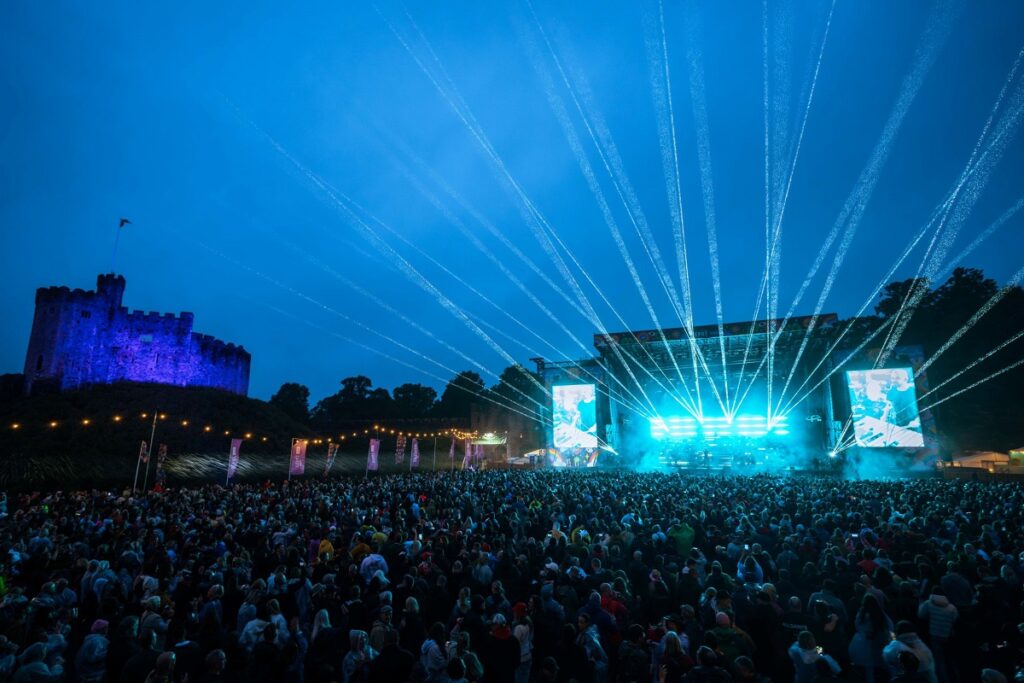
Donington Park is gearing up to host the UK’s biggest festival of rock and metal music.
Whilst this reviewer may be new to the world of Long London, they are not new to the works of Long London’s creator, the brilliant Alan Moore. And so it’s with giddy excitement that I get to jump straight into a world I know little about, with I Hear A New World. Can you in fact jump into this series from any point? Let’s find out…
The world of Long London exists due to The Great When – an alternative, somewhat magical version of London, also the title of Moore’s 2024 novel which preceded I Hear A New World. The brilliantly-named Dennis Knuckleyard has been desperately trying to outrun his past run-ins with this magical portal, even passing off its key to another poor soul. But when the new owner unleashes its power again and furthermore puts Knuckleyard’s first true love, Grace, in danger, he realises he hasn’t in fact escaped The Great When… and may never.
It’s classic Alan Moore. His brilliance lies in his obsessive worldbuilding: he seamlessly blends historical reality with occult philosophy, creating multi-layered universes where the heroes are everyday, flawed human beings just like us. At first, it was a challenge to immerse myself in the author’s dazzling alt-London, and yes – one should, ideally, start with The Great When. All the same, it’s entirely possible to dip in via I Hear A New World, and once in you can’t help but become consumed by the world in question. You can also bask in the knowledge that there’s at least one more book to come starring these wonderful characters.

Help us create an environment in which people fifty and over can fulfill their aims and objectives in life. Fight age discrimination and help preserve and promote the independence, dignity and positive image of people fifty and over and work to ensure that they have appropriate and adequate public care provision.
All Right Reserved. Designed and Developed by Martyn Jones.