
Midge Ure and Jim Kerr support plans to house the museum at Glasgow’s troubled Centre for Contemporary Arts.
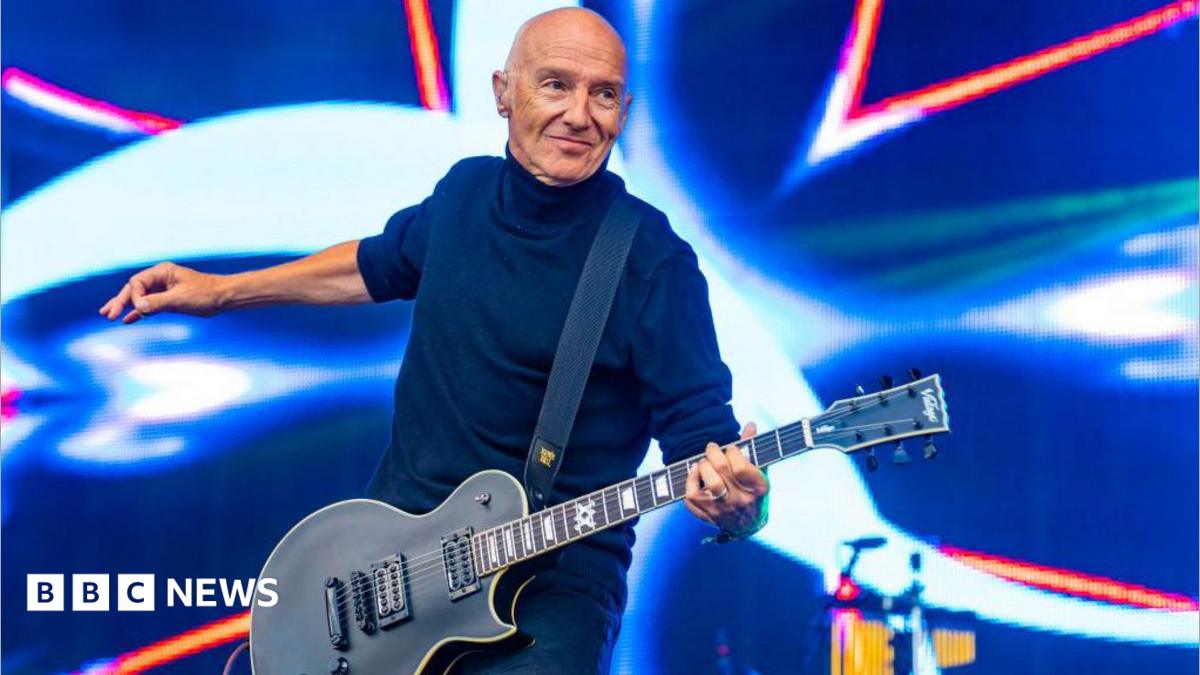
Midge Ure and Jim Kerr support plans to house the museum at Glasgow’s troubled Centre for Contemporary Arts.

For as long as I can remember I’ve battled with my weight.
At my heaviest two years ago, I was 207lbs – at 5ft 4in, my body mass index (BMI) was 36, meaning I was obese. And I knew it was damaging my health.
Tests showed I was prediabetic, edging toward type 2, and I hated looking in the mirror.
I had mastered the art of standing behind people in photographs, hiding in oversized smocks and baggy jeans.
Every Monday I’d say: ‘This week it all changes,’ vowing to start another diet. But, like clockwork, every Friday I’d be opening the Prosecco, good intentions forgotten.
As a 45-year-old mom, my experience is far from unique. Between the sleepless nights, juggling a full-time career as a freelance journalist, approaching perimenopause and keeping up with a toddler, taking care of myself always came last.
I’d long been a yo-yo dieter but the extra weight was even harder to shift after turning 40.
Every time I convinced myself to do something about my weight, I focused on a new diet trend.
I’ve tried everything, including the Atkins diet, Slimming World and Rosemary Conley’s Hip and Thigh Diet. I’d lose a few pounds but always gained them again fairly quickly.
When I went on Mounjaro weight-loss shots last year, I lost 33lbs in six months, but stopped after developing inflammation in my gallbladder – a side effect of rapid weight loss.
The jabs helped me reach a weight I hadn’t seen in years. But instead of feeling healthier, I felt exhausted. I had no energy, struggled to exercise and relied on vitamin B12 injections just to function.
And then, inevitably, I regained more than 14lbs – almost half of the weight I’d lost.
Lynn Carratt, 45, lost 12lbs in six weeks on The 30g Plan. She says: I’ve found a way of eating that fits around real life, fuels my workouts and doesn’t leave me feeling deprived’

At her heaviest, Lynn was 207lbs – and, at 5ft 4in, her body mass index (BMI) was 36, meaning she was obese. And she knew it was damaging her health
The idea is that you stay fuller for longer while also improving gut and digestive health and boosting your immune system. It sounded ideal.
It was a wake-up call. I promised myself something had to change. I needed to lose weight differently with a lifestyle I could live with.
More than anything, I wanted my energy back so I could run around after my daughter Mia, four, without feeling permanently exhausted.
Then earlier this year a friend mentioned nutritionist Emma Bardwell and her 30g Plan.
Hi, I’m Emma Bardwell, a nutritionist with more than 15 years’ experience helping people improve their health and lose weight.

I’ve been there. I was overweight, unhappy with my skin and stuck in a rut. Then I changed the way I eat. You can now do the same with my tried-and-tested healthy eating plan. And for DailyMail+ subscribers, it’s completely free.
Click here to sign up and start your journey
Her evidence-based philosophy is surprisingly simple: 30g of protein at every meal, 30g of fiber a day and 30 different varieties of plants a week.
The only problem? I don’t enjoy cooking. So would it work for me?
Week One: Breaking the snack habit
Starting weight: 199lbs (90.4kg)
Preparation, I quickly learn, is key. Picking out recipes from Emma’s The 30g Plan Cookbook, I add ingredients to my online shop and note, with horror, that the cost has rocketed by nearly double.
Suddenly I’m buying ingredients such as flaxseeds and edamame beans and, much to my husband’s horror, $7 vanilla bean paste. But I’m committed now.
Usually my breakfast consists of two coffees and maybe, at a push, a protein bar. But instead I’m prepping pots of Greek yogurt and ingredients such as chocolate, pistachio nuts, banana and chia seeds.
Surprisingly, it takes only 20 minutes to prepare several breakfasts at once, and they taste delicious. Lunches become just as straightforward. Butter beans and feta on sourdough with cottage cheese, peas and edamame quickly becomes a favorite because it requires very little effort.
But the biggest surprise is that I am genuinely not hungry. Normally by 3pm, I’m rummaging through the cupboards but now I am not thinking about food at all. For someone who’s spent years battling cravings, that feels almost miraculous.
Week Two: Finding meals I actually enjoyed
Weight: 197lbs (89.3kg)
Stepping on the scales I’m absolutely thrilled to see I’m 2lbs down despite not at all feeling like I’m dieting. The cooking is a hassle but I decide on one rule – if a recipe takes more than 25 minutes, I’m not making it. Life is busy enough.

Emma Bardwell’s 30g Plan is built upon four simple – but effective – pillars

The 30g Plan was developed by nutritionist Emma Bardwell, pictured above, after she found her health began to suffer in midlife
I also work out how to throw meals together myself that fit the plan.
First, I get my head around what 30g of protein actually looks like. That’s roughly 200g (about 1 cup) of Greek yogurt, a chicken breast, a salmon fillet or 200g (7oz) of tofu.
It doesn’t have to come from one food either – cottage cheese, eggs, lentils and nuts can all be combined to reach the 30g target.
Then every meal needs a source of fiber to help me reach the 30g-a-day target, such as a bowl of porridge (5g), a slice of whole-wheat bread (3g), half a can of beans or lentils (8g), a cup of raspberries (8g), a tablespoon of chia seeds (5g) or a few almonds (4g).
Combined with a range of vegetables to hit the 30-plants-a-week goal, meals feel huge and filling.
I start working with a trainer at AdMac Fitness who encourages me to increase my daily step count and introduces weekly weigh-ins to keep me accountable.
Seeing numbers drop is satisfying but the energy boost is better. After months of forcing myself through the day, I finally want to exercise again.
Week Three: More energy and focus
Weight: 195lbs (88.4kg)
Something has shifted and I’m no longer constantly thinking about my next snack.
Instead, I’m focusing on what I can add to hit my targets – a scoop of cottage cheese, more chia seeds or a dollop of Greek yogurt.
Planning what to eat, rather than worrying what I can’t have, is a much healthier mindset. I’m also more focused and my concentration has improved.
By mid-afternoon I’d normally need a nap, but that isn’t happening. And overall I feel like myself again. My husband James comments I seem particularly cheerful, and I have to agree.
I’m looking forward to reformer Pilates classes and have restarted the Couch To 5k running program, which I abandoned during Covid when I became pregnant. I’m not gliding gracefully around the park but I’m out there, which feels like progress.
In the evenings I used to be really fatigued, but now I’m putting on a load of laundry, cooking dinner and staying on the go until 9pm.
I also notice something else surprising: my weekly food bill has started to come down.
Stocking up on store cupboard essentials is expensive, but they last for ages.
And because I’m not constantly buying convenient meals, grabbing lunch to go or topping up on snacks every few days, I’m spending less overall.

Lynn’s breakfasts included pots of Greek yogurt and ingredients such as chocolate, pistachio nuts, banana and chia seeds – which take only takes minutes to prepare

Lunches were just as straightforward. Butter beans and feta on sourdough with cottage cheese, peas and edamame became Lynn’s favorite, because it requires very little effort
Week Four: Better digestion
Weight: 193 lbs (87.6kg)
Twice a week I spend 20 minutes preparing breakfasts and lunches, and Emma’s dinner recipes mean there are usually leftovers too.
It saves both time and money, but more importantly it stops me reaching for convenient food simply because I’m busy.
I still snack, but it’s more mindful. Instead of demolishing half a packet of sweets I grab grapes, a banana or some Greek yogurt, which is a huge achievement.
And I’ve started looking at vegetables differently. Instead of treating them as an optional side, I make them the foundation of almost every meal.
Tomatoes and spinach with an omelet at breakfast; peppers, cucumber and edamame at lunch; roasted broccoli or zucchini with dinner. They count towards my 30-plants-a-week, add fiber and bulk out meals. I’m also less bloated and my digestion has improved – everything has become very regular.
I also start noticing I’m physically stronger during workouts.
The real test comes when I go to watch Take That perform and climb what feels like a million stairs to reach my seat. Normally I’d be puffing halfway up. Instead, I make it to the top thinking, ‘Actually, that wasn’t too bad.’ Little victories like that mean far more than another pound disappearing.
Week Five: Lighter and happier
Weight: 191 lbs (86.8kg)
The weight is coming off steadily and my dresses feel looser.
The slower approach feels healthier than the rapid weight loss I had on Mounjaro.
My mood is improving and I’m less snappy as I’m sleeping better too. I always struggled to drop off at night, sometimes tossing and turning for hours. But I’m falling asleep more easily, which means mornings feel more positive.
Everything definitely feels like less of a struggle and I’m feeling genuinely relaxed about food.
I’m not panicking about going out for dinner, although I am making good choices. Rather than just going for a salad, I choose something that contains protein and fiber and will fill me up: a chicken dish or risotto that ticks boxes and won’t leave me hungry.
I want this to be real life, not another plan I abandon.
One meal never ruins your progress. I’ve spent years believing I either have to be perfect or I’ve failed completely.
Finally, I realize it’s about what you do most of the time. For the first time in years, I feel like I’m learning habits I can actually stick to.
Week Six: More than just weight loss
Final weight: 187 lbs (85kg)
By the end of six weeks I’ve lost 12lb. But what I’m proudest of is how I feel. I have more energy. I’m sleeping better. Exercise no longer feels like punishment.
Of course, I’d like to lose another 42 lbs ideally. I’ve got a trip to Ibiza booked later this year and would love to feel more confident in a swimsuit. I’m still a size 18 and would like to be a 14.
I want to look in the mirror and smile instead of spotting everything I’d change. More importantly, I want Mia to grow up seeing a mom who’s healthy, active and full of energy.
Will I stay on the plan itself? Probably not strictly. But I feel comfortable knowing I can adapt my own meals using Emma’s basic tips. I’ll stick with yogurt for breakfast, edamame and cottage cheese for lunch, and cook the occasional meal from her book in the evenings.
I can simplify it because I understand what works and how to apply that. Six weeks ago, I thought I was starting another diet. Instead, I realize I have finally changed my relationship with food.
I’ve found a way of eating that fits around real life, keeps me full, fuels my workouts and doesn’t leave me feeling deprived.
After years of chasing quick fixes, that’s something I never thought I’d say. And it feels like the biggest achievement of all.

The 30g Plan Cookbook by Emma Bardwell
Thousands of people have now used Emma Bardwell’s 30g Plan to transform their lives using three straightforward, evidence-based rules: consume 30g of fiber a day, 30g of protein at every meal, and at least 30 different plant varieties every week.
It works because protein and fiber help keep you fuller for longer, reducing the urge to snack, while eating a wide variety of plants supports gut health.
Emma, 54, has told The Mail that she devised the plan to ease her own debilitating menopause symptoms, including brain fog, fatigue and low energy, while also helping her lose nearly 15lb.
Since then, she has refined her approach into an easy-to-follow plan packed with delicious, simple recipes, with no banned foods, no punishing restrictions and no calorie counting.
Now, DailyMail+ subscribers can benefit too by signing up for our exclusive six-week newsletter based on Emma’s approach.
As well as helping you improve your overall health, digestion and energy levels, the plan could also help you lose up to 15lb in six weeks, depending on your starting weight.
Every week you’ll receive Emma’s expert advice, practical tips and filling recipes from The 30g Plan Cookbook, along with guidance to help you hit your protein, fiber and plant goals without giving up the foods you love.
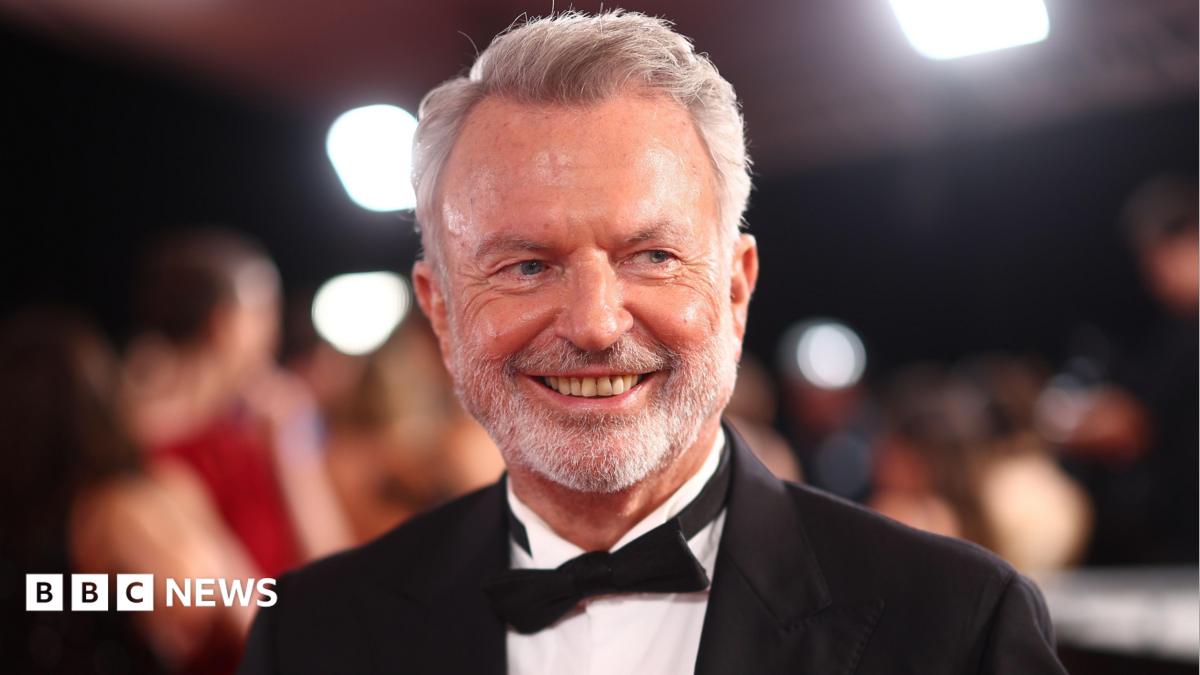
Highlights from this pre-Triceratops era of his filmography include 1981’s cult horror Possession and a role opposite Meryl Streep in 1988’s A Cry in the Dark, which earned him the Australian Film Institute award for best lead actor.
One of his main breakthrough roles was filmed in the UK in the early 1980s, when he appeared as Damien Thorn, son of the devil, in the supernatural horror Omen III: The Final Conflict.
He also appeared in Jane Campion’s 1993 period drama The Piano, which received the top prize at the Cannes Film Festival and went on to win three Oscars.
But it was the release of Jurassic Park in the same year that propelled him to an elite level of worldwide fame.
Steven Spielberg’s epic was like nothing audiences had seen before. For the technology available at the time, the dinosaurs looked incredibly realistic and left viewers transfixed.
Jurassic Park went on to gross more than $970m (£720m), becoming the highest grossing film of all time – until it was dethroned by Titanic in 1997.
Speaking to the BBC at the 1993 premiere of Jurassic Park, which co-starred Richard Attenborough and Laura Dern, Neill said the way the film had been received was a “big surprise”.
His character is naturally fascinated by the dinosaur park but soon realises the reptiles are breeding, after discovering broken dinosaur eggshells and baby footprints in the jungle. The consequences are deadly.
Whether he was playing steely but likeable heroes or a chillingly menacing villains, Neill was one of the most versatile stars in the film industry and always commanded attention on screen.
His other Hollywood roles included The Hunt For Red October as Sir Sean Connery’s second in command, and Dead Calm as Nicole Kidman’s husband.
He also appeared in Perfect Strangers, Bicentennial Man, and more recently in director Taika Waititi’s 2016 breakout hit Hunt for the Wilderpeople.
The collaboration with Waititi led to Neill’s introduction to the Marvel Cinematic Universe, and the director gave him a small part in 2017’s Thor: Ragnarok and Thor: Love and Thunder in 2022.
He also appeared alongside Susan Sarandon and Kate Winslet in Blackbird, which sparked conversation about the issue of assisted dying.
Neill returned to his roots when he was cast as a Belfast police chief in the BBC’s Peaky Blinders in 2013.
However, growing up in Northern Ireland sadly didn’t help his accent, which was affectionately mocked by some viewers.
Neill explained that his Northern Ireland accent had been “well beaten out” of him by classmates in New Zealand, and that he needed help from friends and fellow actors James Nesbitt and Liam Neeson to re-learn it for the role.
“For all those people in Northern Ireland, I say blame it on Jimmy and blame it on Liam, it’s their fault,” he joked.

The slip happened on Sunday afternoon, July 12, on the stretch of beach beneath the cliff path linking the pier and the Barrage. Eyewitnesses posting on social media said the cliff gave way at around 4.30pm, sending a cloud of dust and rubble onto the rocks below while the area was busy with people enjoying the hot weather.
Some described hearing stones “constantly” trickling down from the cliff face in the moments before the main fall, while others said they felt “lucky” no one had been hurt.
A spokesperson for the Vale of Glamorgan Council said the authority was aware of a “landslip on the coastal section between Penarth Pier and the Cardiff Bay Barrage”.
They said this stretch of coastline had a “well-documented history of cliff instability, landslides and rockfalls, particularly following prolonged weather events and coastal erosion”.
Council teams were on Monday assessing the extent of the collapse and would “take any necessary action to ensure public safety”, the spokesperson added.
The public has been strongly advised to stay away from the affected area and, as a precaution, keep clear of all cliff faces and the areas directly beneath them because landslides and rockfalls “can occur without warning”.
Residents and visitors have been urged to follow all warning signs, barriers and safety notices when using coastal paths and beaches around Penarth.
The council said it would continue to monitor the cliffs and share further updates as they become available.
Several local people commenting online said they were not surprised by the latest fall, describing the cliffs as “always unsafe” and warning others never to sit directly underneath them.
Others pointed to recent rockfalls at nearby Jackson’s Bay and Penarth Marina and called for extra signage or engineering work to protect beachgoers along the Vale coastline.
The council has reminded anyone heading to the seaside to check tide times, keep a safe distance from cliff bases and edges, and to call emergency services if they witness a significant rockfall or see someone in immediate danger.

Dr Amir Khan shared something you should aim to do for 30 minutes a day (Image: Gareth Cattermole, Getty Images)
People are more than aware that daily exercise is a key part of any routine, with the NHS recommending that adults aim for at least 150 minutes of exercise each week. However, Dr Amir Khan has revealed there’s another habit you should incorporate into your daily routine to give your brain a significant boost – and it’s lots of fun!
The medical expert shared his “love of reading,” noting that reading a good book not only provides entertainment but also offers a wealth of health benefits.
Currently, he’s reading Yesteryear by Caro Claire Burke, one of the most talked-about books of the summer so far, and he revealed he’s thoroughly enjoying it. After briefly outlining the plot, he shared: “Anyway, I just want to tell you about my love of reading, and why I love reading so much”.
So why should you follow Dr Amir’s example and pick up a good book this summer? Here’s everything you need to know…
It’s not just activities like puzzles that can boost your brain; reading can also have a positive impact.
Dr Amir said: “It’s really good for your brain from a scientific point of view, because you’re exercising different parts of your brain, so it’s like a mental brain workout”.
He explained: “It activates areas involved in memory, attention, language and imagination, helping to build what’s known as cognitive reserve, which may help protect against cognitive decline as we age.”
Dr Amir said that it’s “good for managing stress levels because you get lost in a book”. He described this feeling as “really nice”.
What’s more, the medical professional pointed out it can improve “long-term health” too.
The doctor revealed that reading has been proven to boost empathy because “you see the world through other people’s eyes when you read a book and you get lost in a character”.
Among his “favourite” reasons to read is a major study that “found that people who read books for more than 31⁄2 hours a week had around a 20% lower risk of death during the study period compared with non-readers”.
That amounts to just 30 minutes a day to make a meaningful difference to your life – a complete no-brainer.
Dr Amir noted: “It doesn’t prove reading makes you live longer, but it’s another reminder that looking after your mind matters just as much as looking after your body.”
Dr Amir aims to finish a book every fortnight, revealing he reads mostly “in bed mainly”. He concluded his video with the words: “So if you ever find me with my nose in a book… this is my kind of self-care”.
In the comments section, one follower suggested a “Dr Amir book club” should be launched without delay.
Others chimed in with their own reading habits, commenting: “I love it too! Especially at this time of year, sitting in the garden listening to birds and bees while delving into a good book!
“So relaxing! I also love sitting out in the evenings when it’s so hot and reading until bedtime! I devour books more in the summer, but I do read all year round.”
Another wrote: “Avid reader here. Yesteryear was my favourite book this year so far. People need to know how good reading is for your health and wellbeing, so thanks for sharing”.

When Maci Mugele uploaded a short clip of her baby boy to TikTok last summer, viewers were astonished.
At just four months old, little Gunner weighed more than 22lbs, measured two-and-a-half feet and was already wearing clothes designed for toddlers.
While some of the comments gushed over his ‘chunky cheeks’ and ‘cute features’, others accused his mother of ‘child abuse’, claiming she must be overfeeding him.
Maci, from Chandler, Oklahoma in the US, insisted she was simply feeding her son when he was hungry, adding that doctors had repeatedly reassured her he was perfectly healthy.
But while the debate around babies such as Gunner regularly go viral on social media, experts say they are part of a far more concerning trend.
Women in the UK and around the world are increasingly giving birth to so-called ‘giant babies’ – and rising birth weights may not only reflect worsening maternal health but could also have lasting consequences for the children themselves.
Researchers at the Yale School of Public Health have reported that people with a higher birth weight appeared to face an increased risk of developing bowel cancer before the age of 50. The findings add to mounting evidence linking unusually high birth weights with a greater likelihood of obesity, type 2 diabetes and cardiovascular disease later in life.
Experts believe it is not a baby’s size itself that drives these risks. Rather, birth weight is thought to be a marker of the environment the baby was exposed to in the womb, which may programme long-term changes in how the body’s cells and metabolism function.
When Maci Mugele uploaded a short clip of her baby boy last summer, viewers were astonished. At just four months old, Gunner weighed more than 22lbs
Dr Kathryn Dalrymple, lecturer in nutritional sciences at King’s College London, says: ‘Birth weight serves as a proxy for the intra-uterine environment. Everything that happens during pregnancy and in the months leading up to conception is going to have an impact on the development of that foetus.’
High birth weight, known as foetal macrosomia, refers to newborns weighing 8lbs 13oz (4kg) or more. Around one in ten babies in the UK now falls into this category, and studies suggest babies have become heavier over the past 30 years. This has largely been due to maternal obesity and gestational diabetes – a condition in which the body’s blood sugar levels become too high during pregnancy, affecting around one in 20 women in the UK.
It develops when the body cannot produce enough insulin to meet the demands of pregnancy, causing excess glucose to cross the placenta. In response, the foetus produces more insulin of its own, which acts as a growth hormone, encouraging rapid growth and fat storage in the womb.
The condition is more common in women who are overweight.
Women who are obese before pregnancy are around three to five times more likely to develop it than women of a healthy weight.
Dr Dalrymple explains: ‘If gestational diabetes is poorly managed, too much glucose crosses the placenta, affecting the baby’s development. This can contribute to macrosomia and expose the baby to higher levels of growth hormones, which may increase their risk of obesity later in life.’
And babies don’t have to be born unusually large for this accelerated growth to become apparent. Some start life at an entirely average weight, before rapidly shooting up the growth charts.

When Axyl was born last year he weighed 7lbs 4oz, but in just six weeks he had almost doubled in size, weighing 13lbs 6oz

Now eight months old, Axyl has already outgrown toddler clothes and wears outfits designed for children as old as five
That was the case for Jessica High, 34, from North Carolina. When her son Axyl was born last year he weighed 7lb 4oz, but in just six weeks he had almost doubled in size, weighing 13lb 6oz.
By six months he tipped the scales at an astonishing 33lb 7oz.
Now eight months old, Axyl has already outgrown toddler clothes and wears outfits designed for children as old as five.
Like Gunner’s mother, Jessica has also had to contend with online speculation that she must be overfeeding her son. But she says Axyl is closely monitored by a paediatrician, who has reassured the family that he is healthy.
Dr Dalrymple explains that macrosomia is largely preventable. She says: ‘The most effective ways to reduce the risk of macrosomia are maintaining a healthy weight before pregnancy and managing gestational diabetes if it develops.
‘Being active before and during pregnancy is really important, even if it’s simply going for walks.
‘And if you are diagnosed with gestational diabetes, it’s vital to follow your clinician’s advice so it is managed appropriately.’
Experts stress that being born larger than average does not mean a child will go on to develop health problems, and many babies with macrosomia grow up healthy.

Firefighters are tackling a blaze of unprecedented scale sweeping through Fontainebleau forest south-east of Paris.
The fire began late on Sunday afternoon in the one-time royal hunting preserve about 40 miles (60km) from the capital, which today is dotted with villages. The blaze, which is unusual in its proximity to Paris, raced across about 800 hectares (2,000 acres) of forest and was still spreading early on Monday, officials said.
On Sunday, it caused the partial closure of the A6 highway, France’s main north-south artery, and disrupted key train lines. The Paris region remains under the highest heatwave alert.
The mayor of Fontainebleau, Julien Gondard, said he was shocked and angered. “This exceptional area is consumed by flames, we’ve never seen anything like this,” he told local TV ICI Paris Île-de-France. “The forest is fragile and it’s in a critical condition.”
Fire officials said it could take several days to several weeks to fully contain the fire. They described it as “very virulent” and of “exceptional scale”.
The interior minister, Laurent Nuñez, visiting an operations room in Fontainebleau on Monday morning, said: “The aim is to contain the fire.”
Nuñez said about 900 homes had been evacuated but that no home had yet been burned and no one had been injured. He said an investigation was under way to determine the cause of the fire. “The fire began at several points at the end of yesterday afternoon – around 10 points, which would suggest it could have been voluntary in origin. I won’t say more because an investigation is ongoing.”
Nuñez said that in total forest fires had burned 32,000 hectares of land in France this year, adding: “That is already more than the 2025 season and it’s only 13 July.”
He added that since the start of the summer, 44 people had been arrested across the country on suspicion of being responsible for the outbreak of fires.
High-speed rail was affected after the fire broke out on Sunday because key lines pass near the forest. The French rail company SNCF said there were delays of up to eight hours for trains arriving at or leaving from Paris’s Gare de Lyon. Rail services were returning to normal on Monday morning.
Half of the 700 residents of the village of Le Vaudoué were evacuated and firefighters were operating in several other towns in the area, the local Seine-et-Marne fire service said.
Without the use of firefighting planes, other villages would already have been evacuated, said Olivier Compta, who was overseeing the firefighting operation.
About 400 firefighters have been working to contain the fire, which erupted two days before the 14 July Bastille Day national holiday.
Eric Brocardi, a spokesperson for France’s national federation of firefighters, said it was the first time firefighting planes had been sent up from the normally drier and hotter south of the country to extinguish fires in the Paris region. Two firefighting helicopters and an observation aircraft were also helping to tackle the blaze, he said. “The aim is to save lives and property.”
Earlier, firefighters dealt with a fire that had blocked a highway running east from Paris and disrupted a high-speed train line to the south of France.
The Paris region, along with large parts of the rest of France, has had a succession of heatwaves since May that have also broken temperature records in several other countries across Europe and have caused thousands of excess deaths, according to estimates in Belgium, Britain, France and Spain.
The June heatwaves would have been “virtually impossible” without climate change, the World Weather Attribution group of scientists has said.
Human-caused climate breakdown is supercharging extreme weather across the world, driving more frequent and more deadly disasters such as heatwaves and wildfires.
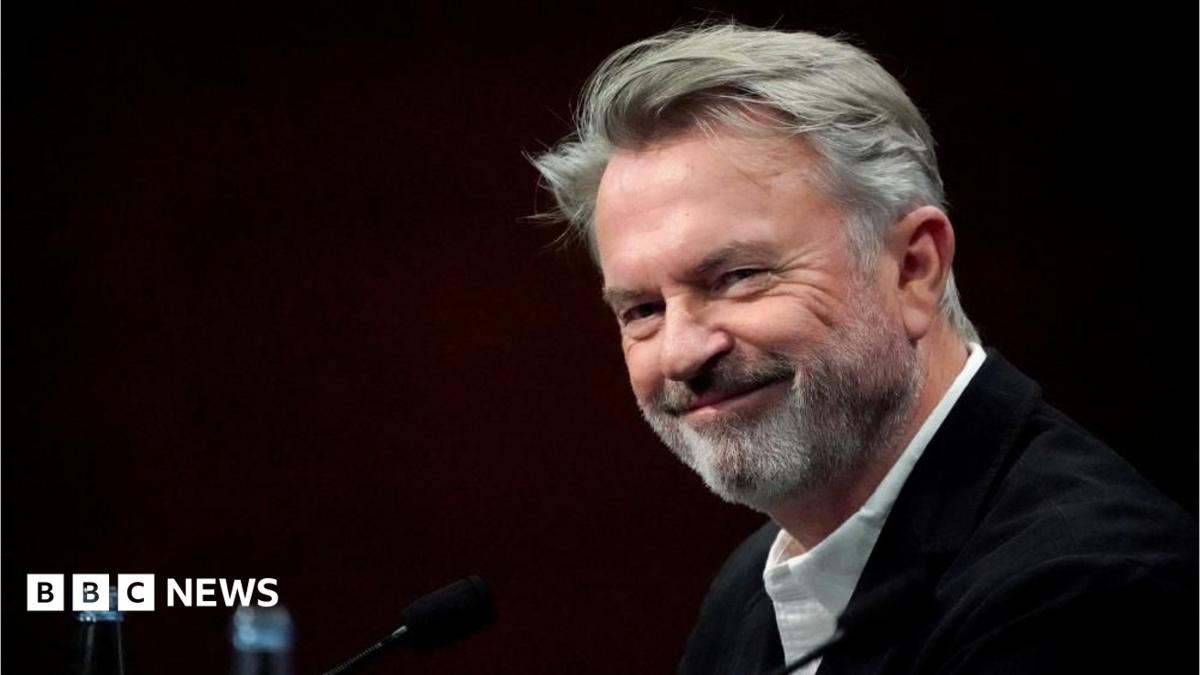
Born Nigel John Dermot Neill in Omagh, Northern Ireland, in 1947, he moved to Christchurch, New Zealand, with his family as a child.
He adopted the name Sam at the age of 12 because there were several Nigels at his school.
He began acting while studying at the University of Canterbury and made his film debut in 1971’s The City of No. After a number of television and film roles in New Zealand, he gained wider recognition in the 1977 film Sleeping Dogs, one of the country’s first films to achieve international distribution.
He later moved to Australia, where he starred in My Brilliant Career (1979), a film that helped establish him as a leading actor.
Sir Sam achieved global fame in 1993 through his performances in Jane Campion’s Oscar-winning The Piano and as palaeontologist Dr Alan Grant in Steven Spielberg’s Jurassic Park. He reprised the role in Jurassic Park III (2001) and Jurassic World Dominion (2022), and voiced the character in three video games based on the series.
He also found success on television, playing the sadistic, corrupt police officer Major Chester Campbell in the first two series of the BBC’s Peaky Blinders.
His last film appearance came in The Fox (2025) and his last TV appearance came in Netflix series Untamed (2025). He is expected to make posthumous appearances in Godzilla x Kong: Supernova and The Last Resort in 2027.
Over a career spanning more than five decades, he amassed more than 150 screen credits.
Sir Sam was appointed an Officer of the Order of the British Empire (OBE) in 1991 for services to acting. He was later made a Distinguished Companion of the New Zealand Order of Merit in 2007 and accepted a knighthood in 2022 after changes to New Zealand’s honours system allowed recipients to adopt titular honours.
In his 2023 memoir, Did I Ever Tell You This?, he revealed details of his cancer diagnosis and treatment.
“I’m not afraid of dying,” he told the BBC at the time. “What I don’t want to do is to stop living, because I really enjoy living.”
He added: “I’ve regarded it as an adventure, quite a dark adventure, but an adventure nevertheless.”
Sir Sam Neill is survived by his four children and eight grandchildren.

The FOI request made by the Local Democracy Reporting Service found that 112 buildings that the council is the duty holder for or whose maintenance it is responsible for have asbestos-containing materials (ACMs) in them.
Data revealed in the request showed that 40 educational establishments (schools, colleges, nurseries) contain ACMs as well as four health/institutional buildings (hospitals, clinics, residential care homes), two civic/administrative buildings (council offices, towns halls, depots, fire/police stations), 20 leisure/cultural buildings (leisure centres, libraries, community centres, museums) and 46 other public buildings.
It also revealed that a former Vale of Glamorgan County Council employee had pursued a claim against the council for asbestos exposure from one of the above buildings.
However, no money was paid out in a settlement of this claim.
Exposure to asbestos can cause mesothelioma (cancer of the linings of the lungs and abdomen), asbestos-related lung cancer and asbestosis (irreversible scarring of lung tissue).
However, it only poses a health risk when it is deteriorating or damaged during renovations or removal. If left intact, it poses almost no risk to health.
A spokesperson for the Vale of Glamorgan Council said: “As a council, we hold records identifying asbestos-containing materials (ACMs) in 112 properties.
“This reflects our ongoing legal duty to survey, record and manage asbestos in buildings, many of which were constructed before asbestos was banned in 1999.
“The presence of asbestos does not mean a building is unsafe. In line with Health and Safety Executive guidance, asbestos that is in good condition and unlikely to be disturbed can be safely managed in place.
“The council has a robust asbestos management programme, including maintaining records, carrying out annual inspections, monitoring the condition of known ACMs, providing asbestos information before maintenance works, and arranging repairs or removal where necessary.
“The fact that asbestos has been identified in 112 properties does not mean those buildings are unsafe. It simply reflects the work of the council in identifying, monitoring and managing asbestos in line with health and safety requirements.”

Tributes have poured in for the young star of Antiques Roadshow, Theo Burrell, who died on Wednesday aged just 38.
The auctioneer, who has appeared on the BBC programme since 2018, was diagnosed with the most serious type of brain tumour in 2022, a glioblastoma.
The mother-of-one outlived the bleak prognosis associated with the cancer, which is typically 12-18 months, thanks to surgery, radiotherapy and chemotherapy – and she shared part of her journey with her Instagram followers.
But what is less known is one of the first symptoms that signalled something was wrong back in 2021, which most would likely dismiss.
During Christmas that year – then aged 35 – she experienced car sickness during a long journey, Ms Burrell told Brain Tumour Research last year.
‘It was strange because I never got car sick,’ she said. ‘I was also having migraines which made me really sick, and I was having problems with my vision. My son, Jonah, was one at the time and had recently started nursery so I thought I may have picked up a stomach bug.’
It wasn’t until the summer of 2022 that the antiques specialist was offered a CT scan at Edinburgh Royal Infirmary after a visit to A&E due to severe migraines.
Doctors discovered a lethal glioblastoma and advised that an operation would be needed immediately to remove the cancer.
Theo Burrell has died at 38 from a glioblastoma, the most common form of brain cancer
Surgeons removed 90 per cent of the tumour and Ms Burrell underwent further treatment to destroy the cancer cells.
However the tumours are notoriously deadly and only five to 10 per cent of patients will survive more than five years.
But experts say that spotting the signs early can give you the best chances of successful treatment – and not all of them are complaints you’d typically associate with a brain tumour.
You’re suddenly seeing double
In cases of glioblastoma, double vision is a common symptom.
It is typically caused by increased pressure on the brain caused by swelling or the tumour itself pressing on nerves controlling eye movement.
You need the toilet more often
Figures released by Glioblastoma Research found that nearly half – 40 per cent – of patients experience urinary incontinence.
This can be because tumours – especially ones near the spinal cord – can affect the nerves that control the bladder and pelvic muscles.
Sudden incontinence can be an early warning sign of glioblastoma and always warrants further investigation.
Suddenly you’re dropping things
Many people with glioblastoma experience weakness in their arms and legs, which can present as a sudden clumsiness.
This is because the tumour damages the motor cortex, the part of the brain that controls movement. It can manifest as weakness on one side of the body or a loss of overall coordination.
It was the first symptom experienced by HGV driver Phil Edmondson, who found out he had less than 18 months to live after he began losing feeling in his right hand.
After initially dismissing his early symptoms as ‘clumsiness’, Mr Edmondson, 39, found out he was dying from brain cancer after his GP referred him for a CT scan.
His wife Natalie told the Daily Mail: ‘It started with him dropping things more than usual. Then he kept getting pins and needles. We thought it might just be from driving all day.’
With his mobility affected, he is no longer able to work or drive, and even simple daily tasks have become challenging.
‘You don’t realise how often you use your dominant hand until you can’t.
‘Even making a sandwich or filling our little one’s milk bottle can be frustrating because it’s so much harder for him now.’
You feel sick and dizzy all the time
Brain tumours affect intracranial pressure as they grow in size, making the patient feel sick.
They can also affect hormone levels which can lead to unrelenting nausea.

It is important to know the tell-tale signs of a brain tumour to help catch in its early stages
Pamela Cook from Lincoln died aged 65 just a few months after being diagnosed with a glioblastoma. Doctors initially believed that she was suffering from depression and placed her on medication.
Her daughter, Clair Bowkett, 42, said her mother began feeling ‘dizzy and tired’ after attending her wedding in March 2023.
But when she went to the doctors, Ms Bowkett said they ‘told her it was depression and gave her antidepressants’.
‘Even when she went back because she was getting worse, they told her to keep taking the tablets.
Exhausted despite getting plenty of sleep
A grinding sense of exhaustion is one of the most commonly experienced symptoms of glioblastoma.
The Brain Tumour Charity say that it is caused by the body trying its hardest to naturally defend against the cancerous mass.
‘The development, growth and progression of a tumour and the body’s response to it, involves the destruction of tumour cells and the repairing of tissue, which uses a lot of energy,’ their experts explain.
‘Your body is working harder, diverting energy normally used on everyday living to fight the tumour.’
Jamie Brunt was struggling with extreme tiredness, often finding it hard to keep his eyes open – his GP suspected low testosterone, but it was actually a brain tumour.
He said: ‘I just couldn’t stay awake. I would sleep all night, wake up, have a coffee and a cigarette, and then I would be asleep again within about 20 minutes.
‘It felt like I had weights clipped to my eyelids. I had never experienced anything like it before.
‘I spoke to my GP during COVID and thought it might be low testosterone.
‘They did blood tests and told me everything was fine. A dietitian rang me and said it was probably my diet. After that, there was no follow-up and it was just forgotten about.’
After his tiredness in summer 2020 was dismissed, two years later Mr Brunt suffered a seizure while driving and woke up in a wrecked van, covered in blood.
Hearing things – and ringing ears
One of the rarest symptoms of glioblastoma is tinnitus, where you hear a constant buzzing or ringing in the ears.
It typically happens if the tumour is pressing against the auditory nerve – vestibulocochlear – or is growing in the part of the brain that processes sound.
Auditory hallucinations, as they are known, can be caused by brain tumours that are both cancerous and benign.
These hallucinations can happen if the tumour is located in the temporal lobe, the part of the brain which processes sound, understands language and encodes memory.
It can also happen if the tumour is pressed against a nerve which sends signals from the ear to the brain.
A tumour here can also cause difficulty with hearing and speaking, according to Cancer Research.
For years, 73-year-old Glenn Lilley lived with bouts of vertigo, ringing in her ears and worsening hearing, and was told time and again there was nothing to worry about.
Then, in the summer of 2021, she collapsed at home and was given a diagnosis that turned her world upside down: a brain tumour so aggressive that without surgery she might have had only six months left.
Can’t tell if a cup of tea is hot or cold
Depending on its size and location in the brain, some people may notice that their sense of touch is negatively affected by the tumour.
Some may lose the capacity to feel different temperatures, sharp edges, light touches or pressure and weight being placed upon them.
You’re much more irritable
It is not uncommon for people with glioblastoma to develop psychological issues and mood disorders – and not only because they are struggling to accept their diagnosis.
The tumours themselves can trigger abnormal behaviours, from losing inhibitions to becoming irritable and withdrawn.
Unexplained pins and needles
If the tumour is located in the sensory cortex or parietal lobe of the brain it can cause numbness and tingling elsewhere in the body.
The most commonly reported areas affected are the limbs, and this can be an early symptom or a warning sign that the condition is getting worse.
In some cases, the tingling is actually caused by miniature seizures in the brain.
When Lydia Carfrae-Brohaska from Wakefield, West Yorkshire, first began experiencing tingling, she thought nothing of it, but the symptoms rapidly spread to her legs and eventually she struggled to use the left side of her body.
Tragically, in August 2018, doctors confirmed the worst – cancer – and gave Lydia just 12-18 months to live.
