
TWO police officers were assaulted by Katherine Quick, aged 39, outside a Wetherspoons pub in Barry.

TWO police officers were assaulted by Katherine Quick, aged 39, outside a Wetherspoons pub in Barry.

[noscript_1]
Sweeteners found in sugar-free soft drinks could slow the growth of beneficial gut bacteria, a study suggests.
Researchers from the University of Cambridge studied how artificial and low‑calorie sweeteners affect the bacteria living in the gut, and how these effects change when they are eaten together with caffeine, flavourings or medicines.
While marketed as healthier alternatives to sugar, there is growing evidence linking sweeteners in food and drinks to diseases such as type 2 diabetes, obesity and cancer.
Sugar substitutes are not digested in the same way as sugar because they pass through the stomach and interact directly with the bacteria living in a person’s intestines.
The researchers grew each of the 25 gut bacterial species – including beneficial, neutral and potentially harmful bacteria – in the lab.
They then exposed each culture individually to 39 common, commercially used sweeteners, some artificial and others natural, and measured how well the bacteria multiplied.
The research, published in the journal Molecular Systems Biology, found that one sweetener derived from the stevia plant, isosteviol, significantly impaired the growth of certain gut bacteria when combined with the antidepressant duloxetine.
Sweeteners found in sugar-free soft drinks could slow the growth of beneficial gut bacteria
Duloxetine is the seventh most dispensed antidepressant in the UK, with more than five million NHS prescription items issued annually.
When the two were combined, researchers found the sweetener strongly suppressed two gut bacteria that play important roles in maintaining a healthy gut microbiome.
Further analysis showed the combination increased toxicity in certain laboratory-grown cells and interfered with cells involved in the body’s inflammation and immune responses.
‘Sweeteners are often marketed as metabolically neutral, but our study challenges this idea,’ said study lead author Dr Sonja Blasche.
‘We found they can directly affect gut bacteria, particularly when mixed with other compounds such as medication and food additives.’
More research is needed, she said.

Emergency services are currently in attendance at a crash which is blocking the main route between Blaenavon and Abersychan. Cwmavon Road is shut in both directions.
A statement from Gwent Police reads:
“Cwmavon Road is currently closed between Blaenavon and Abersychan. Diversions are in place which may cause congestion. Please avoid the area if possible and find alternative routes for your journey. “

Toxic levels of a cancer-causing heavy metal are lurking in jewellery sold on Amazon and TikTok Shop, a worrying investigation has revealed.
Earrings, rings and charms sold via the online marketplaces contain dangerous amounts of cadmium – a heavy metal that can affect the liver, kidneys and lungs.
It can also cause bone thinning, liver damage, infertility and cancer, experts have warned.
‘It’s one of the most potent metals to cause toxicity. You should minimise any cadmium exposure,’ Professor Christer Hogstrand, a toxicologist at King’s College London warned.
In the UK, the legal limit for this carcinogenic metal is 0.01 per cent in any piece of jewellery.
But according to an investigation by The Sunday Times, one ring sold on Amazon that was advertised as 925 silver contained more than 9,000 times the maximum limit.
It was estimated that the ring comprised over 92 per cent cadmium.
After sending a number of pieces for testing at the Birmingham Assay Office, which assesses the purity of precious metals including gold, silver and platinum, Perform Pearls – a seller on TikTok shop – was banned from the site.
Items sold on Amazon and TikTok shop have been found to contain illegal amounts of a cancer-causing metal which experts have warned is more dangerous than mercury
Charms in one of their bracelets were found to contain almost 3,300 times the legal limit of the toxic metal, putting wearers at risk of serious toxicity.
As a result of the investigation, a recall was issued and the seller was banned from the site for breaching policies.
But according to the experts, earrings cause the most concern as exposure is considered more risky when the toxic metal comes into contact with pierced skin.
‘With jewellery, the greater concern is not that every wearer will develop cadmium toxicity, but that a toxic metal is present,’ Dr Ariel Haus told The Sunday Times.
‘The concern becomes greater if the item is mouthed or swallowed, particularly by a child, or is worn against damaged or pierced skin,’ the dermatologist added.
Uses of the metal cadmium are declining and are now heavily restricted in Europe because of the health risks it poses.
However, the investigation comes amid growing concern over a wave of potentially cancer-causing products entering the UK over the last two years.
In February 2025, Essex Trading Standards intercepted a large batch of earrings that contained well over the legal amount of cadmium.
In October last year, tests on jewellery by the Office for Product Safety and Standards found Dishowme butterfly rings contained high levels of cadmium.
Officials warned that the jewellery posed a ‘serious chemical risk’ to people and must be removed online.
So far, there have been two product safety reports this year where items bought on Amazon were intercepted at the border and destroyed for the same reason.
But the National Association of Jewellers is concerned UK trading standards are not equipped to monitor the issue closely, warning that more toxic products could infiltrate the market.
According to the UKHSA, breathing air with high levels of cadmium can cause shortness of breath, chest pain, a metallic taste in the mouth, cough and flu-like symptoms, which may occur some hours after the exposure.
‘In severe cases, exposure can lead to extensive fluid loss, lung damage, multiple organ failure and death.’
‘Exposure to cadmium for a long period of time may result in damage to the bones and kidneys and may cause cancer,’ the health body warns.
As such, any item that has prolonged contact with the skin – such as tampons, buttons and jewellery – must not contain cadmium above the legal level.
Under the general product safety regulations, it is a criminal offence to supply products known to be unsafe.
However, it is unclear whether TikTok Shop and Amazon fall under this category.
An independent jewellery consultant, Jayne Bond, who bought a ring on Amazon marked 925 silver tested the ring and found that it was made up of over 90 per cent cadmium.
Despite alerting Amazon to the issue on May 12, the ring remained on sale for at least a week, returning similar results in its cadmium content.
In response, Amazon said it is in the process of removing these items after an internal investigation.
‘We take customer safety seriously and we’re reaching out to Ms Bond regarding her experience.
‘Amazon requires all products offered to comply with applicable laws, regulations and Amazon policies,’ it added.

There must nothing better on a sultry summer night than to be packed into a small venue like this one. The air conditioning may be on 11, but Dead Air are sweating buckets and putting in a hard shift.
Taking the well-trodden route along the M4 and over the Welsh border, these Londoners are causing heads to turn. The band are your archetypal rock’n’roll three-piece, with a sound as tough and muscular as Queens Of The Stone Age or Rage Against The Machine. Guitarist Lyle Salvatore is economical but effective, chopping out sweeping chords with abandon – and they say a band is only as good as the drummer, and boy does Richard Greenbury hit his drums, to the point where cymbals are falling off their stands.
Meanwhile, Dead Air lead singer Reuben Moonasar is everything you want from a frontman: his commanding stage presence bolsters a vocal delivery that’s both understated and powerful. He’s modest, too – letting us know just how astonished he is to see so many here for the band’s Newport debut.
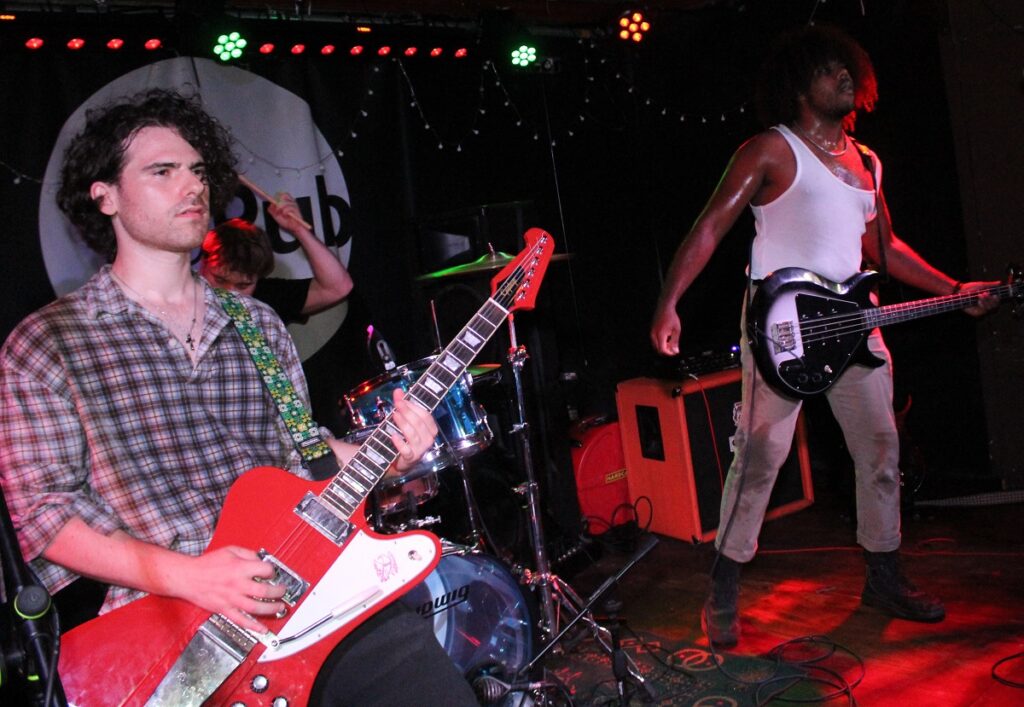
Highlight of the evening, though, comes when Greenbury grabs the mic to announce that he’s getting married in two weeks. Is his choice of wedding song appropriate, we’re asked? Whereupon Dead Air launch into a raucous version of RATM’s Killing In The Name. Let’s hope the bride and in-laws share either or both of his humour and music taste – as for this crowd, unsurprisingly they go mental, a few invading the stage for good measure.
A triumphant night for the band, who depart with a Terminator-esque proclamation, “We’ll be back.” When it rolls round, get your tickets quick. Gigs – and venues – like this are where the real rock’n’roll bread and butter is to be found.
Dead Air, Le Public Space, Newport, Fri 17 July
words and photos PAUL WINDSOR

Balcony upgrade
A property on Anchor Road is set to receive a modernised rear balcony, following a recent planning submission.
The proposed upgrade will slightly increase the structure’s footprint, providing additional outdoor space.
As the property is part of a larger development where communal green areas are already in place, the application states that the new balcony will not affect existing green infrastructure.
To support biodiversity, the plans include the installation of a bird box on the building’s front elevation.
Travel plan for specialist school
A travel plan has been submitted for a new specialist school development at Lower Cosmeston Farm in Lavernock.
The plan aims to promote sustainable travel, reduce unnecessary car use, and ensure safe management of pedestrian and vehicle movements.
It includes annual travel surveys, regular reviews, and direct engagement with the local community on traffic and transport issues for at least five years after occupation.

It has become the ultimate middle-class healthy-eating flex: swapping a mass-produced, plastic-wrapped supermarket loaf for an artisan boule from a posh bakery like Gail’s.
Opt for a wholemeal version – preferably topped with an aesthetic sprinkling of seeds – and you’ve hit the nutrition jackpot (for £5 a pop), we’re told by diet gurus.
The cheap, packaged option on supermarket shelves, on the other hand, is supposedly full of harmful nasties like emulsifiers and flavourings, and is stripped of its nutrients.
TV doctor Chris van Tulleken, author of Ultra-Processed People, has referred to bog-standard loaves as ‘industrially produced edible substances’.
But is a supermarket wholemeal loaf really such a nutritional villain? And is there any benefit to paying four times the price for the freshly baked alternative?
First, it’s important to understand exactly what wholemeal means.
In the UK, ‘wholemeal’ has a strict legal definition. The flour must contain all parts of the grain—the fibre-rich outer bran, the nutrient-packed germ, and the starchy endosperm.
Don’t be fooled by ‘wholegrain’ or ‘multigrain’ options; loaves with that description are not required to be made entirely from wholemeal flour and may contain significant amounts of white flour (meaning they lack fibre and key vitamins).
Trendy bakeries like Gail’s charge £5 for a loaf of crusty bread, but is it worth it?

Modern loaves bear little resemblance to traditional bread and are often packed with ultra-processed ingredients, experts have suggested
All industrially produced bread is made using the Chorleywood process. Developed in 1961, it uses powerful mechanical mixers and Vitamin C to develop dough rapidly, reducing traditional multi-hour fermentation to just a few minutes.
The process made for pillow-soft, sliced bread that supermarkets could sell at incredibly cheap prices.
Nowadays, manufacturers often add additives to slow mould growth and emulsifiers to keep the texture soft and prevent crumbling. These are usually listed as calcium propionate, DATEM and diglycerides of fatty acids on the label.
A freshly baked loaf from a high street bakery, however, doesn’t usually carry an ingredients list – manufacturers are not legally required to provide one.
This means shoppers are generally in the dark about grain type, calorie, fibre, and salt content.
In short, yes. Two medium slices of standard supermarket wholemeal bread will provide roughly the same calories and sugar as white, but around 5.6g of bowel-friendly fibre—the same amount of white bread typically delivers 2.3g.
Health chiefs recommend that UK adults consume 30g of fibre daily, yet the average person in the UK currently manages less than 20g.
Fibre feeds beneficial gut bacteria, helps keep us full, and protects health. A 2019 review published in The Lancet found people eating around 25–29g fibre daily had a 15–30 per cent lower risk of premature death, heart disease, stroke, type 2 diabetes, and bowel cancer than those eating the least fibre.
Wholemeal bread also naturally outclasses white bread when it comes to many essential micronutrients that help release energy and keep the immune system healthy.
It contains nearly three times the magnesium, twice the zinc, and 50 per cent more iron than sliced white.
White bread isn’t entirely devoid of nutrients, though.
Under UK law, all non-wholemeal wheat flour must be fortified with calcium, iron, thiamin, and niacin to restore some of what was stripped away during milling—with folic acid about to join the mandatory list. These additions feature in both a budget white sliced loaf as well as an expensive, artisan one.
Yes but unfortunately, the more expensive, fresh version is likely to be healthier.
Firstly, the additives in supermarket-bought bread are a potential hazard. Some laboratory and animal studies suggest the compounds might disrupt the protective mucus lining of our gut, or alter the microbiome.
Dr Megan Rossi, a research fellow at King’s College London, has just finished working on the world’s first clinical trial investigating a low-emulsifier diet in humans, looking at patients with Crohn’s disease, an inflammatory bowel condition.
‘For the first time, we showed that following a low-emulsifier diet not only improved symptoms but also reduced disease severity,’ says Dr Rossi.
But she adds that the evidence of harm isn’t yet certain for those without bowel conditions.
‘Having a slice or two of bread containing these emulsifiers isn’t something I’d consider concerning in isolation.’
However the health risk lies with the fact roughly half of all ultra-processed foods contain at least one emulsifier – and Britons eat a lot of them.

‘If someone is eating multiple foods containing emulsifiers throughout the day – breads, baked goods, plant milks, desserts, snack bars and other ultra-processed foods – then the cumulative intake may become more relevant,’ Dr Rossi explains.
Opting for a wholemeal sourdough can boost the health properties – and even better if it’s fresh, without potentially harmful additives.
The slow, multi-hour fermentation partially breaks down some wheat proteins, which some people find makes it gentler on the gut.
The acids produced during fermentation also delay stomach emptying, helping steady blood sugar and keeping you fuller for longer.
Furthermore, fermentation neutralises phytic acid—a compound that binds to minerals—which may improve how well your body absorbs the bread’s iron, zinc, and magnesium.
But the posh sourdough loaf only triumphs if it’s made with wholemeal flour. Many sourdough loaves sold in trendy high-street chains like Gail’s are made using white flour and contain far less fibre than a standard, budget supermarket wholemeal loaf.
Rye bread is another excellent option, but bakeries often blend it with white wheat flour to keep the loaf light and fluffy, diluting its high-fibre benefits.
If you want a wholemeal loaf without emulsifiers and preservatives you don’t have to spend a fortune.
Supermarkets have begun quietly offering ‘cleaner-label’ packaged bread. For example, Marks & Spencer’s Super Soft Wholemeal does not contain the preservative calcium propionate or DATEM and costs just 75p.
Other examples of low-additive or additive-free products include Tesco Finest Wholemeal (£1.50), ASDA The Bakery Sliced Wholemeal Tin Loaf (£1.56) and Sainsbury’s Taste the Difference Soft Multiseed Farmhouse Wholemeal (£1.60).
It’s true that bread is often a dieter’s biggest downfall. But this is as a result of what is put on the bread, rather than the type of flour someone chooses.
In other words, there’s no point selecting a pricey wholemeal sourdough if you’re planning to use it to make a daily bacon, egg and cheese sandwich.
Keep your toppings as varied as possible, with a balance of protein, vegetables and a little healthy fat, and you’ll have yourself a gold-standard lunch.

Alpine ski resorts in New South Wales and Victoria saw climate records shattered at the weekend with maximum temperatures up to 12C above average.
Ski areas of Mount Hotham and Falls Creek set July records for their hottest daytime and night-time temperatures and Thredbo also set a new hottest July day, according to the Bureau of Meteorology.
The records come after a challenging start for Australia’s ski season with dry and warm temperatures seeing only sporadic falls of natural snow in many alpine areas, leaving resorts to rely mostly on snow-making technology.
The El Niño now in place in the tropical Pacific and the bureau’s long-range forecast both pointed to generally drier and warmer conditions for alpine regions this winter – a “bad combination” for snow.
Climate scientists have long warned that global heating will create difficult conditions for Australia’s ski resorts.
Angus Hines, a senior forecaster at the bureau, said a slow-moving high pressure system – characterised by clear skies and descending dry air – had been a key to the spiking temperatures.
He said this had also caused a “temperature inversion” where it was cooler closer to sea level than it was at higher altitudes.
“These temperatures were a substantial departure from the norm and even from previous bursts of heat for July,” he said.
“This highlights the likely issues we will have with ski seasons into the future with a warming climate.”
He said warmer than usual temperatures would remain in ski areas until about Wednesday and there was a chance of a snow flurry at the weekend, before temperatures were expected to climb early next week.
At Mount Hotham in Victoria’s alpine country, where the official temperature record goes back 36 years, the hottest July day was 8.7C in 1994.
But that record has been broken three times this month. The mercury peaked at a record 12C on Sunday in a month when the average daily maximum temperature is zero.
At Falls Creek, the highest July temperature had been 9.8C recorded in 1992. But this was eclipsed with 11.5C recorded on Saturday and then 13C reached on Sunday. The average daily maximum for July is 1.2C.
Also setting new daily temperature records in alpine regions this weekend were Thredbo (14C), Cabramurra (14.3C) and Mount William (15.2C).
Record warm night-time temperatures were also set in Mount Buller (5.7C), Mount Baw Baw (12C), Mount William (9.4C), Mount Hotham (4.6C) and Falls Creek (also 4.6C).
after newsletter promotion
Dr Andrew Watkins, a climate scientist at the Climate Council, skied at Mount Hotham on Friday when temperatures were already threatening the previous 1994 record.
“It was incredibly warm up there,” he said.
“You do not expect to see temperature records that are more than 30 years old being broken by two or three degrees. It is quite phenomenal.
“I don’t think any climatologist is surprised by events like this any more. It is shocking in its own way.”
Laura Gray, from Bright in Victoria, skied Mount Hotham and Falls Creek on the weekend and said she saw people skiing in T-shirts and without gloves.
“It did feel pretty bizarre and I had to keep reminding myself that it was still mid-July and not the spring,” she said.
“In the morning it was lovely to ski but once the sun got high enough on the slopes it turned slushy very quickly.”
She said the ski season, which officially started in early June around the King’s birthday long weekend, had been “pretty grim” so far.
“It is not unusual not to ski on opening weekend, but it’s been pretty dire – just pretty dry and warm. Without snow-making, we absolutely would not have been skiing at all.
“When we heard there was going to be an El Niño, that put us on edge, but I don’t think anyone could have expected these July temperatures.”
The Guardian has approached Snow Resorts Australia for comment.

Salutem Shared Services has lodged an application with Vale of Glamorgan Council to turn Broad Island House into a daycare facility.
The property covers 21-26 Broad Street in Barry and is described as “currently vacant and in a very poor state of repair” in planning documents.
The applicant wishes to relocate the current Day Opportunities Centre at Hayes Road in Sully to the new location, which they say would have the benefit of being “more accessible to visitors”, “closer to leisure centre, clubs, and health hubs”, “more visible in the community” and more.
A statement from the applicant reads: “We intend to provide educational/recreational activities at the service and in the community for adults with disabilities which promote and maintain wellbeing.
“The move from our current location to a community location would support work experience opportunities and access to a wider range of activities which are currently unavailable.”
The proposed hours are between 8am and 4pm for staff and from 9am to 3pm for customers on weekdays and also 10am to 12pm on every second Saturday of the month for a social group.
Planning documents read: “The facility will provide a mix of supervised recreational, educational, and therapeutic activities during the day.”
According to the company’s website it provides care for children and young people with “social, emotional and mental health needs” and learning disabilities as well as adults with a “wide range of social care needs” such as “autism, learning disabilities, mental health issues, and complex needs.
Due to the property’s current state the applicant has “committed to carrying out a site clearance and internal refurbishment of these dilapidated buildings, securing and updating the premises whilst bringing them back into positive use that would once again be an asset to the community”.
Some existing activities that will be taken at the new facility include sensory art, sewing, film club, housekeeping skills, library, bingo, and karaoke.
Proposed activities for the new facility include sports clubs, exploring “volunteering/ employment” opportunities, gym, IT skills, and many more.
New signage is also proposed for the building that will be “in keeping with the existing character of the area and appropriately scaled”.
Broad Island House was originally built in the late 19th century but an “extensive” art deco rebuild was completed in 1924 after a severe fire destroyed the previous Co-operative Wholesale Society premises in 1923.

A pharmacist has revealed how to tell if an insect bite is the work of a harmless midge, or a tick that’s infected you with debilitating Lyme disease.
A rash that looks ‘like a bullseye or target’ developing around the bite is a red flag and a reason to visit a GP urgently, warns pharmacist Richard Harrison of Asda Pharmacy UK.
The condition, which is a bacterial infection spread to humans by infected ticks, can cause a wide range of symptoms including fatigue, high temperature, paralysis and joint pain.
Infected ticks are found all over the UK, but high-risk places include regions in the South of England that are grassy and wooded, and they are most active during the summer months.
Rapid treatment of the infection is vital to reduce the risk of long-term symptoms, experts say.
This involves both seeking medical help and removing the tick from the skin as quickly as possible.
‘Use a clean, fine-tipped pair of tweezers to grasp it as close to the skin as possible and pull upwards slowly and steadily,’ says Harrison.
‘Avoid twisting or squeezing the tick, as this can leave parts of it behind or increase the risk of infected material being pushed into the bite.
Cases of potentially fatal Lyme disease have risen by more than 20 per cent in England over the past year, public health experts have warned
The telltale rash can appear up to three months after being bitten by an infected tick, but usually appears within a couple of weeks.
Infected bites are also a serious health risk. In extreme cases they can trigger life-threatening sepsis, where the immune system overreacts to an infection.
Mosquito, horsefly and spider bites are those most likely to get infected, although bites from ants and fleas are also vulnerable, says Harrison, who advises visiting a pharmacist at the first signs of infection (swelling, discharge and intense pain).
Another serious risk is an allergic reaction, which can happen to those who’ve never had such a reaction before.
This can happen with a bite from a mosquito, but is more commonly associated with stinging insects.
Signs of anaphylaxis – a life-threatening allergic reaction- include swelling of the throat and tongue, difficulty breathing, a rash that’s swollen, raised or itchy and skin that feels cold to the touch.
The pharmacist has also revealed the characteristics of specific types of bites, so patients can tell exactly which bug has bitten them.
‘Mosquito bites usually appear as small, raised, itchy bumps that may become red or inflamed,’ Harrison says. ‘They often develop shortly after being bitten and are most commonly found on exposed areas such as the arms, legs and face.

Mosquito bites tend to appear either as singular marks or as a cluster in a random order

Horsefly bites tend to be more painful than they are itchy, Richard said
‘What makes mosquito bites different is that they’re typically isolated or appear as a few scattered bites rather than in a distinct pattern.’
If a bite hurts immediately, it’s likely to have come from a horsefly, says Harrison.
‘Horsefly bites tend to be more painful than many other insect bites because the insect cuts the skin rather than simply piercing it.
‘The bite may leave a larger red area, significant swelling and sometimes bruising around the site.’
In a warning to parents, he said that children who have sustained horsefly bites will likely complain of soreness rather than itchiness.
He advised: ‘Keeping the area clean, using a cold compress and avoiding scratching can help.’
A bite from a midge, however, tends to be very small but can be extremely itchy, he added.
‘They often occur in clusters, particularly on the legs, ankles, arms or areas of skin exposed outdoors.
‘Because midges tend to bite in groups, parents may notice several small red spots appearing at the same time. The main symptom is normally persistent itching rather than pain.
‘Treatment focuses on reducing irritation through cooling the area, avoiding scratching and using suitable itch-relief treatments.
‘Sometimes washing the area with mild soap and water and then applying a cold compress can help to relieve the midge bites.
Midges thrive in damp and humid environments. In particular, they’re known to inhabit marshy areas in Scotland including the West Highlands.’
A less recognisable type of bite is that that comes from a flea, Harrison says.
‘Flea bites frequently appear as small, intensely itchy red bumps, most commonly around the ankles, lower legs or areas close to clothing lines.’
He added flea bites often come in groups of three or more, and tend to appear in a straight line – whereas some other bites appear randomly.
‘Treatment focuses on relieving itching and preventing infection from scratching. Persistent symptoms or signs of infection should be assessed by a pharmacist.’
Ms Harrison has urged those suffering from troublesome bites and stings to seek help from their pharmacist.
‘Most bites are nothing to worry about with the right first aid, but some need prompt treatment to avoid infection,’ said Faisal Tuddy, Asda’s head of pharmacy.
‘You can walk into any Asda Pharmacy, no appointment needed, and we’ll assess it, treat it, and prescribe antibiotics on the spot if needed.’
