
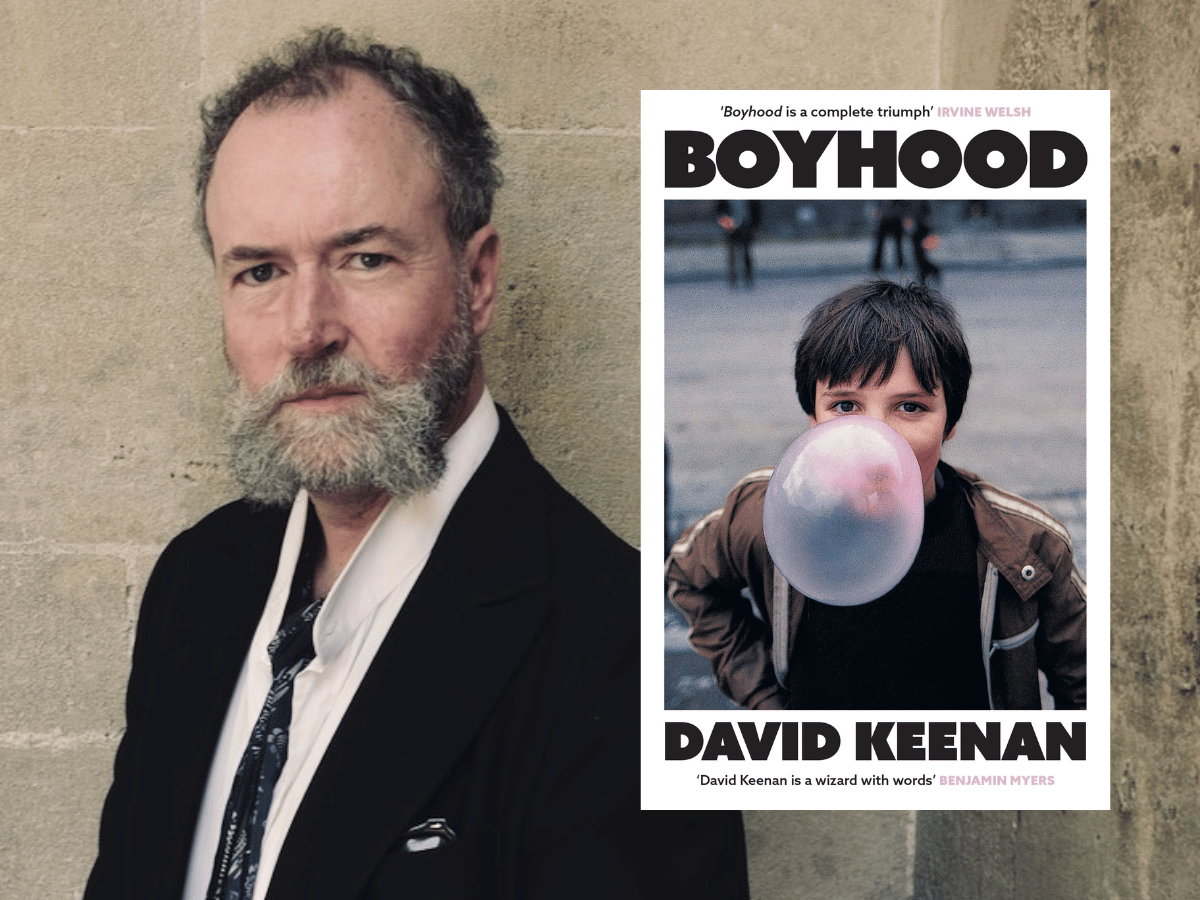
David Keenan has previously insisted that his books are neither expositions of a single idea nor designed to make some kind of point. Sure enough, his sixth novel Boyhood contains multitudes, flitting back and forth in time and space between apparently disparate narratives – about a series of unsolved child murders, a pair of ill-crossed lovers in Paris on the cusp of World War II, covert operations during the Troubles, the blackly comical criminal escapades of feuding gypsy families in Glasgow, the wild whirl of life in Mexico City, and more.
Along the way, we encounter a celebrated ballerina, a lipstick model and burlesque dancer, a couple of private detectives, a free jazz-loving taxi driver, members of The Undertones and a talking horse, and learn about French poetry, Mayan culture and how to chop an onion. As readers, we desperately try to gather the clues that gradually connect and cohere, the microfibres that make it possible to weave the separate narrative patches into patterned fabric.
But it’s tempting to abandon the forensic analysis and simply go with the flow. Exhilarating and ambitious, fizzing with the possibilities of fiction, dense with allusion and drunk on a strange dreamlike magic, Boyhood could be hailed as extraordinary if extraordinary wasn’t by now par for the course for Keenan.

