
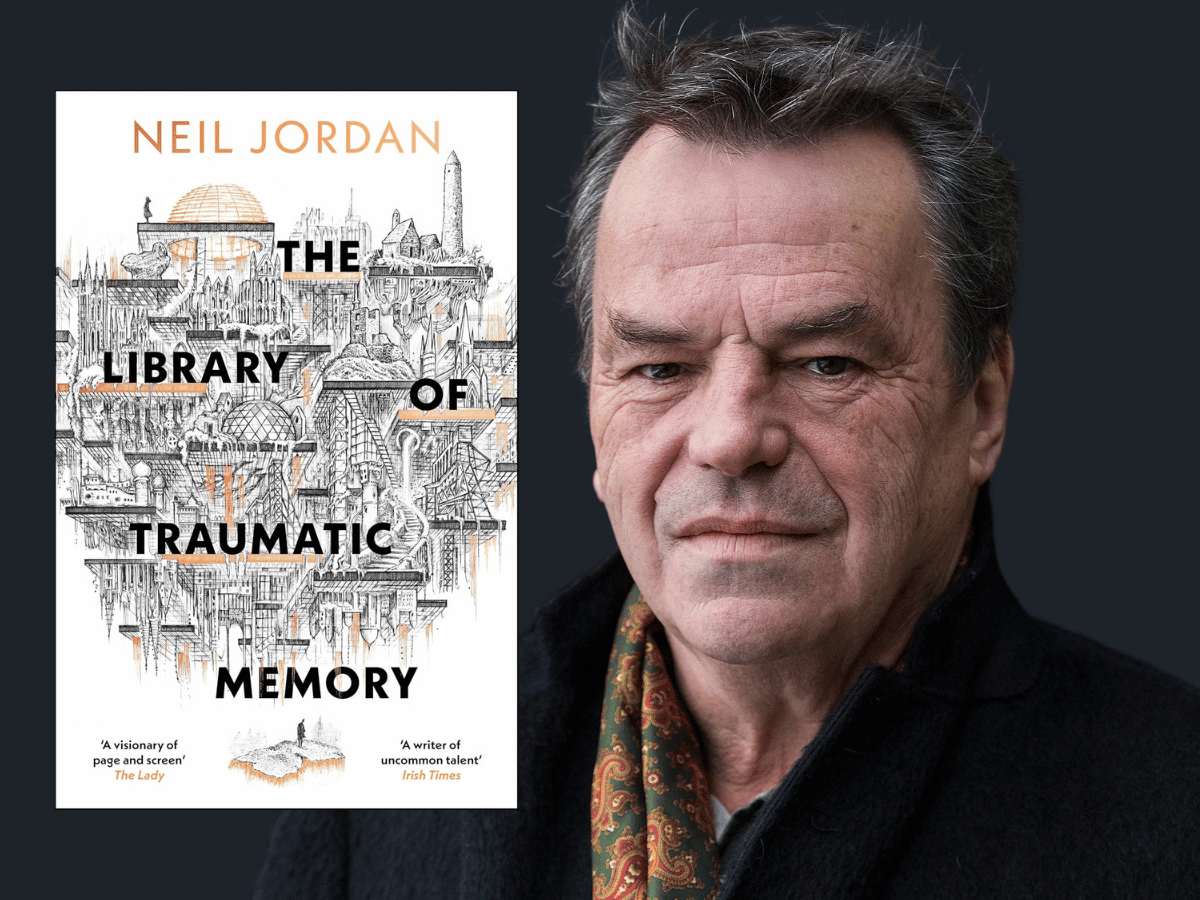
Neil Jordan is most likely to be known to you as a film director: Interview With The Vampire, The Crying Game and The Company Of Wolves all feature on his CV. His literary career actually predates his cinematic one, though, and The Library Of Traumatic Memory is Jordan’s first venture into science fiction novel writing.
Set in 2084, each short chapter reads like a vivid scene from a future sci-fi classic film. Think Aldous Huxley colliding with Terry Gilliam – an equation helped by The Library’s protagonist, Christian Cartwright, working at the Huxley Institute. He’s a librarian, archiving painful memories sourced from around the world – and when his girlfriend Isolde dies in a car accident, Cartwright brings her back to life as a digital entity within the Library Of Traumatic Memory.
What becomes apparent is that memories can be twisted, embellished and changed, with AI and telepathy playing their parts here. Jordan also dives back to the 18th century, introducing us to Montagu Cartwright – an ancestor of Christian’s, who founded the institute at a time of even more murkier goings-on, as revealed in the archive.
The double-timeline factor of The Library works well amidst complex plotting. Jordan is as fearless an author as he’s visionary in the director’s chair, and this feels like a future cult classic.

