
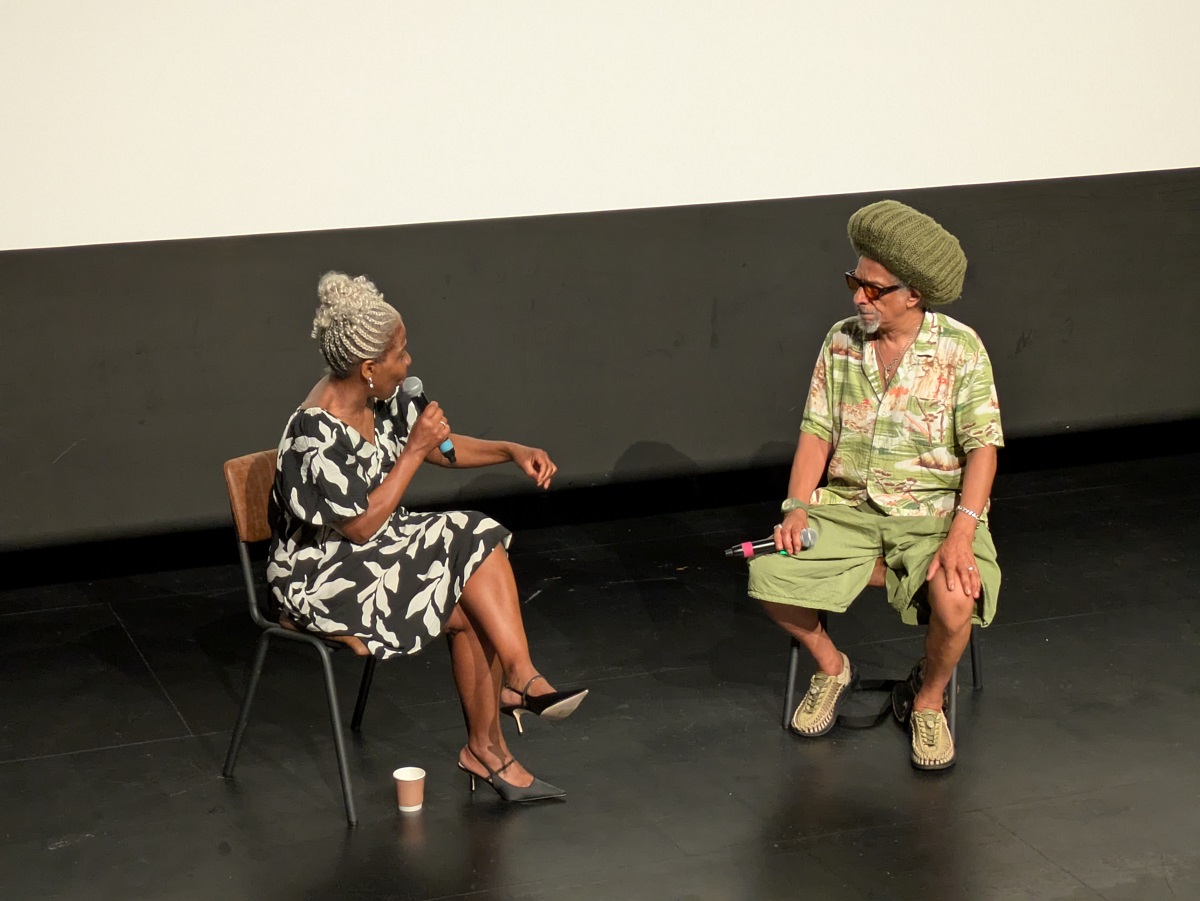
Ben Woolhead visits the Riverfront in Newport for a screening of In Those Days, a new Windrush-themed documentary by pioneering punky reggae partystarter and filmmaker Don Letts – who was also present to discuss all of the above and more.
On the hottest day of an extreme heatwave, when even the breeze feels like an industrial hairdryer, where better to take refuge than in the air-conditioned auditorium of Newport’s Riverfront, in the company of a man who radiates cool?
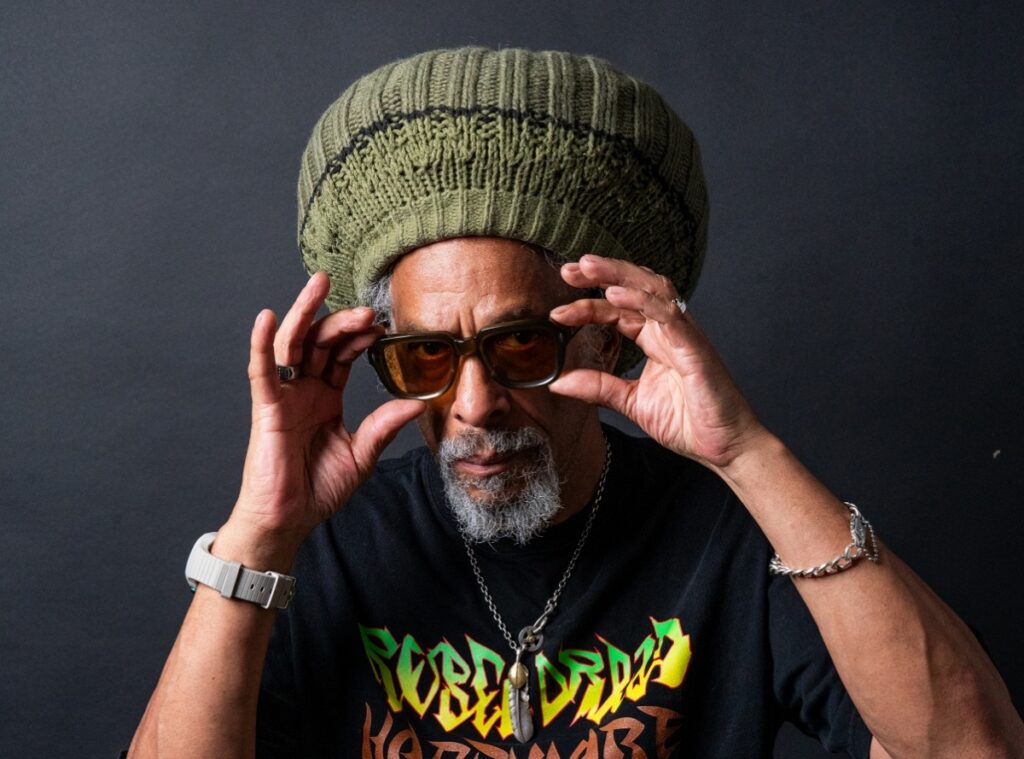
Don Letts’ CV is enormously impressive. He was running Kings Road punk clothing shop/scene hub Acme Attractions by the age of 19; he became videographer for the Clash and (briefly) manager of the Slits; he cofounded Big Audio Dynamite, with the Clash’s Mick Jones, in the 1980s. As a filmmaker, he scooped a Grammy for the 2000 documentary The Clash: Westway To The World, and as a DJ, he’s widely credited with having introduced reggae to punks, and has a long-running 6 Music show.
Letts is in Newport for a screening of his documentary In Those Days: Stories From The Windrush, completed in 2002 but not given a public release until 2025. Supported by Race Council Cymru and Welsh Government, the event takes place a few days after the anniversary of the arrival of HMT Empire Windrush on 22 June 1948 – a moment that has come to symbolise post-war migration to the UK from the West Indies. In the post-screening Q&A, Letts admits his regret at having never really spoken to his parents about their experiences (or to his dad about his homemade soundsystem, or his mum about her recipe for cornmeal porridge).
The film is his attempt to make partial amends through inviting other members of the Windrush generation to share their reflections. Archival footage, it transpires, is devilishly expensive, but in constructing a documentary with no narrator or interviewer, just talking heads, Letts grants them the opportunity to tell their stories in their own words.
In Those Days also serves to bust stereotypes and correct myths. There was, for instance, often a jubilant party atmosphere on the long sea crossings from the Caribbean (not merely homesickness and seasickness). While the migrants are often portrayed as coming to help to rebuild the post-war nation by filling vital roles in transport and nursing, they actually took up all kinds of jobs – one interviewee recounts how he strolled into Harrods and instantly scored himself a position.
However, many discovered on arrival that the heart of the Empire was not the promised land it had been cracked up to be at home. Tough winters and families living in single rooms in drab, grim prison-like terraced houses came as a shock, as did the racism and violence they encountered at the hands of white Brits. Letts gives his white interviewees just enough rope to hang themselves with their mild and not-so-mild prejudices. When one claims that the newcomers faced the same housing problems as working-class whites, Letts immediately cuts to a Windrush migrant talking about the infamous “No Irish, No Blacks, No Dogs” signs commonly found in the windows of rental properties.
In the face of this hostility, where assimilation was demanded but attempts to do so (such as through mixed-race relationships) widely frowned upon, it’s little wonder that Caribbeans set out to create their own culture – whether through slang or soundsystems and basement dances. The Notting Hill Carnival was born, bringing the sounds, sights and smells of the West Indies to the streets of West London. (Letts laments the scale and commercialism of its modern-day incarnation and says it needs to rediscover its political roots.)
The elephant in the room, Letts acknowledges after the screening, is the Windrush scandal, which erupted in 2018, between the recording of the interviews and the film first airing. The Tories’ ‘hostile environment’ policy led to many members of the Windrush generation being treated as undocumented illegal immigrants and consequently denied benefits or medical care, detained or even deported. Letts understandably struggles to contain his anger at the gross injustice, connecting it to Grenfell in terms of how glacially slowly the compensation scheme is operating. Had he begun making In Those Days post-2018, the tone would undoubtedly be darker.
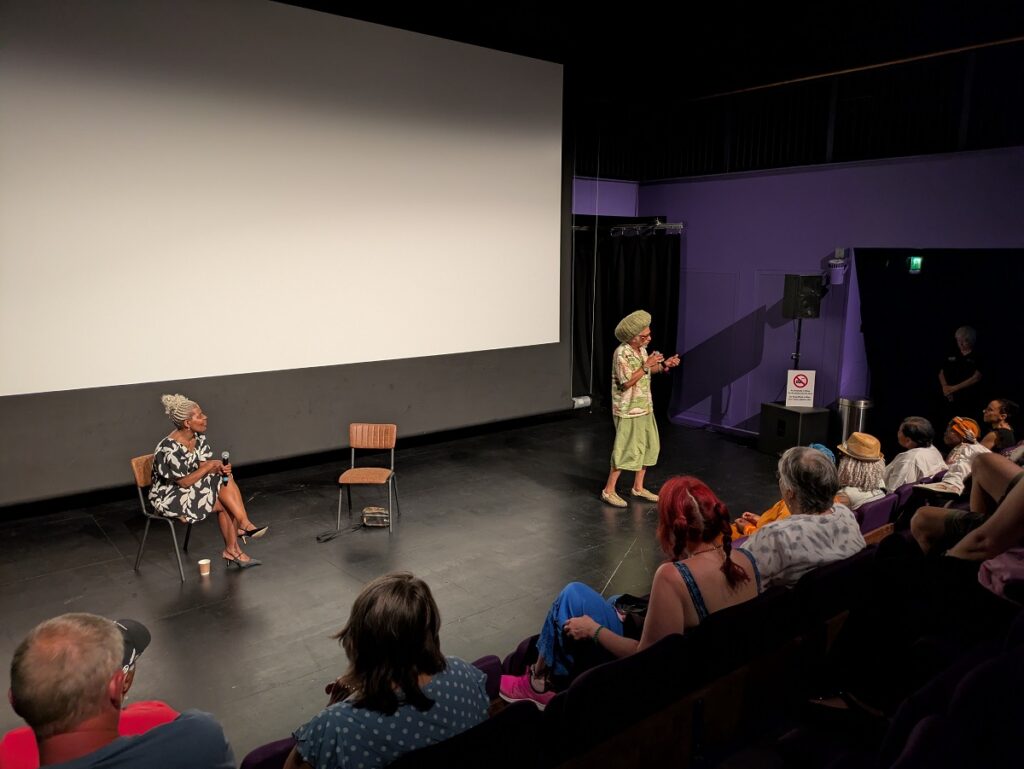
The Q&A session is, perhaps appropriately, an anarchic affair. Neither Letts nor the audience respect the formal conventions; the latter interject to wrest control away from interviewer Marilyn Bryan-Jones, and Letts leaves his seat, roaming animatedly around the auditorium as he holds court. In among audience reminiscences about the early days of the carnival and a life-changing DJ set at a Siouxsie & The Banshees gig, Letts says his radio show – as much as he enjoys it – is a means of paying the bills, and pours cold water on the prospect of a Big Audio Dynamite reunion.

He also notes that it’s something of an exaggeration to say he and Bob Marley were friends – though he does admit to assisting Marley in the procurement of relaxative substances while the Jamaican was in London in exile in the late 1970s. Asked to name his proudest achievement, he chooses the 1997 film Dancehall Queen and the video for Musical Youth’s 1982 hit Pass The Dutchie – the first featuring Black artists ever to appear on MTV, which fed into nascent ideas of what it might mean to be Black and British.
Ultimately, Letts argues, what unites all of his work is a belief in “the power of culture to bring people together” – and the multi-generational, multi-racial make-up of tonight’s audience proves his point. At a time when a host of bad actors are increasingly seeking to stoke intra-community tensions and incite racist violence, Letts’ ethos is more vital than ever.
words and photos BEN WOOLHEAD

