
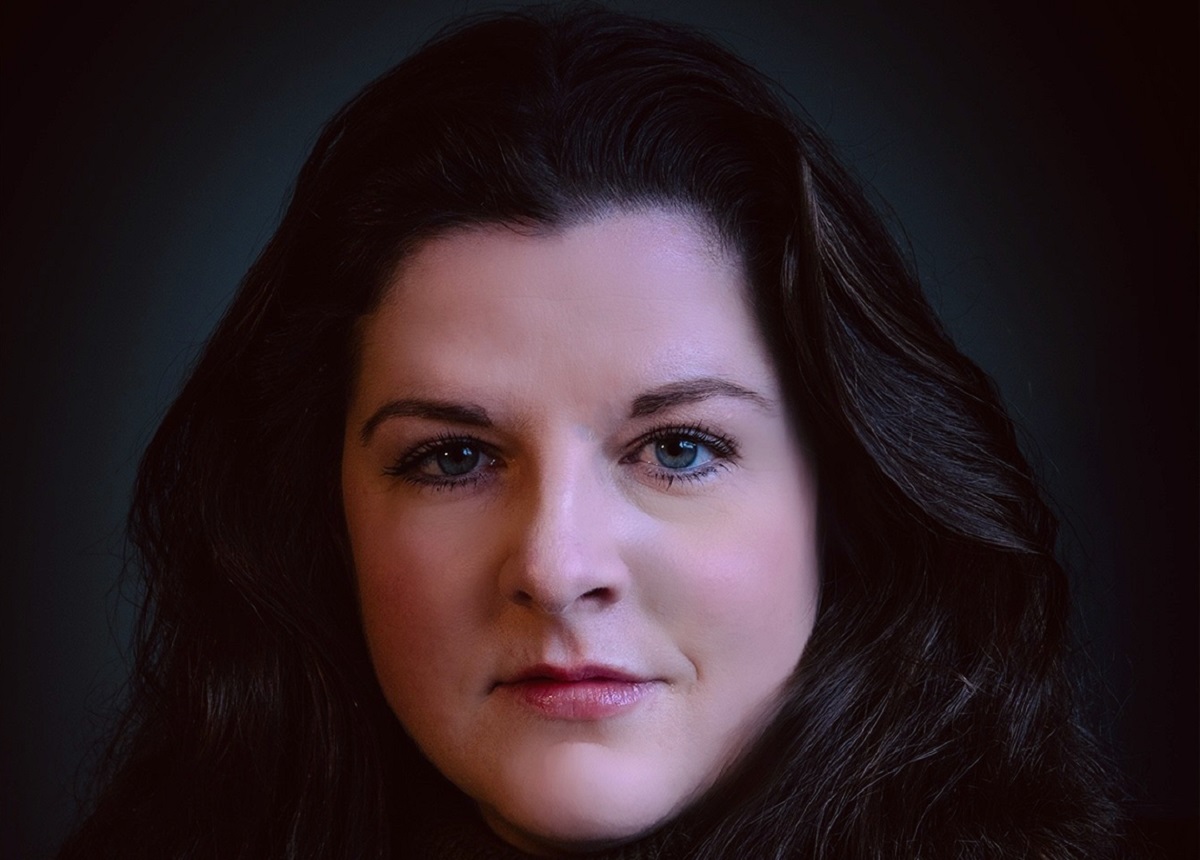
An acclaimed name in Welsh fiction for over a decade, with Red Dragon Song – a novel in the romantasy subgenre, published this month – Rebecca F John adopts the pen name Catrin Cadogan and adapts the tales of the Mabinogion on which she was raised. She fielded some questions about it from Antonia Levay.
What first inspired you to create Red Dragon Song?
The seeds were initially planted by my publisher and editor at Harper North, Genevieve, who, having witnessed the successful rise of fantasy novels featuring dragons in recent years, longed to see more Welsh dragons taking centre stage. She was hoping to find a Welsh writer to bring the idea to life, and we were happily introduced.
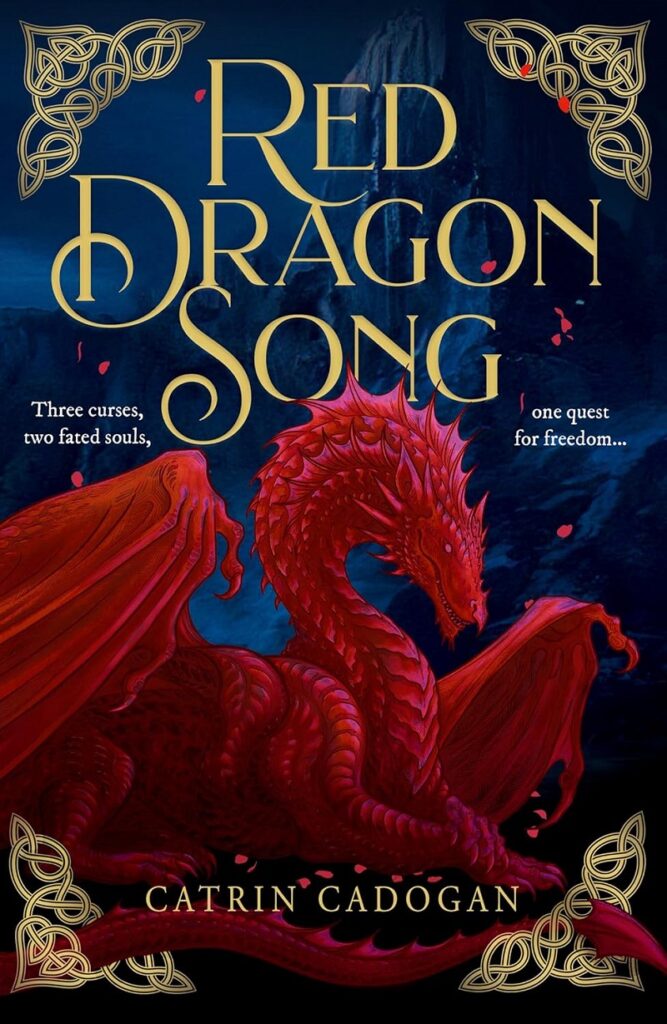
It’s based on the story of Lludd and Llefelys in the Mabinogion, which features a country beset by three plagues, as Red Dragon Song does. We agreed we wanted to develop a story based loosely on the Mabinogion, rather than remaining completely true to the source text. That essentially shaped where I was able to take my protagonist Arianwen’s story.
How did the idea develop from concept to finished work?
Romantasy is an entirely new genre for me, so the next consideration was finding my way into the story; knowing and understanding the characters. Though Arianwen is 20 years younger than me, I soon felt a real affinity with her – she is fascinated by the sea, as I am, a keen horsewoman as I once was, and a musician, as I could have claimed to be many years ago! I felt certain that if I had a good basis in characters who were honest, interesting, and relatable, they would be able to carry a world in which dragons might swoop by at any moment.
Arianwen was partly why I decided to write it in the first person instead of third -something I’ve always been afraid of doing, but I think it lends the novel a pace which might otherwise have been lacking, and allows me to explore a different tone. The final decision which took me out of my comfort zone was to use a split narrative; the novel is largely narrated by Arianwen, however, there are some chapters from the male love interest, Edern’s, point of view. This proved important as both Arianwen and Edern set out on important quests in this novel, which they do not initially reveal to one another.
Did you surprise yourself in the process of creating this novel?
Absolutely. I wasn’t sure I could write dragons convincingly – I’d never tried it before! When I came to create the main dragon, it was initially male, but I was compelled to make her female. I wanted her to be sympathetic, not scary, so I named her Rhosyn – meaning rose, for its delicacy – and I paired her with a male dealer, Edern, who was just a bit too full of himself. This allowed me to write Rhosyn with a degree of impatience towards Edern – as though they were an old married couple – which brought her to life for me.
The title Red Dragon Song evokes strong Welsh imagery. How does Welsh culture, history, or identity influence its themes?
It’s the first time I have written Welsh characters moving through a Welsh landscape in long form. That’s influenced the imagery, the language and dialogue, and the themes. I think that, as a nation, we hold on quite tightly to our history – there are supposedly over 600 castles in Wales, so it’s fairly simple to visit a castle and learn about its past.
History has certainly influenced the themes of Red Dragon Song. The traditional conflict of good versus evil, the prevalence of stories told and shared, the impact of stories of the past on the present and the characters, and also the necessary coexistence of people and nature. I think our identity as people who are passionate about their land and story is evident throughout the novel, but there can be a tendency to view that passion as something quite twee.

This style of storytelling is incredibly popular, with authors like Sarah J. Maas creating epic storylines and becoming huge names in the genre. Why do you think romantasy has become so popular?
Reading allows me, for a short while, to become people in locations or occupations that I will never reach or achieve. It offers me, in essence, more life. There’s an argument that, in our fast-paced world, we’ve never needed escapism more – it’s possible, then, that the worlds of romantasy are the perfect place to escape to.
Equally, fiction is often the best platform through which to explore the truth of the human experience. Where else can we enter the minds of people so dramatically different than ourselves? Perhaps, then, the escape into fiction is as much about gaining some relief from the real world as it is about better equipping oneself to move through that world as a fuller, more thoughtful human being.
What has Red Dragon Song’s reception, or how people have connected with it, taught you?
I’d assumed my readers would be exclusively dedicatees of romantasy fiction, but that hasn’t been the case at all. Some readers have come to the story because of the genre, certainly, but others because of the Welsh element, or because they know my historical fiction writing – and what I’d not expected was for many of them to say, “I would have known that was your writing anywhere.” It seems that what you might call my voice is discernible whatever the genre, and I really like that idea. Someone told me once that I write in a Welsh accent – but perhaps what they hear is my excitement around the possibility of language, and how much I love doing what I do.
What message or emotional experience do you hope audiences take away from Red Dragon Song?
There are so many answers to this question! Firstly, I really wanted Red Dragon Song to be a celebration of the natural world – the characters live in close connection to the natural world in a way most of us certainly don’t today. It is also a love letter to the landscapes of Wales. I wanted to honour those two aspects of Wales, and encourage the reader to pause and look closer at the wonder that is right on their doorstep.
Secondly, I wanted to offer the reader a young protagonist who is reaching for a better understanding of the world and her place within it. Arianwen doesn’t set out from home to search for a husband, or to find easy comfort, or for the sake of adventure – she’s seeking is her purpose. I think a lot about purpose as a writer: what am I aiming for in my career? What am I giving back to my community? What am I providing for my family? I think putting a story into the world is hugely important – that is my purpose – but Arianwen, like many young people, hasn’t found hers yet, and perhaps I wanted to encourage readers to go out and seek their purpose with the same bravery as Arianwen. Finally, I’m always keen to end my novels with a sense of hope. I tend to put my characters through the mill a little, but I never want to leave my readers on a note of pessimism. So as Arianwen rises towards the new and unknown at the end of the novel, she is carrying with her heartache and doubt – but she is also looking forward with enthusiasm to whatever comes next.
Red Dragon Song is out now via HarperNorth.
Price: £18.99/£12.99 Ebook/£17.99 audiobook. Info: here
words ANTONIA LEVAY

