
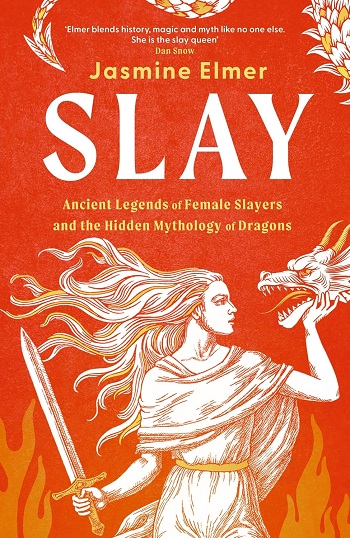
Dragons are to myths and legends what dinosaurs are to most children under 10, Steven Spielberg blockbusters, and CGI-based educational documentaries. In other words, top-tier beasties. But unlike the (mostly) serpentine creatures of legend who do everything from hoard gold to provide the ultimate challenge in tameable steeds, we know very little – if anything – about the women of yore who fought them. According to Jasmine Elmer’s new book Slay, St. George, Hercules, Beowulf and all the other strapping male slayers who are household names have been eclipsing stories of female dragon slayers for centuries.
Elmer, who has an enviable PhD in dragon studies, believes that the symbolism of dragons – because they are, like almost everything in folklore, symbolic of all sorts of things – changes in the context of female slayers, whose stories have been buried in dusty obscurity thanks to our patriarchal culture. For Elmer, this symbolism runs deeper than a surface-level fear of the unknown or the Jungian ‘shadow self’, but “a mirror to our inner worlds” that are “deeply personal and unique … to speak of dragons is to speak, in part, of ourselves.”
This personal approach is woven into Elmer’s retellings of four female slayer tales from different parts of the world and different time periods: Medea, Thákane, Tokoyo and Margaret. As with many other modern-day retellings of stories from antiquity, Elmer colours these accounts with each heroine’s thoughts, feelings, inner desires and conflicts to great effect. We don’t just learn of the witch princess Medea and chisel-jawed hero Jason’s (of the Golden Fleece fame) dalliance, for instance – we learn what it’s like for her to fall head-over-heels in love with a man who will later cower from his dragon quarry, leaving a doomed, lovesick Medea to finish the job at great personal sacrifice. I don’t want to use such a hackneyed marketing term as ‘relatable’, but, like dragons, though none of these women existed, you’ll feel like they did by the end.
Elmer follows up each retelling with analysis that puts each beast and its slayer into historical and cultural context, deepening our understanding of what we’ve just read and, in turn, both our understanding of dragons more broadly and prevailing perceptions of women in these eras and cultures. I really appreciate this unique hybridised approach – it feels like the literary equivalent of a dramatisation in a history documentary; a highly accessible ‘edutaining’ experience that is equally vivid, empowering and fulfilling in its fiction and non-fiction contents.

