

While Dan Richards’ Overnight is predominantly about the world of nocturnal work, Imogen Willetts’ Up All Night focuses on afterhours play, “in all its messy, ever-changing glory”. Nightlife, which she defines at the outset as “a commercial and secular environment designed to offer a variety of pleasures at night”, is hailed as “the greatest generator of cultural inventions” and a form of “organised rebellion” – but this superb book primarily makes the case for the pursuit of bacchanalian thrills for their own sake.
Don’t be fooled by the illustration of the tangoing couple on the cover – for a disquisition on dancing, see Emma Warren’s Dance Your Way Home. Neither should you be deceived by the inclusion of a smiley face logo – the already well-chronicled UK acid house scene of the late 1980s does feature, though only in a brief between-chapter interlude. For that, you’re better off referring to Jeremy Deller’s film Everybody In The Place.
Willetts’ subject is broader than both: a technicolour history of hedonistic excess that is truly international in scope, taking the reader from Yoshiwara in 17th-century Japan all the way to 00s Los Angeles, via France, Cuba, Germany and China, and calling in on nightclubs from Montmartre’s Le Chat Noir to Studio 54 in New York. While Yoshiwara was purposely constructed, most of the featured places were enclaves that developed organically.
This development was invariably closely tied to social, cultural, economic, political and/or historical circumstances. Speakeasies sprang up in Harlem in response to Prohibition; Russian emigrés displaced by the 1917 revolution were vital to nightlife in Paris and Shanghai; mobsters’ money propped up the postwar club/casino boom in Las Vegas and Havana; and post-industrial/post-communist ruins in Detroit and Berlin both gave techno an early home.
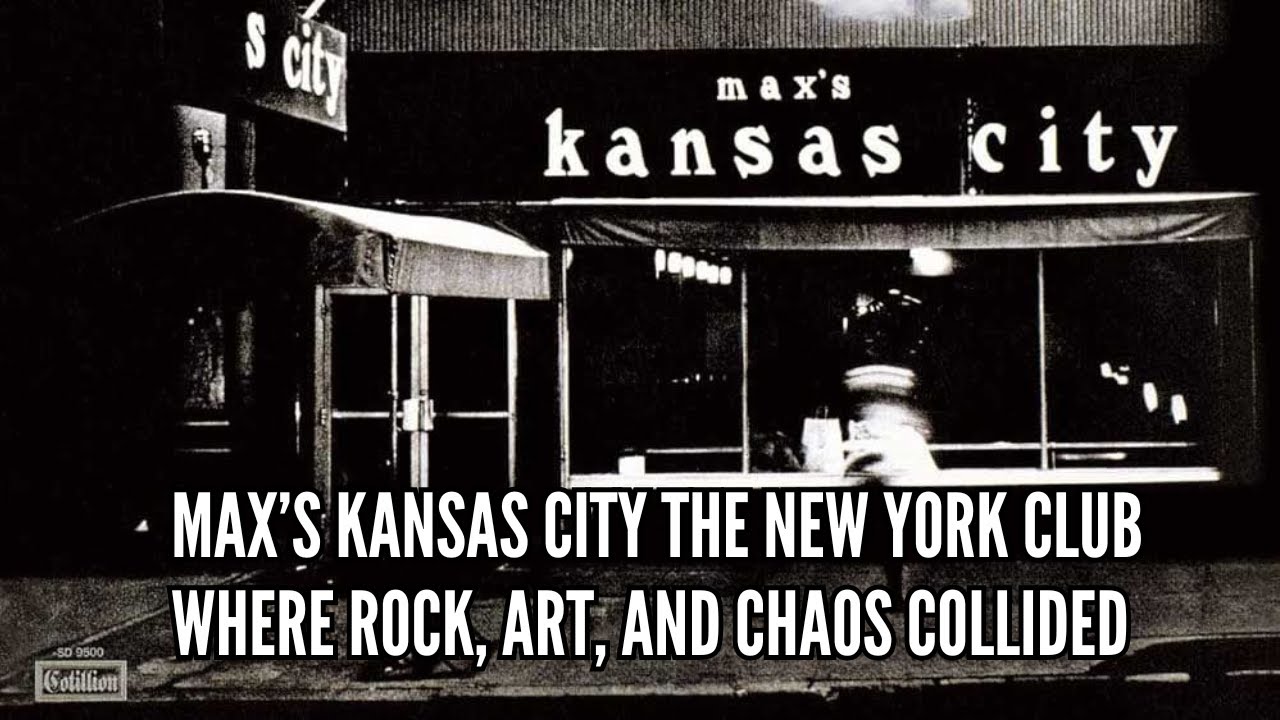
Culture war has become solidified as a negative, antagonistic phenomenon, but Up All Night exemplifies instead the generative aspects of culture clash. Many of these scenes revolved around sex, but Willetts underlines the invigorating qualities of conversational and social intercourse too. London’s Vauxhall Pleasure Gardens are celebrated for bringing together people of different social classes on an radically egalitarian footing in the 1700s; the interracial mixing and “magnetic energy” of Harlem made a night out there feel “like being part of the resistance”; and the door policy at Max’s Kansas City, a NYC institution and Warhol hangout, seemed inscrutable but intended to “achieve a kind of social alchemy”.
In some of these places, no expense was spared in terms of decadent décor, spectacle and entertainment, but most were not exclusive billionaire playboys’ playgrounds; on the contrary, they were inclusive and welcoming to women, racial minorities and queer people, whether they wanted to make a living or just make merry.
As you might expect, Up All Night is a treasure trove of trivia, with unexpected revelations on every page – whether Willetts is describing the extravagance and debauchery of the Parisian art students’ ball of 1893, or detailing how revellers in the 1950s would watch atomic bombs being tested from the Sky Room of the Desert Inn in Las Vegas while sipping on Atomic cocktails (vodka, champagne, brandy and sherry). The book is also a riotous cavalcade of colourful characters – from wealthy impresarios motivated by hubris and greed to pioneering mavericks with vision and ambition, from glamorous or eccentric stage performers to stylishly dressed punters.
Along the way, for example, we meet Paris-based surrealist Kleofas Bogailei, “who slept in a coffin decorated with bones to trigger nightmares, which he would commit to canvas the following morning”; Eddie Dodson, “in-house cocaine dealer” at Hollywood’s Fake Club, who “robbed banks while on dates to pay for dinner”; and Anita Berber, cabaret star of Weimar Berlin, who would “urinate on especially loathed customers” and was partial to a “breakfast elixir” that involved “stirring white roses into a glass of chloroform and ether and slowly nibbling at the wet petals to slump into a woozy euphoria until lunch”.
Time and again, Willetts shows that the ever-present threat of crackdown and closure, and the ominous backdrop of conflict or societal collapse, have failed to snuff out nightlife’s flame; on the contrary, they have often only made it burn brighter. She quotes Hugh Hefner from a 1963 issue of Playboy: “The possibility of imminent extinction has given life a new significance. A new savoring of life and all that [it] offers.” There is freedom and escapist joy rather than merely fatalism in fiddling while Rome burns.

Willetts also quotes from the memoir of Spandau Ballet’s Martin Kemp, in relation to Soho’s legendary Blitz: “The energy and attitude of punk were still there. The hunger to take on the world headfirst was too. But we were no longer interested in turning the place to rubble.” Like so many others featured in the book, Blitz proprietors Steve Strange and Rusty Egan and their loyal clientele sought to channel “collective effervescence” not into destroying society but into “building a fantasyland from trash”.
Up All Night ends on a sobering note, with Willetts observing that nightlife is currently struggling due to post-COVID stay-at-home habits, the economic downturn and the way in which smartphones inhibit public behaviour. And yet she retains hope of a revival, reiterating that it has often flourished in adversity and emerged anew, bubbling up from the counterculture. As ever, imagination, endeavour and DIY spirit are what’s needed.
This exemplary social history is engrossing and energising – though its exhilarating whirl may leave some readers in need of a cup of tea and a nice sit down.

