
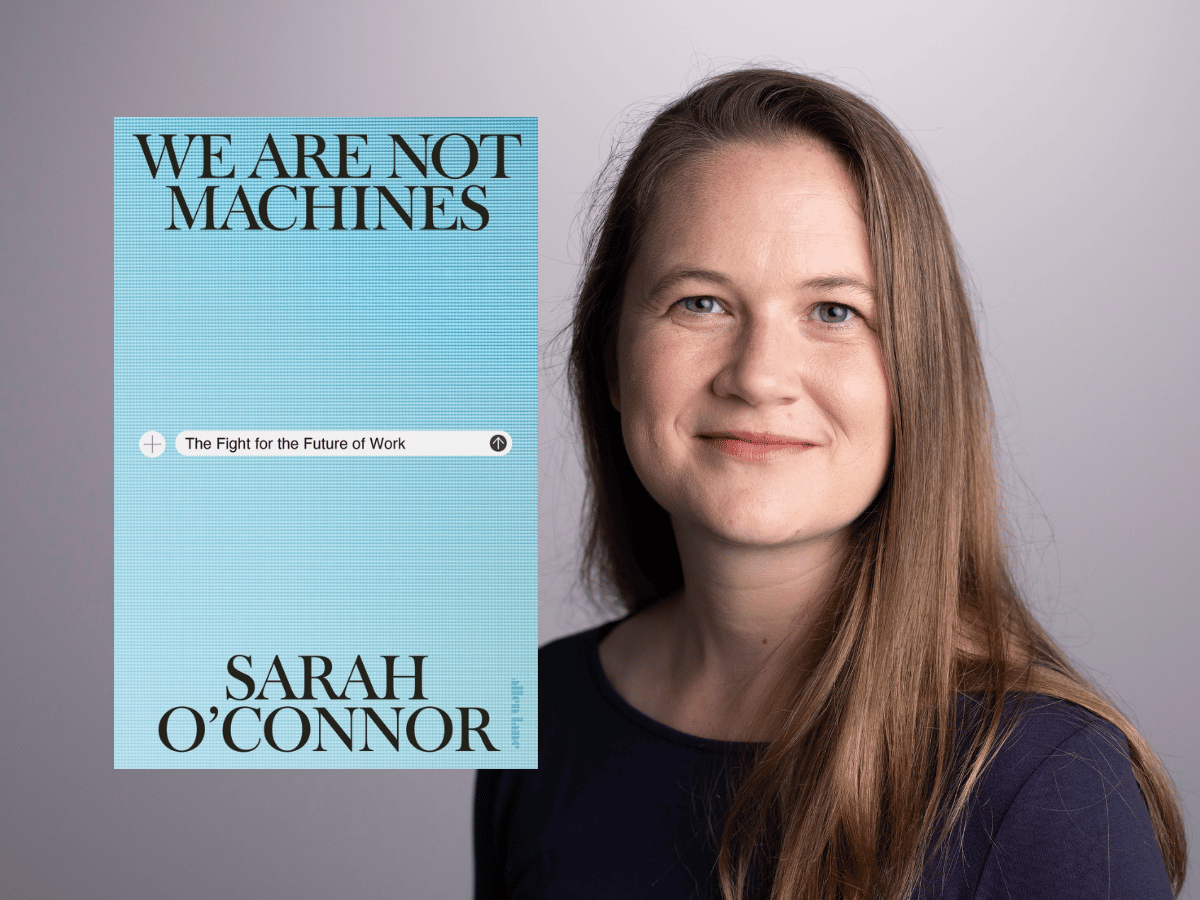
“To many, it was irresistible,” writes Sarah O’Connor in the introduction to We Are Not Machines, referencing the rise of ChatGPT: 100 million monthly active users signing up in just two months. As the book begins in earnest, it begs many questions: what is humanity really losing to the machine? Will AI turn out to be a tool for improvement? Or, are more and more groups of people losing their jobs to the machines that are making the professions into “dull, mechanical, ‘lifeless’” shells of what they once were?
O’Connor presents the varied sides of the argument: there are scenarios where machines can greatly improve the quality of work, like the Swedish mines that allow workers to supervise machinery from safe office spaces, just the same as machines are presently incapable of providing the human touch that is necessary for professions like nursing.
Throughout the book, O’Connor’s investigation into the rise of AI and machine learning in the workplace subverted my expectations – upholding standards of journalistic integrity, despite the dividing topic. Predisposed to the idea that the book might turn out to be a smear campaign against the machine, I was surprised to read O’Connor’s tactful inclusions of the equal benefits and downfalls of increased AI usage in the workforce.
Even at We Are Not Machines’ conclusion, O’Connor implores that she still holds the belief that technology can help make the world better, but it won’t just happen naturally. The future that so many of us want and desire can happen, but “not without a fight”.

