

There is something mesmerising about the texture of space. When we see images of nebula, and clusters of stars and gas, we’re reminded of how small our seemingly enormous planet is, and all the people who looked at those things and tried to make sense of it all before us.
In Stars And Their Consolations, Hugh Lupton and Daniel Morden combine images taken by NASA and stories from Greek mythology to remind us all that we have been asking the same questions – and coming up with our own answers – about the cosmos for thousands of years.
The show is based on the Greek myths behind several of the constellations we recognise today. Taking it in turns to share tales, the two tellers explore the narratives of Orion, Orpheus and his lyre, and the Pleiades, among many others. Interspersed within the tales is footage from space telescopes, bringing us closer to structures that people have been telling tales about for millennia. In the final instance, the show reminds us to go outside and look up.
At the beginning of the evening, Morden says, “If you’re here, I’m assuming you, like us, are Greek geeks.” I’m not – I find Greek mythology incredibly tedious, on the whole – so it speaks to the quality of Lupton and Morden’s storytelling that I was so enthralled as to completely lose track of time. The end of the first half came as a complete surprise to me.

The two storytellers offer very different styles of performance, offering contrasting energies that complement one another well. Lupton, light and airy, offers a soothing, ethereal experience to listeners; Morden, more grounded and commanding, adds a sense of drama and excitement to the work. Each style is stronger for the presence of the other, and the two tellers find ways of making sometimes inaccessible stories engaging for a wider audience.
Sarah Leanne Lewis’ score is also a beautiful and important addition to the piece. Her compositions are not simply background music, but work with the storytellers to add wonder and tension to the work. Her music is otherworldly, and heightens the feelings of awe present in both the stories and the images it supports.
Stars And Their Consolations would benefit from a small amount of attention to pacing, not because it drags, but because sometimes things end too suddenly. The end of the first half in particular takes you through three events in fairly quick succession, and while that can be really exciting, a few things don’t quite land as a result. Some stories across the show would benefit from slightly more space and slowing at the end, just to allow them to land with the audience.
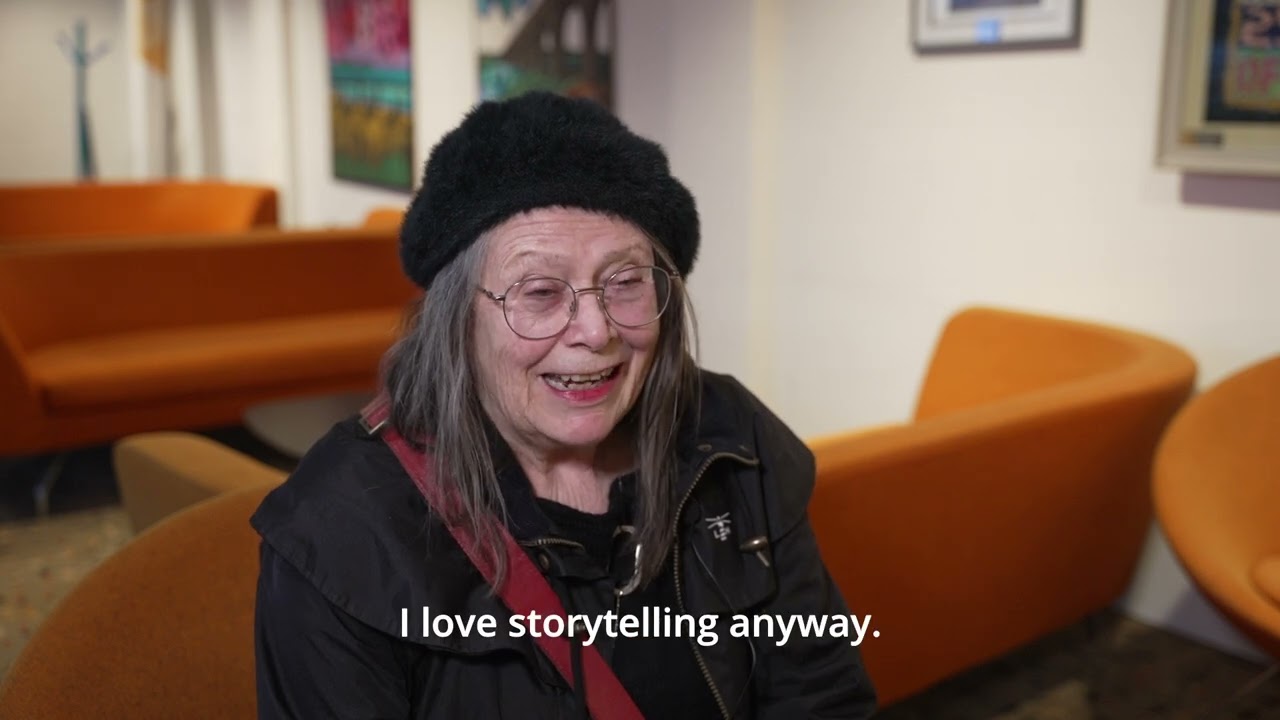
All of this aside, the audience loved it, and I did too. I was sat next to a teenager attending a storytelling show for the first time, because her parents knew how much she loved mythology. In the break, she excitedly told her parents all about the differences and similarities between the tales told and the ones she knew, and how she’d never seen anything like this before; the people behind us called it “surprisingly lovely”, and one of them said they’d like to try storytelling out for themselves.
The show is worth seeing for the two storytellers alone, but the combination of tech and composition makes Stars And Their Consolations a must-see – not only for Greek geeks, but anyone who loves stories and wants to experience something magical.
Stars And Their Consolations, The Riverfront, Newport, Wed 25 Mar
words HARI BERROW

