
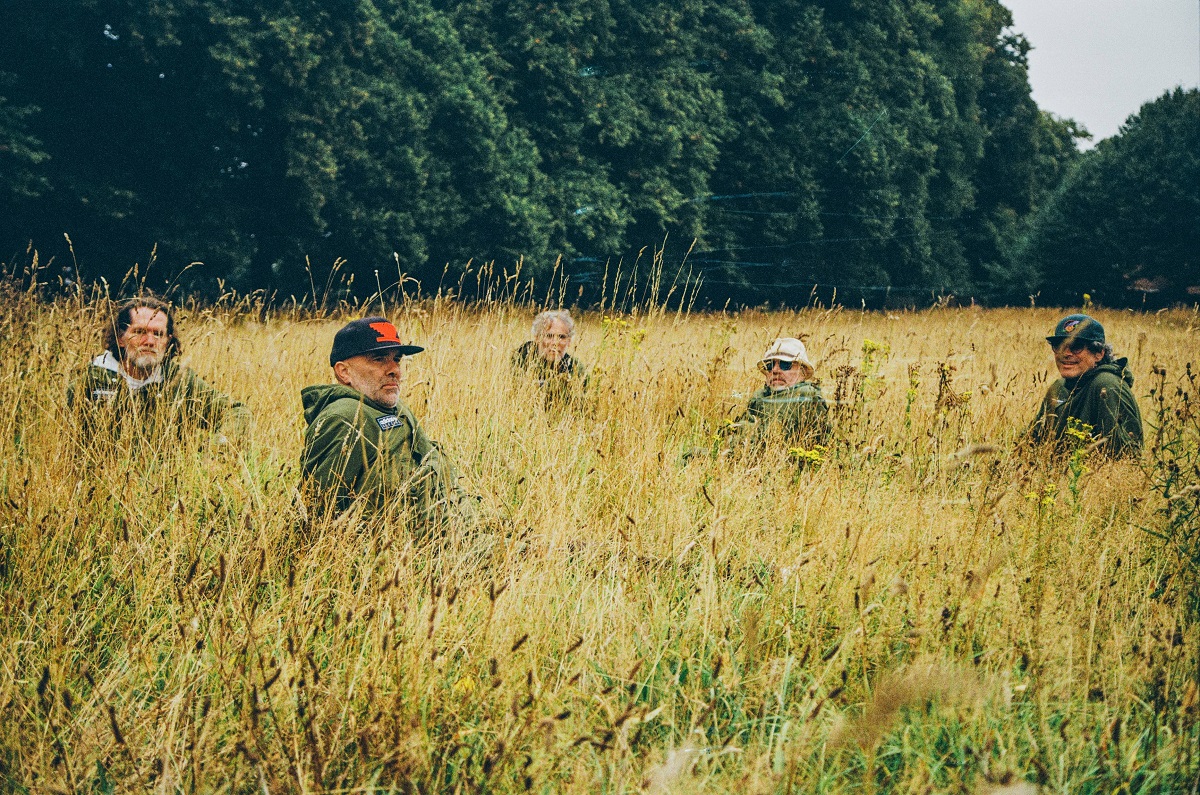
Super Furry Animals are back! And they’ve got a summer of shows lined up. Somewhere in a black hole of phone signal on a “long road” in mid-Wales, guitarist Huw Bunford – aka Bunf – chats from the SFA tour van to Teresa Delfino about Cool Cymru, guerrilla marketing and political footballs.
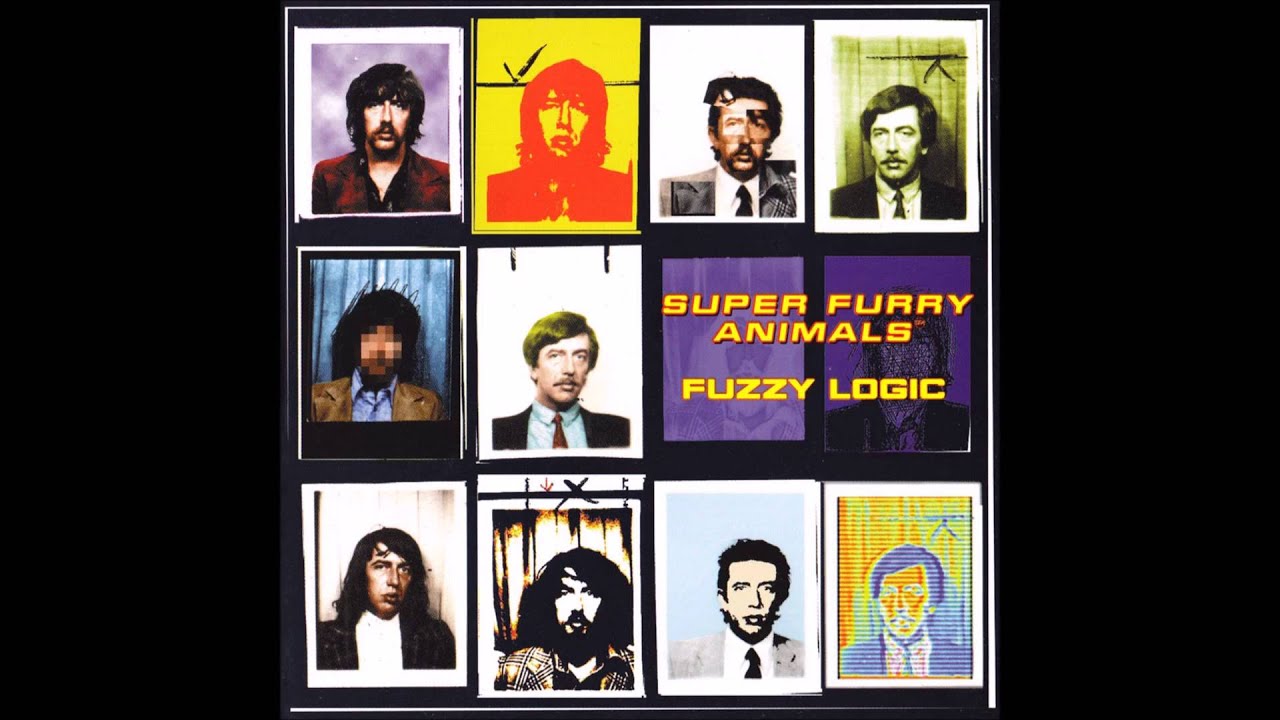
It’s summer 1996, and a decommissioned army tank rolls onto the fields of the National Eisteddfod in Llandeilo, Carmarthenshire. Its passengers are a group of twentysomething musicians who’ve not long released their debut album Fuzzy Logic via Creation Records – making them labelmates of Oasis, Primal Scream and My Bloody Valentine. They’ve spraypainted the 15-tonne vehicle blue, with the words “A oes heddwch?” (Is there peace?) in yellow, and they’re blasting techno to protest a section of the Criminal Justice Act which meant the police could confiscate sound equipment.
“We genuinely thought that spending loads of money on a poster campaign never seemed to make sense to us,” says Huw Bunford, the guitarist of that band, 30 years later. The tank cost the Super Furry Animals £10,000, but the publicity it yielded was priceless. “There were hidden costs. You couldn’t drive it on the Queen’s highway – you had to hire a big truck. So, yin and yang.”
People attend the annual National Eisteddfod for choral music, live bands, dance, poetry and literature. Performances are governed by a strict Welsh-language-only rule, and the Super Furries set that year became a cultural flashpoint of sorts when the group – Bunford, or Bunf as he’s widely known, plus lead vocalist Gruff Rhys, bassist Guto Pryce, drummer Dafydd Ieuan and multi-instrumentalist Cian Ciaran – chose to whistle the lyrics to their English-language songs.
The backlash, Bunf recalls, was confusing, and made them part of a heated moment in Welsh identity politics. “It was a lot of people up in arms about things we didn’t get, and it kicked off in a way that we weren’t expecting. We’re just a rock band. But we understood the sentiment. It kind of followed us a bit – maybe to do with the fact that we’re [from] north and south Wales.”
Considering the first two Super Furries EPs, released on the Ankst label the previous year, had mostly been sung in Welsh, it was weird to be “caught in the crossfire,” says Bunf. “It was just a natural thing for us to write in both languages, and our records would be bilingual as well. Maybe people thought we cared more than we did.
“We were slightly confused by the backlash from Welsh speakers. Some people just thought we’d turned our backs on them.”
At this point, and throughout the second half of the 1990s, with Britpop a consistent fixture of the UK charts and the term ‘Cool Britannia’ proliferating, there was a drive – opportunistic, but successful – to establish a Welsh equivalent. The Super Furry Animals were very much central to this, joined by the Manic Street Preachers, Catatonia and Stereophonics in being pinned to the ‘Cool Cymru’ tag – whether they much wanted to or not.

“Cool Cymru is just something that everyone was doing. Like Britpop and all that, it’s just marketing for somebody. Mainly journalists really, just to get a label. It’s helpful to throw around, isn’t it, really?
“We never felt like, ‘oh yeah, we’re part of Cool Cymru!’ We had a hard time trying to get the Britpop tag away from us for a while. I think by the second album, they probably thought, ‘oh yeah, they’re definitely not Britpop!’”
In August, the Super Furries will play their first National Eisteddfod show in three decades. “What’s nice [about that] is that we’ve got plenty of Welsh-language songs to play, which is cool, y’know?” Attendees at this edition – the 850th anniversary of the festival, no less – in Llantwd, north Pembrokeshire can expect a healthy selection from Mwng, the fourth SFA album and their only one with all-Welsh lyrics.
A month before the National Eisteddfod show, they’re also booked in at Llangollen Pavilion for a two-set evening – playing Mwng in full, then a more career-spanning selection after an interval. In some ways, it’s a full-circle moment for the band, who felt the timing of its original release in 2000 – on their in-house label, Placid Casual – was a “no-brainer” as Bunf puts it.
“[We had] a backlog of Welsh songs, and Creation was coming to an end. So we decided to release it ourselves, which was one of our better ideas. Everything kind of lined up. Touring it outside of Britain helped as well – they really enjoyed the Welsh songs.”

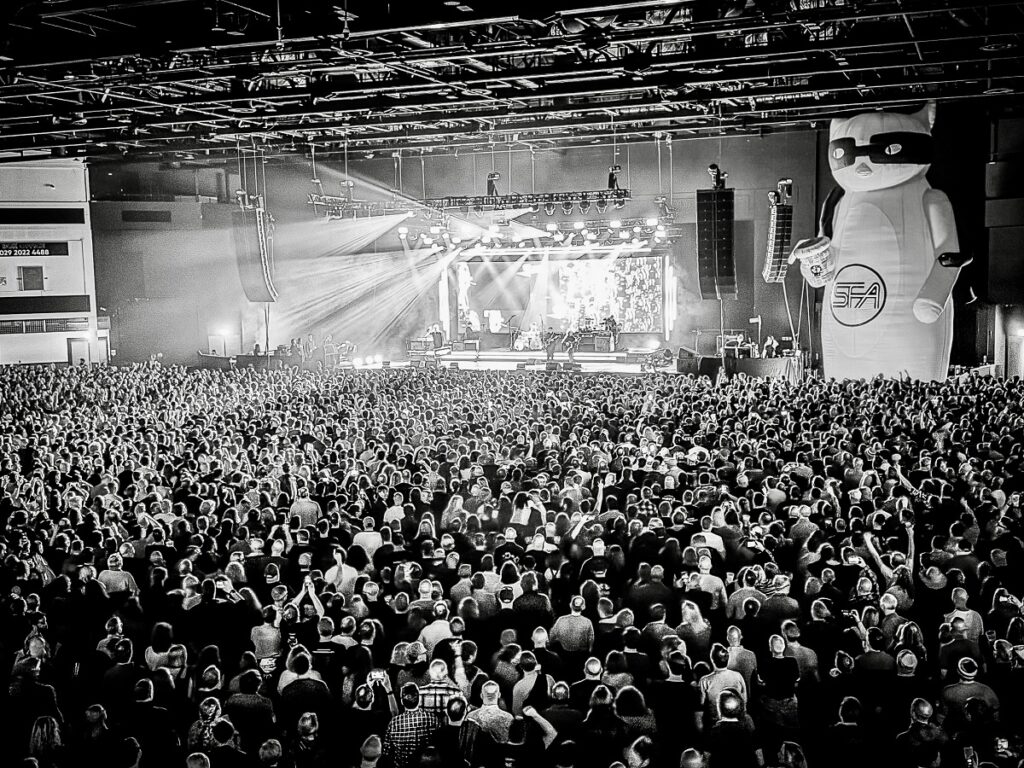
The Llangollen and Llantwd shows – plus a date this month as part of the Bristol Sounds outdoor gig series, with a sprinkling of festival slots throughout the summer – follow the run of nine performances which comprised their Supacabra tour in May. The first Super Furry Animals shows since 2016, they sold out across the board; when I spoke to Bunf, they were already three gigs down (one in Dublin, two in Glasgow) and were on their way to the first of two Llandudno shows.
Just a few days earlier, Gruff Rhys had made the Welsh news for different political reasons. He was among many Cardiff residents who didn’t receive their postal vote ballots in the expected timeframe, ahead of the Senedd election on Thurs 7 May, and with the SFA tour under way by that date, the group were unable to exercise their democratic right.
“None of us in the band manged to vote!” Bunf says. “It might have been different for Guto, since he lives in Scotland. The council are just blaming it on the printer company or something. Terrible, really.” Cardiff Council confirmed over 1,000 postal votes went undelivered in total; as Bunf notes, “It can make a big difference with some of the numbers.”
Nevertheless, the election outcome is welcomed in SFA quarters – not least because they and Rhun ap Iorwerth, Plaid Cymru leader and Wales’ new First Minister, go way back. “We know Rhun! He was around when we were starting. We’ve seen him out and about.”
In those early days, the Furries cut their teeth in a host of places that no longer exist. “Some of the buildings are there, but they’re flats and stuff like that. Use it or lose it.” Rhys and Bunf famously first met on the roof of a train carriage on the Llyn Tegid railway, near Bala – but the band meeting altogether is credited to Clwb Ifor Bach, he tells me.
“We’d go out raving. Inevitably we were the only people standing at the end of the night… It was all taking off in the clubs and illegal raves. It was quite exciting to grow up at that time, with that musical landscape. Then the government just stopped it all, basically – I don’t think it was anything to do with the music, they just didn’t want young people gathering from different walks of life.”
Last month’s tour was accompanied by the release of a SFA compilation, Pre-Creation Percolation: assembled, by de facto band archivist Kliph Scurlock, from various old tapes capturing early incarnations of the band. “He’s kind of our librarian. He gathers all this stuff together, and then we go, ‘wow, I can’t even remember doing that!’ There were six tracks that we recorded in London with [original vocalist] Rhys Ifans singing that we couldn’t find. So if anybody has got a tape with them…”
Early in his SFA career, Bunf was still working as an art teacher; when he was arrested for drug possession in 1996 (though let off with a fine), his former pupils scribbled ‘Free Bunf’ on the school walls. If the band were starting out today, things would be much harder, he thinks.
“We were lucky in the timing. You need a lot of luck really and things to go your way. But saying that – there are opportunities that you didn’t have 30 years ago with social media now. That almost changes the gatekeepers, though.
“For new bands to go on tour now, it’s a real struggle to make it financially worthwhile, but kids still do it, which is amazing. I think we’d probably still ignore all the advice and stick to our guns.”
Super Furry Animals play Bristol Sounds, Canons Marsh Amphitheatre, Bristol, Wed 24 June (tickets: £49.50/£20 under-16s. Info: here); Llangollen International Musical Eisteddfod, Llangollen Pavilion, Thurs 2 July (tickets: £45-£56. Info: here); The National Eisteddfod, Llantwd, Sat 1 Aug (tickets: £25/£45 with camping. Info: here)
words TERESA DELFINO

