The centrally located Peacock Theater in Los Angeles will host the 101st Academy Awards ceremony when it begins streaming on YouTube in 2029.
The centrally located Peacock Theater in Los Angeles will host the 101st Academy Awards ceremony when it begins streaming on YouTube in 2029.

The pop star secured three of the biggest awards of the night as the show celebrated its 30th anniversary.

Ben Woolhead is on the spot in Newport for a late-morning hour in the company of Keith Cameron – author of the definitive Manic Street Preachers songography, 168 Songs Of Hatred And Failure – and, naturally, a room full of fans of the Welsh rock icons.
Over the course of four years, music journalist Keith Cameron was a regular visitor to the Manic Street Preachers’ studio Door To The River, located on the outskirts of Newport. The extensive interviews with band members James Dean Bradfield and Nicky Wire which he conducted there were for his magnificent book 168 Songs Of Hatred And Failure: A History Of Manic Street Preachers, published last year.
As part of the second Newport Festival Of Words, Cameron returned to Newport to discuss the book with Kai Jones, onstage at the Corn Exchange. The book, Cameron explains, was initially to be called 70 Songs Of Hatred And Failure, repurposing one of the band’s great lost album titles, but Wire committed him to a considerably more labour-intensive enterprise by insisting on 168. According to Motown Junk, the early single which Cameron contends encapsulates everything you need to know about the Manics, 168 seconds is how long a love song “stops your heart beating” and “your brain thinking”.
Hatred? Because they grew up in and emerged from a south Wales that felt like it had been under political and economic assault throughout the 1980s. Failure? Because it’s a more relatable human condition than success, and because the Manics ultimately failed in what they set out to do: destroy rock‘n’roll with a single album and then implode. They are, in Manics drummer Sean Moore’s words, “an experiment gone wrong”.
The notoriously reticent Moore wanted no part in the book, but traditional band spokesmen Bradfield and Wire were on board from the outset. Typically, Cameron talked to them separately; the occasional joint interviews, he recalls, usually descended into bickering, Wire winding up Bradfield and Bradfield rolling his eyeballs in “look-what-I-have-to-put-up-with” exasperation.

Cameron admits that 168 Songs… could have been compiled through cobbling together quotes from previously published articles and books, but the band’s close involvement – and the subsequent wealth of exclusive commentary – gives it a unique selling point and makes it much richer. However, this did mean having to negotiate over which songs should feature and which should be left out.
Cameron had to use all his powers of persuasion to convince Wire and Bradfield that Underdogs was worthy of inclusion – it was the lead single from 2007’s Send Away The Tigers, but the pair grew to hate it so much it was swapped out for a B-side on the album’s 10th anniversary edition. But they put their foot down in insisting on the omission of She Is Suffering, making it the only song from 1994’s The Holy Bible to miss out.
The Manics have since started playing She Is Suffering live again, which Cameron suggests might speak to their contrarian nature – or that the interviews prompted Wire and Bradfield to reassess their catalogue. Part of what makes the book so engaging is their critical appraisal of their entire career with the benefit of distance – regrets, missteps and missed opportunities, but also positive reevaluations. Cameron recalls being struck by the impression that a band known for their nostalgia had never revisited the making of 2009’s Journal For Plague Lovers, whose songs are built around previously unused lyrics by Richey Edwards – the Manics guitarist having disappeared in 1995, it may be that this album is especially emotionally heavy for the remaining trio.
For Cameron, too, the research process proved illuminating. Manics songs are “portals”, gateways to other worlds (political, historical, cultural), and in the course of teasing out the myriad lyrical threads he found himself going down numerous rabbit holes – not least in tracking down the copies of Revolutionary Communist Party publication Living Marxism that inspired PCP and reflecting on the political climate of his own student days in Edinburgh.

Fielding questions from the floor, Cameron talks about the Manics’ embrace of “happy accidents” and stresses the vital importance of having their own studio (before Door To The River, the group had Faster in Cardiff) to their longevity. The band treat it like going to the office, helpful for self-discipline and focus when they all have other pressures on their time and energy. He names The Holy Bible as his favourite Manics album and their release with the most contemporary relevance – though talks himself out of picking it as an ideal desert island disc for the sake of his own sanity. (Its followup Everything Must Go might be more appropriate, given that it starts with the sound of waves.)
When someone asks whether he’s now tackling the remainder of the Manics’ oeuvre, he laughs but does reveal that the paperback edition (out next year) will include additional chapters on 16 of their best cover versions – an announcement that doesn’t seem to dampen attendees’ enthusiasm for the hardbacks for sale afterwards.
A thoroughly engrossing hour ends with Cameron reading the chapter on The View From Stow Hill – a song from 2014’s Futurology, and Wire’s “stunned underdog elegy for his adopted home city”. Newport has indeed faced a “struggle to revive in a post-industrial era” – but council-backed initiatives like the Festival Of Words as well as the Outline music programme and The Eye, the photography festival relocated from Aberystwyth to the banks of the River Usk, are raising hopes that a cultural revival may be underway.
words BEN WOOLHEAD
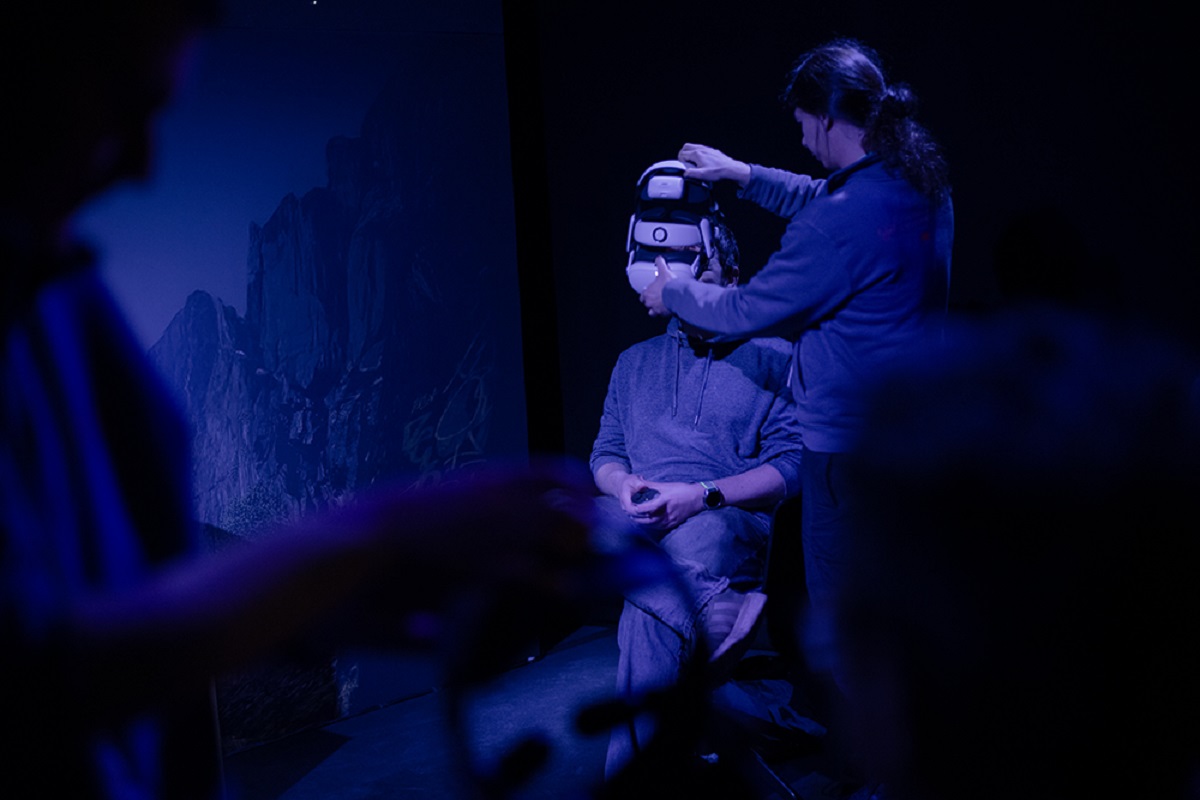
Haunts, a virtual reality installation narrated by Callum Scott-Howells in English and Steffan Donnelly in Welsh, is running at the Wales Millennium Centre in Cardiff Bay until Sun 12 Apr. Amy Ford followed up a previous interview with its co-director Tom Chetwode-Barton by further quizzing Lucy Hammond, creator of the Haunts concept, and executive producer David Massey.
Briefly explain the concept behind Haunts.
David Massey: A nostalgic, stream-of-consciousness experience that follows the story of 16-year-old Morgan, who is exploring his identity against the backdrop of a rural landscape. In this instance, Morgan’s reality is defined by music, distorted archive footage, photographs, digital art and virtual environments.
What is the inspiration behind the experience? And why now?
Lucy Hammond: The idea of where hangouts are in the modern day, compared to where they were in the 2000s. Where are the spaces and places that teenagers will be nostalgic about in the future? As a young person from a rural area, especially somewhere like north Wales, the kind of loneliness of some of the places you have to hang out when you’re a teenager – the bus stop, or a wall outside your corner shop – and your relationship with the landscape is really interesting.
In the story Morgan, our lead character, talks a little bit about being in between places, and I think there’s something kind of incredible about the idea of a haunt being imbued with power – the ghosts of all the people that have hung out there before. As a teenager, you’re between childhood and adulthood, so there’s a sense of movement and transition. That’s the space we’re trying to explore with the piece – that strange moment when you’re on the cusp of something, discovering yourself, and how you might remember that when you grow up.
For young people now, a lot of their shared spaces are digital; many people who originally opened a Facebook account have now deleted that. And what does that mean when some of your hangouts may not exist in the same physical way in the future?
David: The concept and pitch came from Lucy, at a time when we were in talks with the National Library Of Wales about granting artists the opportunity to explore the Wales Broadcast Archive. We started to explore how Lucy could mentor an emerging director from Wales, charting their life and cultural identity. Once we pitched the idea to the National Library – who’d been given Heritage Lottery Funds to support creative work using the archive – we went about seeking a Welsh director and writer [Tom Chetwode-Barton] and built a team! Lucy had worked with Dreaming Methods previously and loved their approach, so we wanted to collaborate with them on Haunts.
How did Callum Scott Howells become involved with the project?
Lucy: He came to our minds straight away. We just thought he’d be brilliant. He has this incredible track record of playing these really interesting queer characters. His performance in It’s A Sin, especially, was amazing, and he was the MC in Cabaret. He’s a really recognisable voice but also has this really great history of delving into characters like Morgan and kind of thinking about that mindset. He got stuck in with the script straight away and totally got what we were trying to achieve with the piece.
David: When Callum walked into the studio he was instantly present and an absolute joy, quickly understanding his role within a VR context, inviting audiences into the world that we were creating. Speaking to audiences is his power: meticulously framing each scene, guiding audiences gently through this personal yet very familiar story.

What does nostalgia mean to you – are there any examples of everyday things that make you nostalgic for another time?
Lucy: Any time an indie band from the 00s comes on the radio – the Libertines or even the Pigeon Detectives – that always makes me feel really nostalgic for that time. It felt very exciting and very sort of particular to young people to be into that music, like you were discovering all these bands for the first time, even though they were all heavily influenced by previous decades.
The other thing, which I think a lot of people relate to, is the theme tune to the Antiques Roadshow. It’s still on! I remember hearing that and thinking about going to school and college the next day – sort of bittersweet, a bit worried about what that week might hold ahead.
How did the combination of partners you worked with on this project – National Library Of Wales and Dreaming Methods, plus the musicians – bring your ideas to life?
Lucy: Tom and I visited the National Library Of Wales to look at the Wales Broadcast Archive, and there’s something about the wealth of footage from the 00s – even though it’s sort of in our recent history, fashions are so different, the way that teenage activities are discussed and looked at, the idea of indie bands and music culture, small gig spaces… that kind of thing was really interesting. In Haunts, you’ll see a couple of really interesting clips of people playing music either in their bedroom or at small gigs.
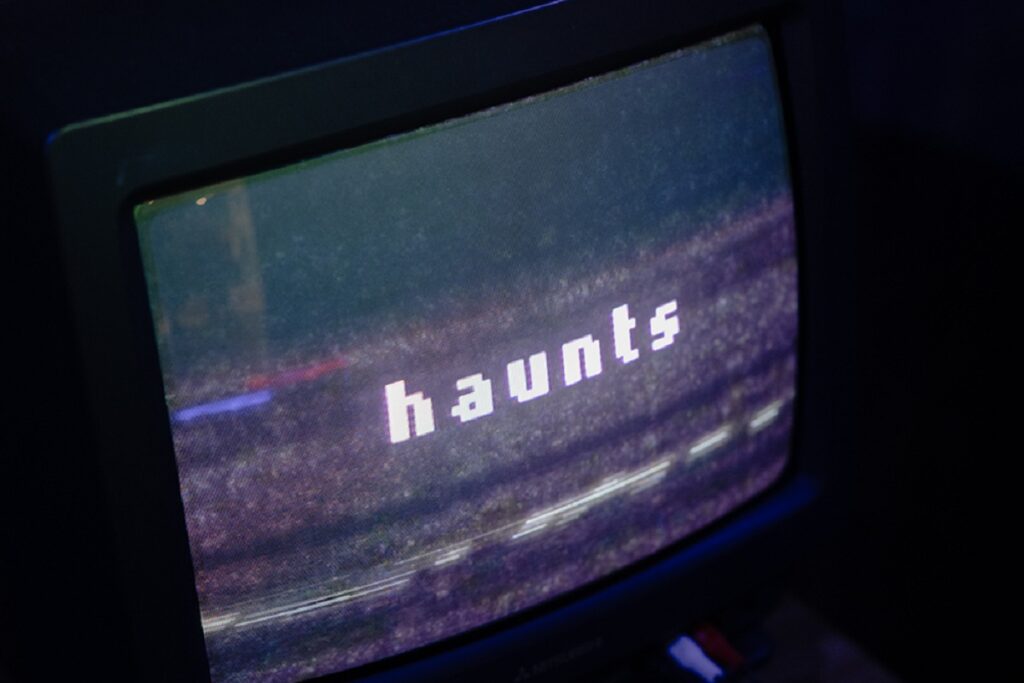
David: It was important for the music to shape the work, driving audiences through a familiar soundscape featuring Morgan’s eclectic playlist. Alongside this we had the titanic talents of Judi and Andy from Dreaming Methods, who took all of these ingredients to reimagine this vision in a way that feels rooted within Wales. Using archive, virtual environment and landscape, they carefully led on story design, the creative concept and its realisation for VR.
What are you hoping people will feel after experiencing Haunts?
David: I’m hoping that audiences will come away feeling as if they’ve inhabited a world for a fleeting moment that might feel distant and familiar. For many it might feel like a sucker punch or a bittersweet tale. Within the exhibition, I’m hoping it will create a conversation and naturally challenge conventions around new forms of storytelling.
Lucy: That people feel transported to another place and to another perspective, just for a short time. Happy to have stepped into someone else’s shoes, and ready to reflect on whatever their teenage years and haunts mean to them.
What’s next for you both?
Lucy: I’m currently pulling together another virtual reality project with Pilot Theatre, the company I’m immersive director for. Not sure when it’s going to go into production, but I’m working on that at the moment. And Pilot also have our theatre tour of Noughts & Crosses [across England throughout April and May].
David: At the Wales Millennium Centre, we’re working hard on producing Annwn – a new prize dedicated to immersive storytelling. Four shortlisted works from the UK, USA, Greece and France will be showcased as part of a major exhibition in May and June. We also have a couple of new XR productions in development that we plan to launch in 2027 and 2028.
Haunts, Wales Millennium Centre, Cardiff Bay, until-Sun 12 Apr.
Admission: FREE. Info: here
words AMY FORD

The 83-year-old looks back at his childhood in Liverpool on the new record, which comes out in May.
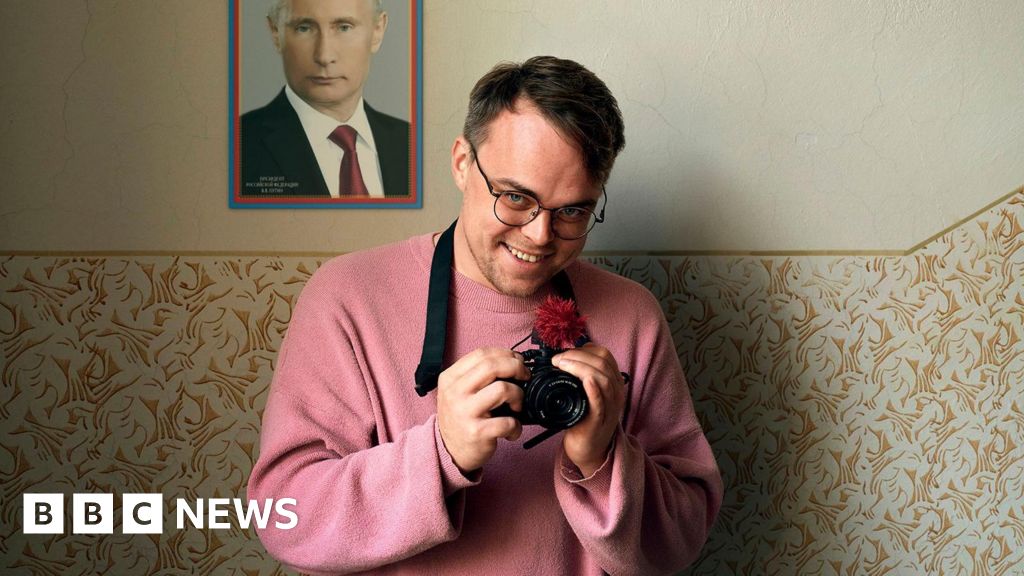
A court alleges that the documentary promoted “negative attitudes” about the Russian government and the war in Ukraine.
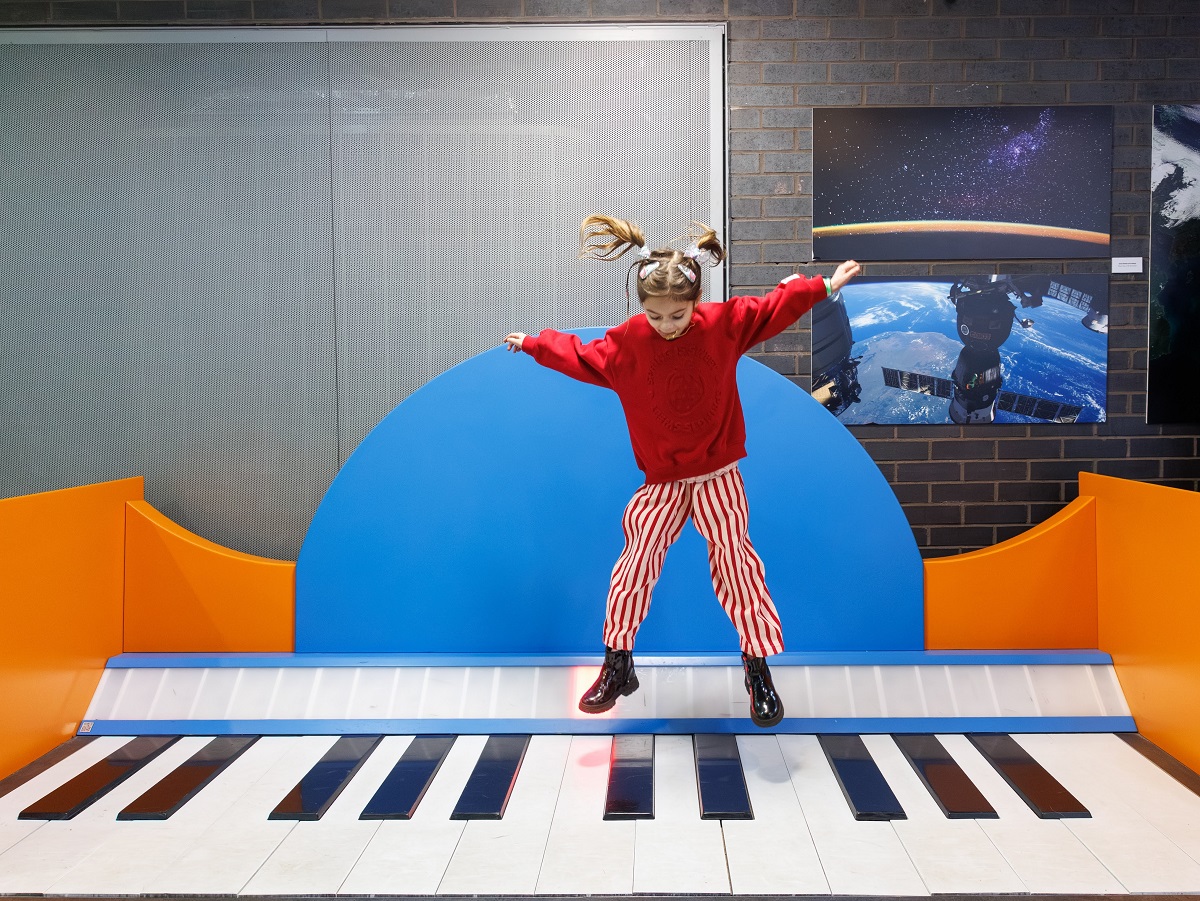
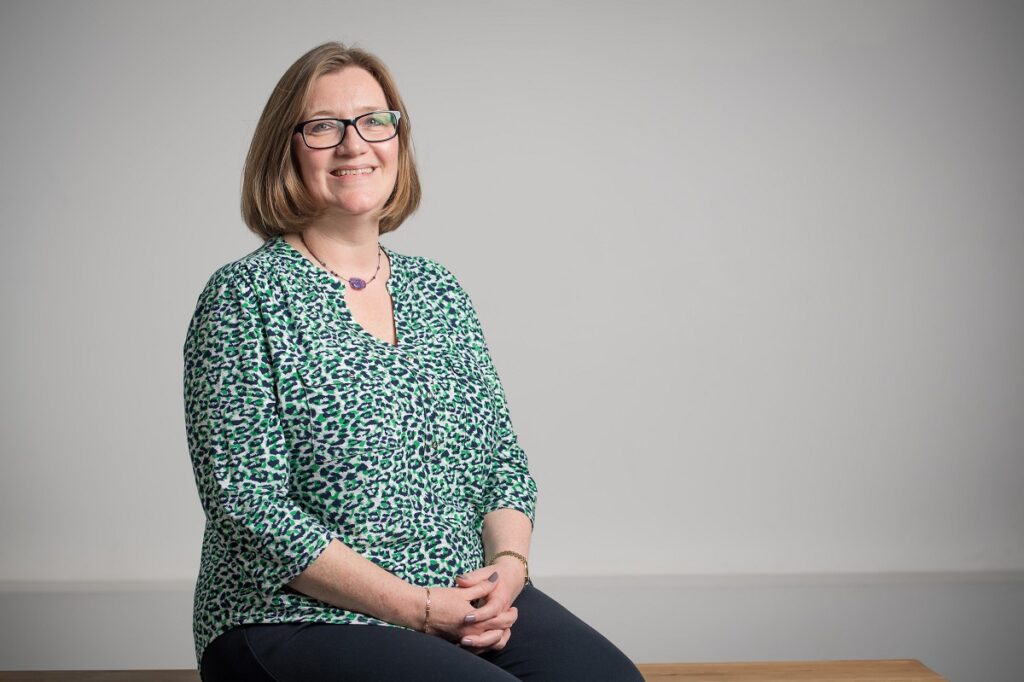
Set to mark 40 years open this November, Cardiff’s science discovery centre Techniquest is still one of a kind. CEO Sue Wardle met with Neve Blue to discuss its history, most enduring exhibits, birthday celebrations and future plans.
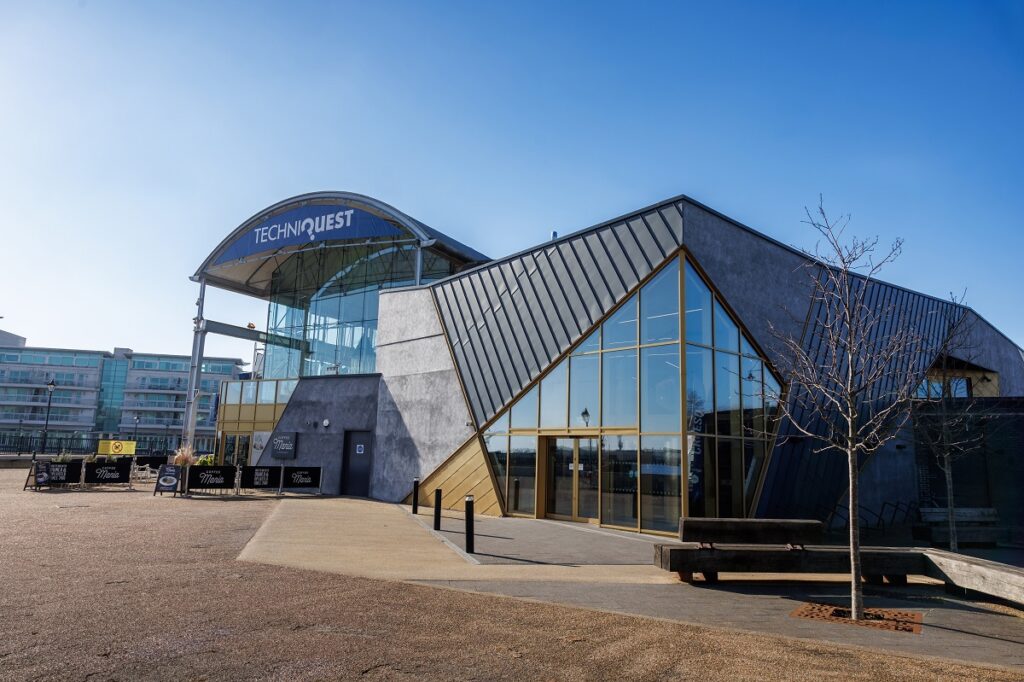
The name Techniquest is one liable to induce nostalgia and fondness for many people across Wales. Since it opened in Cardiff city centre in 1986, its mission has been to provide fun, educational experiences and displays to appeal to all ages. Now found in Cardiff Bay, where it’s been since the late 90s, and featuring over 100 interactive exhibits in its current incarnation, the discovery centre resides on Stuart Street, and on the site of a former heavy engineering plant.
As Techniquest CEO Sue Wardle and I take a stroll round the centre, she talks of its reputation with evident pride. “Our home is an amazing, iconic building – everybody would recognise what Techniquest looks like. We’ve been in it for 30 years, which is quite something, and it’s got its own history.”
That history is at the core of Techniquest’s 40th birthday celebrations. Its official opening date was 13 Nov 1986, in a building just across the road from Cardiff Castle, but there are anniversary events set to take place throughout 2026. “Our theme is 40 years of discovery,” says Wardle, “and within that we’ll be talking about the past, the present and the future. So the new exhibits coming on in July will be a nod to the past, bringing back some old favourites that visitors have asked us about, and some new exhibits as well.”
Last year, Techniquest launched a new interactive space, the Bradbury Zone – titled in reference to the Bradbury Foundation Hong Kong, one of the main funders that helped facilitate the area. Since its opening, the zone has been home to temporary activities and events, and is now set to become a permanent space, Create & Shape.
“It’ll be all around family interactive learning,” Wardle says of this space – a calmer space to sit down for family activity, in comparison to the busier, more active environment of many other sections of Techniquest. “You can’t have innovation and invention without creativity, so we champion the arts alongside STEM [science, technology, engineering and maths].”
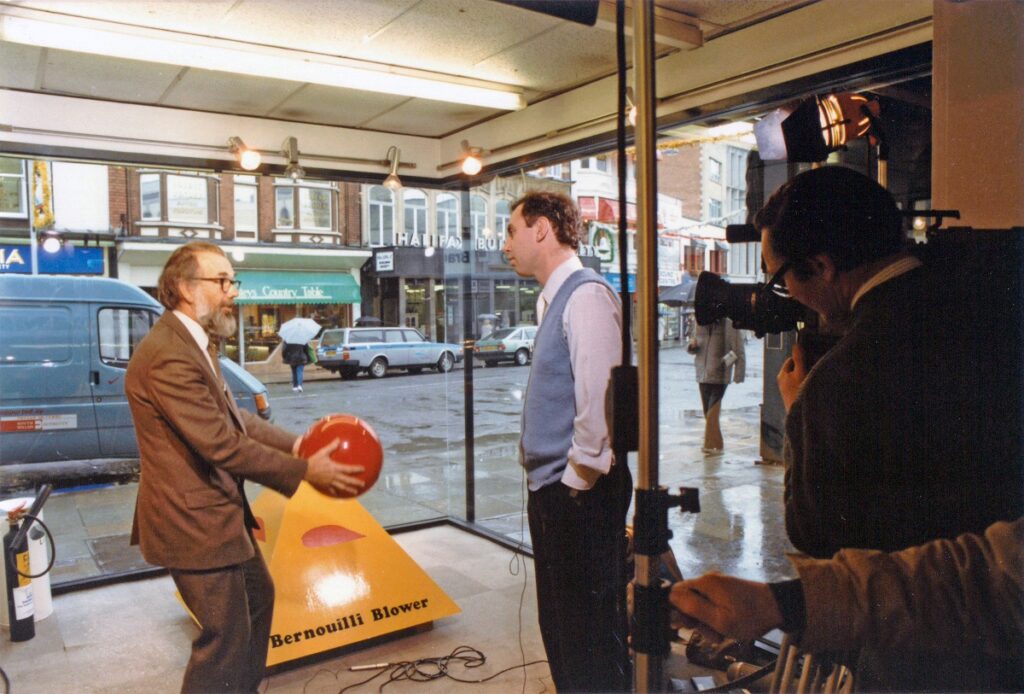
With a broad variety of exhibits having appeared on the Techniquest floor across four decades, some have proven to be favourites of returning customers throughout the years: the giant piano, plasma sphere, Bernoulli blower and the low light zone to name a few. By all accounts, plans to retire some of these have been reversed when it’s become apparent how popular they are with the clientele.
Alongside exhibits that have stood the test of time Techniquest, it’s also important for the centre to engage with new and ever-changing facets of STEM, such as the rise of AI. “We’re trying to stay relevant with everything that we do,” Wardle says. “We’re doing quite a lot of work at the moment with businesses to try and understand what they think the workforce of the future is going to be like.”
And, she notes, while AI is beginning to change and automate things, “I don’t think you can ever get away from the fact that young people are going to need communication skills and problem-solving skills. All of that stems from curiosity and asking questions, and that’s absolutely everything that we’re about here. Making science fun and hands-on; inspiring everyone, but mostly young people, to be curious about things.”
That 40-year milestone is also being commemorated in Techniquest’s premium pass, available from Fri 27 Mar and subject to a 40% discount for the first 40 days of its sale. Further news and updates will be posted on Techniquest’s website.
Info: techniquest.org
words NEVE BLUE

The presenter and long-time video game fan takes over from Phil Wang as the face of the prestigious show.

Disney+ says it has been given “unprecedented access” to the singer in her first major interview in 15 years.

When Smashing Pumpkins’ Billy Corgan recommended Courtney Love enlist Melissa Auf der Maur as Hole’s new bassist, Auf der Maur initially declined the offer. Yet destiny was calling, and in due course a spotlight alongside the world’s most famous widow of the time.
Auf der Maur, the bohemian child of a beatnik poet and a forward thinking hippy mother, became a vital part of the group. As Love – processing the deaths of not only Kurt Cobain but also Hole’s Kristen Pfaff, who fatally overdosed not long after relinquishing Hole bass duties – had her every move scrutinised by the media, Auf der Maur documented the whole thing. Even The Good Girls Will Cry begins at her first gig with the group, at the 1994 Reading Festival, before going back through her life. Raised by her mother alone, childhood took her all over the world (including a stint in Wales, in a circus caravan no less) before settling in Montreal.
By her teen years, Auf der Maur had fallen in love with British bands like The Cure and Tears For Fears, and had begun to document her life with her beloved camera. The results can be found inside this fascinating book, providing fantastic visual insight. If you weren’t lucky enough to be around in the 90s, Melissa Auf der Maur has done you a solid: Even The Good Girls Will Cry brings you about as close as is possible to experiencing it, without smearing your makeup or getting cigarette smoke on your clothes.