

At the age of 21, Nia Tyler was like any normal university student. She enjoyed socialising, going on nights out and believed that she was perfectly healthy.
At the age of 21, Nia Tyler was like any normal university student. She enjoyed socialising, going on nights out and believed that she was perfectly healthy.

Known for hits Total Eclipse of the Heart and Holding Out for a Hero, Bonnie Tyler’s passing was confirmed in a statement on her website.
The statement reads: “Bonnie’s family and team are heartbroken to announce that Bonnie unexpectedly passed away last night in hospital in Portugal as a result of the illness that she was being treated for.
“We will issue a further statement shortly but for now ask for privacy to deal with this tragedy.”
The singer’s death comes after she was placed into an induced coma following an emergency surgery at the start of May.
Tyler, who’s real name was Gaynor Hopkins, was born in Skewen and grew up in a council house in Neath.
The singer was discovered by talent score Roger Bell at a club in Swansea, and in 1977 Tyler released her first singer, Lost in France.
In 1983, Tyler became an international pop star following the success of Total Eclipse of the Heart, 43 years later the song passed a billion streams on Spotify.
The hit song spent two weeks as the UK’s number one and four weeks in the US.
Tyler earned a Grammy nomination for the song and for her album, Faster Than the Speed of Night and the singer Here She Comes.
Following the success of Total Eclipse of the Heart, Tyler released Holding Out for a Hero, which was used in Footloose, becoming its own anthem.
The album Faster Than the Speed of Night made her the first British female artist to have an album debut at number one on the UK Albums Chart.
In 2013, she was the UK’s act for the Eurovision Song Contest, coming in 19th place out of 26 acts.
Tyler earned an MBE for her services to music in 2023.

Heat can make symptoms worse (Image: Doucefleur via Getty Images)
The UK has been struck by yet another heatwave, and while many people relish the warmer weather, rising temperatures can trigger a range of gut-related complaints for a significant number of Britons. That’s the view of public health nutritionist Dr Emma Derbyshire, adviser to PrecisionBiotics.
She said: “Many Brits already suffer from problems such as bloating and stomach pain, but summer could make these issues worse.”
According to research by PrecisionBiotics, 43% of Brits have experienced bloating and 42% have experienced diarrhoea, with the same amount also experiencing constipation. Plus, one in five adults in the UK suffers from Irritable Bowel Syndrome (IBS).
These digestive complaints can take their toll on work, social commitments, sleep and exercise. So why exactly does summer place such a burden on our digestive systems? And what steps can we take to ease the problem?
Poor sleep

There are tips from a doctor to reduce the issue (Image: m-gucci via Getty Images)
Getting a decent night’s rest in the heat can prove rather difficult. Dr Derbyshire said: “A lack of sleep can impact gut health. In fact, a research review shows that gut dysbiosis – an imbalance in your gut bacteria- worsens sleep while poor sleep worsens gut health.”
A chilled glass of wine or beer on a sweltering summer’s day may seem like the perfect way to cool off, but it could be wreaking havoc on your gut. Dr Derbyshire said: “Alcohol damages gut health by triggering dysbiosis. This can then lead to bloating and gas. I recommend limiting your intake, having alcohol free-days and always pairing alcohol with water.”
Dehydration becomes far more likely in hot weather unless you make a conscious effort to drink water regularly. “Dehydration can slow digestion and limit the amount of fluid in the gut, making you more likely to experience constipation and bloating,” added Dr Derbyshire.
Approximately 44% of Brits report that not consuming sufficient water throughout the day is their primary trigger for stomach complaints, so it’s wise to keep a bottle of water on you at all times.
Crisps, fried snacks, chocolate and other ultra-processed foods can wreak havoc on your gut. Indeed, 24% of people claim these foods prompt digestive changes.
Dr Derbyshire said: “Ultra-processed foods are usually high in sugar, salt and saturated fats. Diets high in these foods have been associated with a decrease in microbe diversity in the gut and an increase in inflammation, which is not good news for our gut-brain axis.
“The gut and brain are closely connected through the gut-brain axis; a two-way communication network linking the digestive system and the brain. A diet that supports gut health may also help support mood, cognitive function and overall wellbeing.”
Tucking into sausages and burgers may not be such a treat for your gut. “These foods can often be harder to digest; the NHS recommends not eating lots of fatty, spicy or processed foods as this can trigger symptoms in some,” said Dr Derbyshire. Where possible, opt for whole foods and leaner cuts of meat such as chicken and turkey.
For some individuals, summertime digestive complaints such as bloating, wind and IBS can persist even after making straightforward adjustments to their diet and daily routine. Dr Derbyshire suggested that targeted probiotic strains could provide additional relief.
She added: “Try a proven targeted probiotic formulation to tackle gut health issues such as gas and stress – but it’s important to look to specific strains and here I would go for Bifidobacterium longum strains 1714 and 35624, which are found in PrecisionBiotics Alflorex Dual Action. These are rigorously studied probiotics species with 35624 having been shown in scientific studies to reduce gas and abdominal angst, and 1714 when studied was found to help reduce stress and cortisol levels and may improve sleep.”
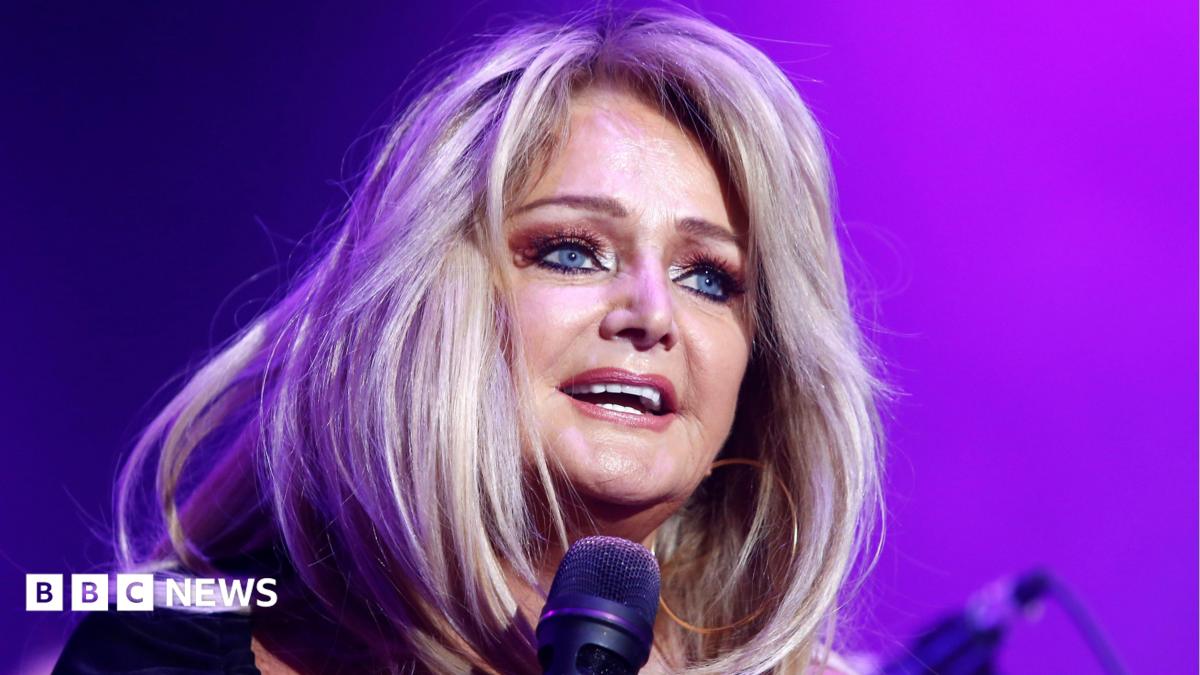
The official statement, released on Thursday morning, continued: “We will issue a further statement shortly but for now ask for privacy to deal with this tragedy.”
Welsh Secretary Jo Stevens has paid tribute to the singer following her death.
“So sad to hear of the death of Bonnie Tyler,” she wrote in a post on X.
“A Welsh music icon, Grammy and Brit award winner and the sound of my teenage years.”
Rhun ap Iorwerth, the First Minister of Wales added the singer was a “true icon”, and that he was “deeply saddened” by the news.
Tyler had been due to perform at the Sunshine Festival in Worcester this summer, along with a number of European dates.
She had also been booked to sing at Cardiff’s Utilita Arena on 17 December.
Family friend Owen Money told the BBC the singer “was one of those ladies who just loved life”, and he was “in disbelief” at the news of her death.
The musician and radio presenter said: “I’ve known her since before she was famous, in the late 60s when she was starting out in Swansea.
“She’s like family really. I was up her house last summer and the first thing she did was open a bottle of champagne.
“Not only were we friends but we were fans of each other. She was still huge in Europe, Germany, Holland, she was just so good. She’s a Welsh icon.”

Researchers have found that sexually transmitted shigellosis – which has risen in prevalence by a quarter in England since 2023 – is becoming ‘virtually untreatable’.

“My mother brought me up to believe in myself,” she told the BBC last year.
“I was a very shy little girl growing up in school, wouldn’t say ‘boobah’ to a goose, and I was very, very shy.
“But I’ve overcome that, because I love singing.”
Bonnie’s love for the industry was still clear in that interview, and she had just released a new single Yes I Can, a song about finding inner strength and believing in yourself.
Reports suggest that Bonnie and her husband, Robert Sullivan, own 22 homes worldwide, though they mainly split their time between Portugal and their home in Mumbles, Swansea.
Despite coming from a big, musical family, Tyler and Sullivan never had children.
She previously told BBC Sounds: “I absolutely adore children.
“You know when most people get on a plane and they avoid children like the plague, don’t they? Not me. I’m like, ‘can I sit here’?
“I did have a miscarriage when I was 40, I left it too late, you know? I wish I had started earlier, but my career took over and it was always, ‘next year, next year’.
“And then next year didn’t come until I was 39.”
After Tyler miscarried, she threw herself into work.
“We did try for another couple of years, but… we’re fine, we’re happy.”
She conquered the music world, and loved Europe – but Bonnie Tyler will always be remembered as the Welsh star who wasn’t holding out for a hero, but became one to millions herself.

The Welsh pop star died in hospital abroad, having been placed into an induced coma following an emergency surgery at the start of May and was being treated for an illness at the time of her death.
In a statement shared on her official website, Tyler’s family said: “Bonnie’s family and team are heartbroken to announce that Bonnie unexpectedly passed away last night in hospital in Portugal as a result of the illness that she was being treated for.
“We will issue a further statement shortly but for now ask for privacy to deal with this tragedy.”
Born Gaynor Hopkins in Skewen, she was discovered by talent scout Roger Bell while singing in a Swansea club and released her debut single Lost in France in 1977.
Country-rock song It’s a Heartache (1977) was her first big breakout hit worldwide.
Tyler’s raspy voice soon found international acclaim with the 1983 power ballad Total Eclipse of the Heart, which topped charts around the world and earned her a Grammy nomination.
The song spent two weeks at number one in the UK, four weeks at the top of the US charts, and has since surpassed a billion streams on Spotify.
Faster Than the Speed of Night, also released in 1983, was the title track of her highly successful UK number-one album.
Her follow-up single, Holding Out for a Hero, in 1984, featured on the Footloose soundtrack and became another global hit, while her album Faster Than the Speed of Night made her the first British female artist to debut at number one on the UK Albums Chart.
Her 1995 cover of Air Supply’s Making Love Out of Nothing at All was another top hit.
In 2013, she represented the UK in the Eurovision Song Contest, with her single Believe in Me, finishing 19th out of 26 entries.
The singer was awarded an MBE in 2023 for her services to music.
Tyler is remembered as a powerful performer whose music soundtracked the lives of generations and whose legacy will continue to inspire audiences around the world.
What is your favourite Bonnie Tyler song? Let us know in the comments.

Kelly Clarke flew to Athens for IVF treatment with a donor egg and sperm and welcomed Lyla Rae Clarke in March 2021 (Image: SWNS)
A single mother who gave birth to an IVF baby at the age of 50 was in “peak fitness” when she conceived and would encourage other women considering later-in-life motherhood – despite scientists claiming 49 marks the fertility decline. Kelly Clarke, 55, decided at 50 that following a successful career and extensive world travel, she was prepared to become a mother.
She travelled to Athens for IVF treatment using donor egg and sperm, and welcomed Lyla Rae Clarke, now five, in March 2021, weighing 7lbs 8oz. Kelly said falling pregnant was absolutely wonderful and would urge any woman contemplating it to take the plunge with IVF.
This follows fresh research from IVIRMA Global Research Alliance, an assisted reproduction medical institute in Italy, which discovered that older women experience reduced chances of successful fertility treatment, even when using young donor eggs, with a significant decline from approximately 49 years of age.
The study challenges the notion that donor eggs can “reset” the biological clock, as researchers suspect that age-related alterations in the womb lining may be responsible. Nevertheless, Kelly insisted this should not discourage women from attempting it.
Kelly, from Crawley, Sussex, said: “At the end of the day you’re as old as you feel. I was at my peak fitness when I conceived and I had the most amazing pregnancy, feeling her inside me was my dream come true.

Kelly Clarke with baby Lyla Rae Clarke at seven months old (Image: SWNS)
“Even though UK doctors called me geriatric, I had no medical problems at all. All I suffered from were migraines, but I already suffered from them and I couldn’t take my normal medicine.
“The only cravings were strawberries and pineapple and the only thing that got fat were my ankles. I couldn’t recommend it enough to anyone who was thinking about having a kid – just do it.”
“Geriatric pregnancy” is an outdated and disused term for pregnancy at age 35 or older. The new study examined 1,774 women and researchers discovered that once a woman reaches 49, there’s a critical threshold where the dangers of pregnancy exceed the advantages, even with donor eggs. It revealed that compared with women aged between 35 and 40, those over the age of 49 had significantly lower odds of achieving a live birth and more than double the odds of miscarriage.
The number of women in their fifties undergoing in vitro fertilisation using donor eggs has risen by 67 per cent over the past decade, according to figures from the Human Fertilisation and Embryology Authority, the UK’s fertility watchdog. Kelly spent 23 years working as a flight attendant before taking on prominent positions at Gatwick Airport. Kelly travelled to Athens, Greece, to undergo the IVF procedure in 2020.

Kelly Clarke decided aged 50 that, after a high-flying career and travelling the world, she was ready to be a mum (Image: SWNS)
She said: “I conceived with a donor egg and donor sperm, as the clinician said it was too risky to use my eggs, and the official recommendation was a donor. I trusted the experts completely. She is not my egg, but she is mine, I grew her and without me she wouldn’t be here.”
Since becoming a mother, Kelly has faced her share of difficulties, especially as a single parent, but believes being older enabled her to navigate the obstacles. She opted for the sperm donor path so she wouldn’t need to co-parent and could raise Lyla precisely as she wished.
Following redundancy during the pandemic, Kelly was compelled to rely on Universal Credit before retraining as a swim teacher. Seeking employment that would accommodate her new life as a mum, Kelly approached her daughter’s school for a position and now serves as a teaching assistant throughout the week.
She said: “When I became a mum I needed a good set up, so I went and sorted the good set up myself. I want to spend as much time as possible with Lyla Rae, I don’t want other people picking her up or dropping her off because that’s my job, so I went out to find something that fits around our schedule.
“I worked my socks off and paid my mortgage off just after Lyla’s first birthday, so now all my salary is spent on bills and Lyla. I don’t think I would have done as well as I am now if I was a younger mum, it would have been different and I would have made it work, but I wouldn’t have been able to do as much.
“For me at this point of my life, I don’t look at her and think ‘I need a babysitter so that I can go out and do things’. I’ve done the partying, I’ve done the flying, I’ve travelled, I’ve swam with sharks, I’ve done so much and I can show her all the pictures.
“Now I can share the experiences with Lyla and I’m not looking at her wishing her life away just so I can get mine back. My life is being a mummy and I’m living my best life.

Kelly Clarke after giving birth (Image: Kelly Clarke/SWNS)
“I’ve spoken to a few friends who were umming and ahhing about it and I would 100% recommend doing it. You’ll regret not doing it as once that baby is here, the love is worth everything and you’ll think thank goodness I did it.”
Now five years down the line, Kelly and Lyla Rae couldn’t be happier, sharing their daily walk home together.
Kelly said: “Lyla is amazing, I am so lucky. She is in reception at school and reads and writes so well, she knows my phone number, she is polite and kind. She is so chatty and a proper storyteller, just like me.”

Millions of households have been urged to check their rights following an alert from the energy regulator.
Ofgem has published updated guidance reminding consumers that stringent regulations exist ‘to protect you’ from being billed for historical energy consumption in many cases, after concerns emerged that some households are still receiving unanticipated demands. A back bill is issued when a gas or electricity provider has failed to bill a customer accurately, frequently due to an administrative error or meter faults.
While customers are required to settle a correct bill, Ofgem states that suppliers are typically prohibited from billing for energy consumed more than 12 months previously if the customer had not been properly invoiced or notified about the outstanding amount.
According to Ofgem’s back-billing regulations, households ordinarily do not need to pay for energy used over a year ago if:
Nevertheless, the protection does not extend to situations where a customer has “acted unreasonably” – for instance by obstructing meter readings, consistently disregarding requests for information or payment, or committing theft of gas or electricity. Martin Lewis calls for tougher rules.
The latest reminder follows consumer champion Martin Lewis telling MPs the current safeguards are not robust enough. Providing evidence to Parliament’s Energy Security Committee earlier this year, Mr Lewis stated thousands of consumers were still being sent bills they should not be liable for, despite the existing regulations.
He contended that the definition of customers who have “unreasonably obstructed” suppliers is too ambiguous, making it simpler for companies to challenge complaints. He also pressed Ofgem to mandate that suppliers must clearly outline customers’ rights whenever a back bill is sent out.
Mr Lewis also stated the 12-month limit should be reduced to six months, telling MPs: “We live in a modern digital age… Why should a firm take over six months to give you a correct bill? I can’t see any reason for that.”
Ofgem advises anyone who gets a back bill should first verify whether the supplier has adhered to the rules. If you think the demand covers energy that falls outside the allowed timeframe, you should contact your supplier straight away. If the supplier has taken money incorrectly, it should issue a refund.
Consumers finding it difficult to pay, or who think they should not have been sent the bill at all, are also urged to contact their supplier as quickly as possible. If the disagreement cannot be settled, customers can submit a formal complaint.
The watchdog also notes that additional assistance could be on offer for households concerned about meeting their energy bills. Further information is available here.

Traffic for drivers heading towards Pontypridd from Cardiff is currently flowing freely. However, there are long delays for those heading southbound towards the capital.
The most severe congestion is between Cilfynydd and Upper Boat.
Traffic at Cilfyndd(Image: Traffic Wales )
