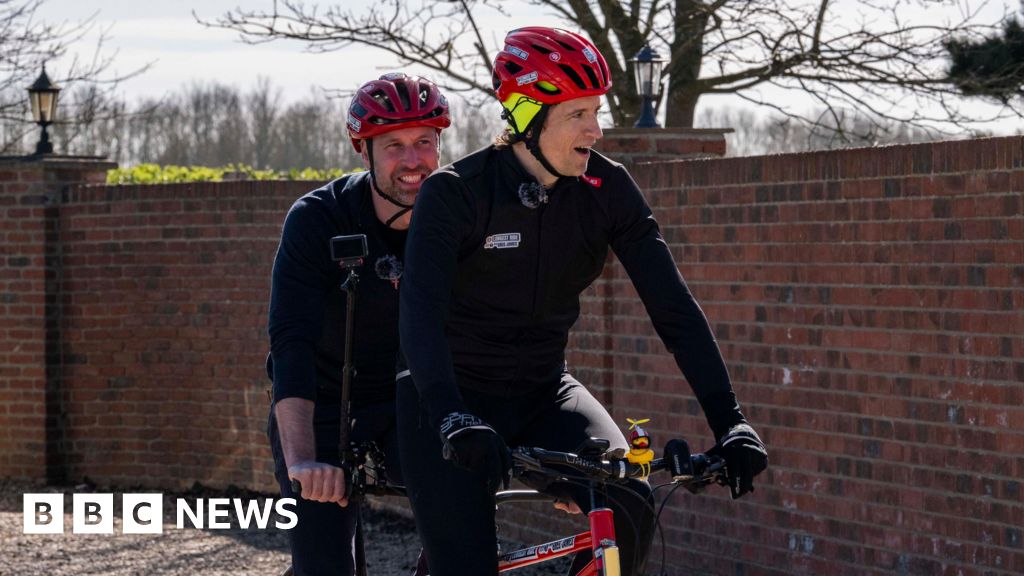
Andrew Mountbatten-Windsor is the latest in a long line of famous people photographed in the back of a car.
All Right Reserved. Designed and Developed by Martyn Jones.
Andrew Mountbatten-Windsor is the latest in a long line of famous people photographed in the back of a car.
Stars including Olivia Dean, Lola Young and Rosalía turned out for the Brit Awards in Manchester.
Since it first appeared on UK shelves in 1956, paracetamol has become the nation’s default painkiller – swallowed for everything from headaches and toothache to back pain and fever.
An estimated 200 million packets are sold over the counter each year.
Cheap, widely available and generally safe when used correctly, it is a medicine cabinet essential for millions of Britons.
But despite its ubiquity, paracetamol remains one of the most misunderstood drugs we take.
Scientists still debate exactly how it works in the body. Its effectiveness for some common conditions has been questioned in recent years.
And while it is safe at recommended doses, it is also one of the leading causes of overdose-related hospital admissions in the UK.
That leaves patients with some surprisingly basic questions: Should you take it before pain strikes or wait until symptoms hit? How long is it safe to use? And is there any real benefit in paying more for branded versions over supermarket generics?
So how did this small white tablet become a household staple – and how safe is it, really?

Since it first appeared on UK shelves in 1956, paracetamol has become the nation’s default painkiller – swallowed for everything from headaches and toothache to back pain and fever
Dr Deborah Grayson, a pharmacist with 30 years of experience, tells the Daily Mail: ‘When it comes to precisely what paracetamol does and how it works, it’s a bit unclear.
‘It’s not uncommon for scientists not to fully understand how medicines work – particularly those that act on the nervous system.’
Unlike ibuprofen, which reduces inflammation at the site of injury, paracetamol works primarily in the brain and spinal cord. Researchers believe it dampens the production of chemical messengers involved in pain and temperature regulation, though the precise mechanism remains under debate.
‘It reduces the production of substances called prostaglandins, essentially inhibiting the enzymes responsible for transmitting pain signals,’ says Dr Grayson.
‘There is also some suggestion that it acts on the cyclooxygenase-2 (COX-2) pathway, which plays a key role in inflammation.
‘Ibuprofen inhibits this enzyme too, though paracetamol does not appear to have the same anti-inflammatory effect.
‘Instead, paracetamol seems to work mainly by blocking pain signals in the brain.’
Here, Dr Grayson reveals exactly what you need to know about paracetamol…
Is branded paracetamol better than supermarket own-brand generics
With prices ranging from 35p for a packet of supermarket own-brand paracetamol to £2.35 for the branded equivalent, is there any real difference?
‘Standard 500mg paracetamol tablets are essentially the same,’ says Dr Grayson, dubbed the ‘Godmother of Pharmacology’.
‘There may be subtle differences in the non-active ingredients, such as fillers, colourings and binding agents, but they should work in exactly the same way.’
She adds that although the active ingredient is identical, prices can vary significantly between brands due to packaging, marketing and advertising.
‘Generic tablets usually have simpler packaging and aren’t heavily advertised,’ she says.
Do cold and flu medicines work better than plain paracetamol?
Paracetamol is often the first-line over-the-counter treatment for fever, headaches and body aches associated with colds and flu.
Many brands also sell dedicated cold and flu products formulated with a combination of active ingredients – most commonly paracetamol and a decongestant.
These typically come with a much higher price tag than plain paracetamol.
For example, a packet of 16 Lemsip Max Day & Night Cold & Flu Relief capsules costs £6.80 at Boots – 43p per capsule. By comparison, 16 Boots 500mg paracetamol tablets cost just 49p, or around 3p per tablet.
So is there any real benefit to choosing a branded cold and flu remedy over standard paracetamol?
‘While decongestants can make you feel a little better in the short term, they can actually worsen symptoms over time,’ says Dr Grayson.
‘You can end up more congested than you were before taking them. From a cold and flu perspective, you’re usually better off taking regular paracetamol two to four times a day to control fever and ease pain.’
What does ‘maximum strength’ paracetamol actually mean?
Many paracetamol products are labelled ‘maximum strength’ – a term Dr Grayson says can be misleading.
‘When a product is labelled ‘max strength’, it simply means it contains 500mg of paracetamol per tablet,’ she explains. ‘That’s the same dose as standard ‘regular’ paracetamol.’
According to the NHS, the maximum recommended dose for adults is two 500mg tablets, up to four times in 24 hours.
The phrase is often used on cold and flu remedies that combine paracetamol with other ingredients. The danger is that people may take more than one type of cold medicine at the same time, not realising they are stacking their total paracetamol intake – increasing the risk of serious liver damage.
In reality, ‘maximum strength’ usually just indicates that the product contains the highest dose permitted for over-the-counter sale in a single tablet, rather than a more potent formulation.
Does rapid-release paracetamol work faster?
According to Dr Grayson, there is some scientific evidence behind ‘rapid-release’ tablets, such as Panadol Rapid.
These formulations are designed to provide faster pain relief than standard paracetamol, with studies suggesting they can begin working within 30 minutes.
‘Typically, manufacturers add ingredients such as sodium bicarbonate to rapid-release formulas, which helps the tablet dissolve more quickly in the gastrointestinal tract,’ she explains.
‘They can also micronise the active ingredient – meaning the particle size is made much smaller – so it passes across the gut wall more easily.’
This allows the paracetamol to reach the small intestine faster, where it is absorbed into the bloodstream.
‘The difference in speed is often marginal, though,’ Dr Grayson adds.
While standard paracetamol can take up to an hour to take effect, rapid-release – particularly effervescent forms – may begin working in around 30 minutes.
Why is caffeine added to paracetamol – and does it help?
Paracetamol is often combined with caffeine to enhance its pain-relieving effects.
According to Dr Grayson, caffeine can accelerate the absorption of paracetamol, helping it enter the bloodstream more quickly. It also acts on adenosine receptors in the brain, reducing the perception of pain.
This is why products marketed for period pain and migraines frequently contain caffeine alongside paracetamol.
Caffeine also acts as a vasoconstrictor, narrowing blood vessels – particularly in the brain – by blocking adenosine receptors, which would normally cause them to dilate.
This temporary narrowing can raise blood pressure slightly and reduce cerebral blood flow, which may help relieve certain types of headache.
What’s the difference between paracetamol and co-codamol?
Paracetamol is also available in combination with codeine in varying strengths. Lower-dose formulations – commonly known as co-codamol – can be bought over the counter at pharmacies, while higher-strength versions require a prescription.
When taken together, paracetamol and codeine work through complementary mechanisms.
Codeine is an opioid that binds to opiate receptors in the brain and spinal cord, reducing the transmission of pain signals. Paracetamol works through a different pathway, primarily within the central nervous system.
‘It’s like an additional mode of action on top of the paracetamol,’ says Dr Grayson.
Is paracetamol safer than ibuprofen?
‘Paracetamol is gentler on the stomach than ibuprofen, but it is far more dangerous in overdose because it can cause irreversible liver damage,’ says Dr Grayson.
‘This is because ibuprofen inhibits not only COX-2, but also COX-1.
‘COX-1 is an enzyme involved in producing mucin and bicarbonate in the digestive system.
‘Mucin forms the protective mucus lining of the stomach, while bicarbonate helps neutralise stomach acid.
‘If you inhibit COX-1, that protective barrier is weakened, meaning the stomach lining can effectively be digested by acid and pepsin.
‘So if you’re taking ibuprofen over a prolonged period, blocking that mechanism increases the risk of gastric irritation or even erosion.’

Why is there a limit on how much paracetamol you can buy in the UK?
Paracetamol overdose is a leading cause of acute liver failure.
Compared with the US, where paracetamol can be purchased in large quantities, the UK tightly regulates sales to reduce the risk of overdose.
General retail outlets can sell packs of 16 tablets or fewer, while pharmacies can sell up to 32, with a maximum of 100 tablets per transaction. This legislation was introduced in 1998 to help prevent self-poisoning.
Can taking paracetamol too often cause headaches?
‘All painkillers taken regularly carry the risk of an analgesic overuse headache, with opiates being the worst,’ says Dr Grayson.
‘Taking painkillers pre-emptively on a regular basis can increase the risk. For people with chronic pain, this may be unavoidable, but if you’re taking them to prevent pain, there’s a real danger of getting caught in a perpetual loop.’
What happens if you take too much paracetamol?
While safe at the recommended dose, taking too much paracetamol can cause serious harm and requires urgent medical attention.
‘Most people are now hopefully aware of the risks, and we generally see fewer accidental overdoses,’ says Dr Grayson.
‘However, some people assume the occasional extra dose is harmless. The risk is higher if your liver isn’t functioning well or if you drink large amounts of alcohol.’
A deliberate overdose is a medical emergency, even if the person feels well.
‘Symptoms such as nausea, vomiting and abdominal pain usually appear 24 to 72 hours after an overdose,’ explains Dr Grayson.
‘Over the following days, jaundice, confusion, extreme drowsiness, and liver or kidney damage can develop. If the overdose isn’t treated quickly, permanent liver damage – even cirrhosis – can occur.
‘That’s why restrictions on over-the-counter sales were introduced: to prevent people stockpiling large quantities of paracetamol.’

Speaking at the White House, President Trump told expectant mothers to ‘tough it out’ and ‘fight like hell’ not to take the drug, claiming it was contributing to rising rates of autism
Does paracetamol really cause autism?
In September, US health chiefs urged pregnant women to take paracetamol – known as Tylenol in America – sparingly, advising use at only ‘the lowest effective dose for the shortest possible time’.
Speaking at the White House, President Trump went further, telling expectant mothers to ‘tough it out’ and ‘fight like hell’ not to take the drug, claiming it was contributing to rising rates of autism.
The remarks sparked an international furore – not least because in many countries, including the UK, paracetamol is recommended as the first-line painkiller during pregnancy.
Around half of pregnant women in Britain are thought to take it at some point, rising to about 65 per cent in the US.
Since then, a major research paper published in The Lancet has found no evidence that paracetamol use in pregnancy causes harm when taken as directed.
Major health bodies worldwide – including the NHS, the World Health Organization and the American College of Obstetricians and Gynecologists (ACOG) – continue to state that paracetamol remains the safest and recommended option for pain relief during pregnancy when used appropriately.

CNN’s Becky Anderson was forced to seek shelter live on air after bomb warning alarms went off in Abu Dhabi following Iran’s retaliatory missile strikes across the Middle East in response to US and Israel attacks
Hen’s Teeth (Sub Pop)
If you’ve not heard any of Sam Beam’s eight full-length albums as Iron & Wine, then it’s about time you fixed that with Hen’s Teeth. Beam has defined 21st-century Americana from the log cabin acoustic reveries of his 2002 debut album, going on to expand his sound and band exponentially.
Last year’s Light Verse album and this followup are close cousins, with the musicians sat right in a fertile groove during recording sessions – applying a loose jazzy grip to a cosy melange of folk, rock and country. Beam’s 23-year-old daughter, Arden, contributes poignant harmonies and backing vocals on several songs, with Singing Saw being the pick of the bunch and Defiance, Ohio a sweet tropicalia-tinged tune replete with whistling and strings. I’m With Her duet with Beam on Robin’s Egg and Wait Up.
Rivers of poetry course through the lyrics, with Grace Notes (“Forever was a word like a name in a sidewalk … live like I’m digging just for filling in a hole”) rejoicing in living in the moment and being thankful for small mercies – a rare joy for us all.
words CHRIS SEAL
Frightening photos of MRI images of babies in utero have once again gone viral – capturing people’s attention and reigniting the debate if undergoing an MRI while pregnant is worth the worry.
In MRI images, a fetus’s skeleton shows up brilliantly white against the darker soft tissue, so mothers can see the entire spine, every rib, the tiny skull and even individual finger bones.
In images that some say resemble a fossil preserved inside the living body, the eyes, because they are fluid-filled, appear as large, dark, hollow sockets that sometimes seem to bulge or stare out.
For moms-to-be, the circulating images can be unsettling and raise questions about safety and potential long-term effects.
In pregnant women, the standard of care to evaluate a baby’s abdominal organs, bone structures, heart function and development is an ultrasound, with fetal MRIs reserved for high-risk cases that require more information.
An ultrasound uses high-frequency sound waves to produce a black-and-white snapshot of the fetus’s tissues, organs and blood flow throughout the body without using radiation.
An ultrasound can provide doctors and expectant mothers with valuable insight about their babies, identifying cysts, tumors, infections, inflammation, blood clots and organ structural abnormalities.
MRIs for a pregnant woman may be performed if doctors are looking for signs of potentially deadly issues with the fetus, such as tumors, spinal cord injuries and structural abnormalities in the brain. It can also reveal torn ligaments, cartilage damage and joint disorders.

Unlike an ultrasound, an MRI can be uncomfortable. Pregnant women, especially in the third trimester, cannot lie flat on their backs for long periods due to the risk of compressing major blood vessels (stock image)

MRI scans of unborn babies have gained attention online for their striking clarity and slightly unsettling appearance. The skeleton stands out vividly white against softer tissue, revealing the full spine, ribs, small skull, and even individual finger bones
Your browser does not support iframes.
Fetal ultrasounds are an important part of prenatal care to ensure that fetal development is on the proper course without signs of structural abnormalities, growth restrictions or complications that could affect the health of the baby or mother
Most pregnant women do not undergo MRIs, particularly in the first trimester, unless medically necessary – largely due to concerns about the use of gadolinium-based contrast dye used to illuminate intricate organ structures, tissues and blood vessels.
The dye crosses the placenta and has been linked to higher risks of stillbirth and inflammatory conditions in exposed fetuses.
MRI uses strong magnetic fields and radio waves to generate detailed images. It does not use ionizing radiation like CT scans, meaning there is no radiation exposure to the fetus.
Most fetal MRIs are performed without contrast dye, using only the magnetic field to generate images, making the procedure itself safe for the fetus. The contrast concerns apply only to the small subset of cases where gadolinium is used to highlight blood flow or inflammation.
Whenever MRI images of babies in utero resurface, the comment sections are occupied by people in awe of the highly detailed, off-putting images.
In the comments of one recent tweet displaying the scans, one user said: ‘Terrifying or hilarious, depending on your mood.’
Another said: ‘What the hell is this gang?’
A third wrote: ‘That’s definitely not a human baby’ followed by a smiling, teary-eyed emoji.
Among nearly 3.5 million pregnancies across six US health systems between 1996 and 2016, 0.4 percent of pregnant women – about one in 240 – underwent an MRI during pregnancy.
Rates increased significantly over time, from 0.1 percent in the late 1990s to 0.8 percent by 2011 to 2016, and no known harmful effects to the baby have been found.

A 2023 study of 156 pregnant women revealed a sharp divide: while 80 percent would undergo a doctor-prescribed MRI to diagnose a potential issue, only 24 percent were willing to participate in MRI research
Research shows there is a clear division of opinion among pregnant women about MRI during pregnancy, and this division depends heavily on why the MRI is being done.
A 2023 study of 156 pregnant women found a dramatic split. Eighty percent were willing to undergo an MRI prescribed by a doctor to diagnose a potential problem, but only 24 percent were willing to participate in an MRI for research purposes.
According to the researchers, this suggests that when women perceive a direct medical benefit, such as diagnosing a complication or evaluating their baby’s health, they are far more receptive to the procedure.
That same study revealed significant underlying concerns. About 94 percent of women wanted more information from their doctor before feeling comfortable and only 10 percent felt they had prior knowledge about MRI safety during pregnancy.
Even with rising rates, fetal MRI is still uncommon and is performed only at specialized centers with experts in reading them.
Most pregnant women receive two to three ultrasounds during their pregnancy.
Data suggests there may not be any long-term consequences of a prenatal MRI.
A 2020 study in the American Journal of Neuroradiology tracked children whose mothers underwent MRI during pregnancy to see if it affected their development. Researchers compared 131 children exposed to MRI in the womb to 771 unexposed children.
At ages two-and-a-half to six, they found no differences in communication, daily living skills or motor function. The exposed children actually scored slightly higher on socialization, leading the authors to conclude that non-contrast MRI during pregnancy poses no measurable harm to long-term neurodevelopment.

Fetal ultrasounds are an important part of prenatal care to ensure that fetal development is on the proper course without signs of structural abnormalities, growth restrictions or complications that could affect the health of the baby or mother
Unlike an ultrasound, an MRI can be uncomfortable. Pregnant women, especially in the third trimester, cannot lie flat on their backs for long periods due to the risk of compressing major blood vessels, and positioning must be carefully managed. The long, narrow tube can induce claustrophobia and anxiety.
An ultrasound, on the other hand, is far more comfortable. The procedure is typically performed with the mother lying slightly reclined or on her side while a technician glides a handheld wand over her belly.
There is no enclosed space, no loud banging noises and no requirement to lie completely still for long periods. The scan is painless, takes about 30 minutes and allows the mother to watch her baby moving in real time.
For parents, a prescribed fetal MRI rarely comes as a surprise. It usually follows an ultrasound that flagged a potential problem, making the detailed images a source of anxiety for many moms-to-be.
But for millions of moms, the advanced scan is a crucial warning sign, an introduction and time to prepare for whatever health issues in their baby they are likely to contend with in the coming months. So while they can be anxiety-inducing, they can also be illuminating and, supply vital information to make important future decisions.

Labour MP Josh Simons has resigned as a Cabinet Minister(Image: Sky News)
Labour MP Josh Simons has stepped down as a Cabinet Office minister following an inquiry into claims that a think tank he headed before joining Government commissioned surveillance of journalists.
Labour Together, regarded as one of the most influential bodies within Labour circles, was accused of paying Apco Worldwide £36,000 to investigate reporters who had written articles about its work.
An inquiry by Sir Keir Starmer’s ethics adviser concluded that Mr Simons had not violated the Ministerial Code, but the Makerfield MP said he had “become a distraction from this Government’s important work”.
Mr Simons had faced mounting pressure to quit and had maintained that Apco had been engaged to look into an unlawful hack. In a letter to the Prime Minister, ethics adviser Sir Laurie Magnus said Mr Simons now accepted that the terms he had agreed with Apco were “wider than he had understood” and that he had acted “too hastily in confirming their appointment”.
Sir Laurie said Mr Simons had acted “in good faith” and noted that the MP acknowledged the “perceived gap between his public statements and what he now accepts appears to be a more extensive scope has been damaging”, reports the Express.
He added: “I see no basis for advising you of any breach of the Ministerial Code by Mr Simons but you will wish to consider, in the light of this distraction and potential reputational damage, whether he continues to hold your confidence as a member of your Government.”
The Prime Minister said he accepted “with sadness” the resignation of Josh Simons from his position as a Cabinet Office minister.
“I want to express my thanks for the commitment, focus, and energy you have brought to ministerial office,” he said in his response to Mr Simons’ resignation letter.
Sir Keir added: “In accepting your resignation, I also want to place on record that the Independent Adviser, Sir Laurie Magnus, found no breach of the Ministerial Code. I am grateful for your full and proactive cooperation throughout his work. I understand that, to avoid any ongoing distraction from delivering the Government’s mission, you have taken the difficult decision to step aside. I respect that decision, and I look forward to continuing to work with you in driving forward the Government’s priorities.”
In his resignation letter, Josh Simons stated: “I welcome that Sir Laurie Magnus has cleared me of breaching the Ministerial Code. It was important to me to complete this process to prove that I behaved with integrity and that my public statements have been truthful and honest.
“Nonetheless, it is clear that my remaining in office has now become a distraction from this Government’s important work. For that reason, and with sadness and regret, I offer my resignation. It has been an honour to serve this great country.
“The work of reporters like Gabriel Pogrund, Harry Yorke, and Henry Dyer sustains our democracy. With rigour and objectivity, they hold those in positions of power to account. In an age when trust in politics is low, anything perceived to be an attack on their integrity and independence deserves thorough investigation. As I have said many times, I never sought to smear these newspaper reporters.”
Apco was commissioned to investigate the “sourcing, funding and origins” of coverage in 2023 regarding Labour Together’s failure to declare more than £700,000 in donations. The think tank was fined £14,250 in September 2021 for delayed reporting of donations between 2017 and 2020, after a self-referral to the Electoral Commission.
Shadow Cabinet Office minister Alex Burghart said Sir Keir Starmer ought to have dismissed Mr Simons sooner. In a post on X, he wrote: “Labour waited to refer the case to the Independent Adviser to delay judgement until after the by-election (fat lot of good that did). Need full investigation into Labour Together now.”
Close allies of Mr Simons maintain he has done the “responsible thing” to bring an end to the “distraction”, and that he never sought to smear or investigate journalists. They insist he “won’t be quiet on the backbenchers” but will argue passionately for change that benefits the country.
A further ally added: “In stepping aside despite being cleared, Josh has shown he’s the type of person to take responsibility and put the long term direction of the Government first. He’ll not give up his energy in driving the party and this country forward.”
Ticketmaster says it has cancelled some new tickets for Harry Styles One Night Only Manchester show.
With glossy, tumbling blonde hair and an enviable figure, Destiny Deakin, 25, looks every inch the fitness devotee.
At 5ft 8in and 9st 5lb – a trim size eight – she exercises daily and follows a healthy diet. But it hasn’t always been this way – far from it. At the age of 12, Destiny tipped the scales at 14 and a half stone. She was, shockingly, an adult size 18 – and a target for relentless bullying at school, where she was cruelly labelled ‘beefburger girl’.
So what triggered this remarkable transformation?
Destiny wholly credits an intervention that has quietly fallen out of favour. Between the ages of 12 and 14 she attended two six-week residential weight-loss camps, where she learned to manage her diet and exercise, and lost a cumulative two stone.
Known as MoreLife, the Bradford-based programme was the only residential camp of its kind operating in the UK at the time, and placed an emphasis on long-term lifestyle change rather than rapid weight loss. Destiny’s time at MoreLife was captured in a BBC Three documentary, I Know What You Weighed Last Summer, which aired a decade ago.
Today, speaking to The Mail on Sunday, Destiny and other former attendees say their experiences show that supportive camps can deliver lasting change, rather than short-term weight loss alone. In the US, where so-called ‘fat camps’ are more common, critics raise concerns about stigma and potential psychological harm – criticisms that have helped push such programmes out of favour.
But Destiny says it marked a turning point, helping her rebuild her health and establish enduring habits after years of feeling defined by her size.
And the need for such intervention is clear.
Official figures show around one in ten children in England are obese when they start school, rising to about one in five by the time they move on to secondary education. Research suggests that these children are up to five times more likely to remain overweight as adults, significantly increasing their risk of life-threatening conditions such as Type 2 diabetes and heart disease.

Destiny Deakin is 5ft 8in and 9st 5lb – a trim size eight. She exercises daily and follows a healthy diet. But it hasn’t always been this way…

… before attending her first weight-loss camp at the age of 12 she was a target for relentless bullying at school, where she was cruelly labelled ‘beefburger girl’
In response, the medical profession is increasingly turning to powerful weight-loss injections or surgery to tackle the problem.
A recent investigation found that about 400 children have been given NHS-prescribed jabs such as Mounjaro and Wegovy, with the youngest aged just nine – prompting debate over whether lifestyle interventions have been sidelined too quickly.
Recalling her childhood, Destiny says: ‘The boys in my class would bully me, calling me fat or “beefburger girl”. I would put on a brave face, but go home and feel so sad.’
While Destiny, from Dudley in the West Midlands, was an active child, enjoying netball and dance, she struggled with cross country and swimming lessons.
‘We were forced to run in cross country, which I found hard because of my weight and I lagged behind my friends. I ended up making excuses each week, saying that I was on my period or that my leg hurt. Swimming was the worst, and I would make my mum write me a sick note because I didn’t want the boys to see me wearing a swimming costume.’ She admits: ‘After school, I would spend my pocket money at the corner shop on sweets, energy drinks and chocolate bars and then put the wrappers in the dustbin so my mum wouldn’t see them. If my mum asked if I’d eaten anything, I’d say no. In reality, I’d usually eaten my daily calorie allowance, and then some, before dinner.
‘Mum would send me to school with fruit, and it’d still be in my bag at the end of the day because I didn’t want it.
‘There was no way for her to track what I had eaten at school. I could have three pizzas if I fancied.
‘She would ask why I was so sad, and say things like, “Do you think you’d feel better if you lost some weight?” But to me, it just felt like she was being mean.’
Destiny often spent time at her grandmother’s house after school and during summer holidays, where she admits she was given ‘literally whatever I wanted’.
‘When the camp was first suggested to me, I said flat out that I wasn’t going,’ she says. ‘I used to stay at my nan’s during the six-week holidays, where there were treats like fizzy pop, crisps, pizza and chocolate.
‘I knew that if I went to camp, I wouldn’t be able to have any of this.’
Her experience isn’t unique. Studies have repeatedly shown that children who struggle with their weight are more likely to gain excess pounds during school holidays, when routines fall away and access to structured meals and activity is lost.
At MoreLife, children followed a portion-controlled diet alongside daily physical activity designed to improve fitness in a supportive environment.
A typical day involved swimming, team sports such as basketball and dodgeball, and running drills, balanced with classes on nutrition, lifestyle and body image. But foods often considered ‘off limits’ were not banned. Chips and pizza appeared on the menu, and the programme even included a supervised trip to McDonald’s – intended to teach moderation rather than avoidance.
‘On your first day, you get a daily calorie allowance based on your weight, height and how much you need to lose,’ Destiny says.
This approach meant some children were on more restrictive diets than others. ‘There used to be a lot of arguments over foods, because some people were hungry and wanted bigger portions,’ she adds. ‘There were times that I was hungry, but that’s the entire point of losing weight.’
Destiny, now a pharmacy dispenser, credits the programme with reshaping her habits.
‘On a typical day we’d get up, have breakfast and then do a lifestyle session. That might be a trip to Sainsbury’s to look at sugar and calorie content in cereals. And then you’d spend a lot of the day exercising.

Jordan Smithy attended the camp at the same time as Destiny, when he was 17 and weighed 19 stone. He lost just under a stone during his stay and has since shed more than three

Now 27, Jordan says: ‘If I hadn’t gone to that camp, I genuinely think I’d be in a much worse place today.‘

A typical day at the camp involved swimming, team sports such as basketball and dodgeball, and running drills, balanced with classes on nutrition, lifestyle and body image
‘Even ten years on, choices I make stem from being at camp. ‘It’s simple things – like being taught to look at the traffic-light system on food packaging. To this day, I still do that when I shop.
‘Looking at my lifestyle now, I do 60 minutes of exercise every day. I go to the gym, take my vitamins, drink my water – all things I learned there. I still have McDonald’s as a treat, but I always go for a grilled chicken wrap, and I always get zero-sugar drinks.’
Jordan Smithy, now 27, attended the camp at the same time as Destiny, when he was 17 and weighed 19 stone. He lost just under a stone during his stay and has since shed more than three.
Jordan says: ‘If I hadn’t gone to that camp, I genuinely think I’d be in a much worse place today. I’d almost certainly be a lot heavier.
‘It gave me the confidence to become a personal trainer and fitness coach, and eventually to audition for a singing competition show. I was a really shy kid who never spoke to anyone. When you lose weight, everything changes.’
He says the camp didn’t just alter his body, but fundamentally rewired his mindset. Before attending, he lived on takeaways, hated exercise and struggled to run. At camp he learned about portion sizes, calories and how to structure daily movement.
Around 120 eight- to 17-year-olds from across the UK attended MoreLife each summer, which was based at a boarding school in Bradford.
Children could stay for up to six weeks at a cost of £1,000 per week, with places largely funded by local authorities or the NHS – as was the case for Destiny.
Over the two decades it operated, around 6,000 youngsters passed through the programme. But in 2018 it closed after public funding dried up.
MoreLife founder Professor Paul Gately says that the decision to withdraw support was short-sighted. He argues that the programme was highly effective at helping children lose weight and keep it off, and insists that education around food and nutrition should come before medical intervention.
He says: ‘From a scientific perspective, weight-loss camps are still the most effective option for children with obesity.
‘This isn’t just about weight – it’s about changing the direction of a child’s life.’
Professor Gately has published a series of studies tracking the impact of his programmes.
The research shows that over six weeks, children lost an average of around 13lb, alongside significant improvements in fitness, self-esteem and body image.
Of the decision to close the camp, he adds: ‘We ran it at a loss for years because we believed in it. But it became unsustainable. As a scientist, it’s frustrating that we’re not doing what we know works.’
The NHS spends an estimated £6.5 billion a year treating obesity-related ill health in England – a figure projected to rise to £9.7 billion by 2050. But not everyone is convinced residential camps are the answer – as putting the estimated 600,000 obese children in the UK through camps could be a complex and expensive endeavour.
Dr Alex Miras, an obesity expert at Imperial College London, says: ‘If you want a large public health impact, you need to reach a lot of children – and from a practical perspective, that can be challenging.’
Professor Gately, however, points to the recent National Citizen Service – a Cameron-era Conservative initiative that ran between 2009 and 2025 – which saw one million teens put through a two to four-week personal development programme. It offered residential ‘away from home’ experiences, outdoor challenges, and community volunteering. ‘It shows these things can be done, if the political will is there,’ he says.
Nichola Ludlam-Raine, a registered dietitian who worked at the MoreLife camp, adds: ‘Evidence shows that while children may lose weight in intensive short-term settings, maintaining that once they return to their normal home, school and social environments is much more challenging.
‘Today, most public health guidance supports whole-family, community-based interventions delivered over time, rather than residential camp-style models.
‘That doesn’t mean structured programmes have no place, but they must be evidence-based, multidisciplinary, psychologically safe and focused on health behaviours rather than weight alone.’
A government spokesman said: ‘Every child deserves the best possible start in life, which is why we are taking decisive action to tackle childhood obesity.
‘We are restricting junk-food advertising before 9pm and stopping fast-food outlets opening near schools. Our Ten-Year Health Plan will shift the focus from sickness to prevention, to create a healthier future for every child.’
For Destiny, that focus on prevention is deeply personal.
‘People don’t believe I was once a size 18,’ she says. ‘But I’ve worked really hard not to be that person any more. I’ve flipped everything on its head – my diet, my exercise and my lifestyle. I’m maintaining my weight, loving life and living well.’
Her experience is echoed by Jordan. When the BBC Three documentary was uploaded to YouTube in 2021, he began receiving messages from strangers who recognised him.
‘I had a message just yesterday asking what the camp was like and whether I’d recommend it,’ he says. ‘I absolutely would. If a camp like that were running today, I’d work there in a heartbeat.
‘I’d love to give back what I needed to learn as a kid, and help children now so that, in ten years’ time, they can be where I am.’

You could say we were being gaslit, but no one could afford the gas.
Before President Trump, Americans were told that high energy prices were inevitable or controlled by Vladimir Putin. We were fed the lie while then-President Joe Biden begged for foreign oil as the unavoidable cost of the “energy transition.” [some emphasis, links added]
Then something remarkable happened. We changed presidents.
In his State of the Union address, President Trump laid out what has unfolded in just one year: energy prices falling, production surging, exports expanding, regulatory barriers dismantled, and American leverage restored.
Energy dominance didn’t require a technological breakthrough. It required leadership.
This week, U.S. oil output approached nearly 14 million barrels per day, the highest level in our history. The president noted that oil production has increased by more than 600,000 barrels per day since he returned to office. But wait, there’s more: natural gas production has reached an all-time high.
That matters not just for oil and natural gas producers in Texas, New Mexico, North Dakota, and Pennsylvania — it matters for every American who pays a utility bill, heats their home, or buys groceries transported by truck.
Gasoline prices, which had spiked above $6 per gallon in some states under the Biden administration, have fallen sharply. In many states, prices are now below $2.30 per gallon, with some markets even dipping below $2. That is not an accident. It’s supply meeting demand.
Energy is foundational. When it becomes affordable, everything else becomes more affordable. But production alone does not equal dominance. That’s why President Trump moved quickly to restore America’s role as a global energy superpower.
He repealed the Biden-era natural gas export halt. The result: approval of a $750 billion export deal that strengthens U.S. allies while weakening hostile regimes.
When Europe, Asia, and developing economies buy American natural gas, they buy stability. They buy reliability. They buy freedom from coercive energy suppliers like Russia. The idea is simple: energy security leads to national security.
That same logic applies to critical minerals.
For years, the United States ceded control of essential mineral supply chains to Communist China. The minerals that are necessary for defense systems, advanced electronics, grid infrastructure, and modern manufacturing.
For rare-earth minerals, China was responsible for anywhere from 70 to 80 percent of America’s needs. That’s not dominance, that’s dependence.
That’s why President Trump announced the creation of a Strategic Critical Minerals Reserve. America has a strategic oil reserve. We need one for critical minerals, too.
For years, the eco-Left was fine with importing dependence from our adversaries while protesting any project here at home. Thankfully, energy policy is no longer being written to satisfy activist pressure groups. It is being written to power the country.
Even as artificial intelligence and large data centers increase electricity demand, the administration has protected ratepayers.

Rather than allowing massive tech companies to shift new costs onto households, the president announced a ratepayer protection pledge requiring major tech firms to build their own power generation capacity. No word yet on how much of the new power demands are being carried by wind and solar
Consumers have more freedom than they did a year ago. The EV mandates that imposed rigid vehicle standards and narrowed consumer choice are in the dustbin, where they belong.
Americans can once again choose the vehicles that fit their needs without federal coercion reshaping the marketplace.
These are the consequences of coherent energy policy: increased supply, expanded exports, secure minerals, less regulatory drag, consumer protection, and stronger allies.
For years, Americans were told scarcity was responsible, higher prices were inevitable, and that domestic energy production had to be restrained. They were sold a lie that fossil fuels were a liability.
But scarcity was not inevitable. It was a choice. Abundance is a choice, too.
In just one year, the United States has strengthened its strategic leverage abroad, reduced consumer costs at home, and rebalanced regulatory policy toward growth instead of constraint.
Energy dominance didn’t require a revolution in technology. It didn’t need trillions in subsidies. It didn’t necessitate punishing consumers.
To achieve American energy dominance, all we needed was a new president.
Read more at Townhall

Help us create an environment in which people fifty and over can fulfill their aims and objectives in life. Fight age discrimination and help preserve and promote the independence, dignity and positive image of people fifty and over and work to ensure that they have appropriate and adequate public care provision.
All Right Reserved. Designed and Developed by Martyn Jones.