Long celebrated as an aphrodisiac, this shellfish option may now have another reason to earn its place on a dinner menu – it could also help calm inflammation in your gut.



All Right Reserved. Designed and Developed by Martyn Jones.
Long celebrated as an aphrodisiac, this shellfish option may now have another reason to earn its place on a dinner menu – it could also help calm inflammation in your gut.

The presentation is due to take place at St Augustine’s Hall, Albert Road, Penarth, on Thursday, July 23, with doors opening at 6.30pm and the talk starting at 7pm.
David Noble, the evening’s guest speaker, will discuss progress since the last update in 2025, highlighting notable nominees for Blue Plaques and two of the planned information boards.
Launched in late 2021, the Heritage Project aims to document Penarth’s history through information boards, blue plaques, QR codes, and an interactive guided tour.
The project also includes Alan Thorne’s book detailing Penarth’s street names.
Mr Noble will share some lesser-known ones, and attendees can also inquire about their own street’s name origin.
The event can be booked at https://www.penarthsociety.org.uk/event-details/pcs-july-penarth-town-heritage-trail-update-david-noble-2026-07-23-18-45
Entry is free for members and £3 for non-members.

When GPs told 14-year-old Charlie Thompson his persistent headaches and dizziness were caused by vertigo and bad posture while gaming online, the youngster could not have imagined the far more sinister truth.
Yet when Charlie, from Staffordshire, was rushed to A&E by his father after his pain was so severe that it caused nausea and vomiting – it was clear that simply slouching was not the root cause.
In fact, more than one year after his first complaint of a sore head, Charlie and his family were dealt a catastrophic blow – the teenager had not one, but two, fast-growing cancerous tumours located in the middle of his brain.
Known as medulloblastoma, it is the second most commonly diagnosed brain tumour variation in children, with approximately 52 cases per year.
However, the odds of having two separate, primary masses like Charlie has makes up just one per cent of occurrences.
In the space of only one month, Charlie had emergency surgery on the larger tumour and was told he must begin a 12-month-long treatment plan including chemotherapy and specialised radiotherapy in Birmingham and Manchester.
For Charlie’s family, including dad Ashley Thompson, 44, this will mean expensive travel to-and-from numerous appointments, costly hotel stays and providing other essentials to make his son comfortable.
To accommodate the escalating expenses, Mr Thompson – who is a bricklayer by trade – has set up a GoFundMe to raise the £5,000 needed, after taking a short hiatus from work to take care of Charlie.
For football-lover Charlie Thompson, the hope is he will be able to live a ‘normal life’ after treatment

Charlie was told by GPs his persistent headaches and dizziness were caused by vertigo and bad posture while online gaming – when in fact, he had two brain tumours
Speaking to the Daily Mail, Mr Thompson candidly discussed the ‘shock’ of his son’s diagnosis after key symptoms were missed by doctors – but how every penny counts toward his son’s journey back to full health.
Mr Thompson said: ‘Around one year ago, Charlie said he was feeling dizzy playing football. I took him to the GP then – they said it was vertigo.
‘He was given some exercises to do, but a few months later he was still complaining of headaches. My mum took him to a doctor again, and they said the headaches were bad posture from gaming.
‘At that time, there was nothing to say that the tumour wasn’t there or that these symptoms were not linked – but it seemed a bit of a coincidence to me, especially when he had been suffering from dizzy spells for a while.’
It was not until May this year, that Mr Thompson said things took a turn for the worst after Charlie’s headaches began to cause severe nausea and vomiting – symptoms he said were still brushed off by GPs with anti-sickness medication.
He said: ‘Towards the end of May, we went to the GP. Charlie’s headaches had got a lot worse and he wasn’t eating. That was my main worry – he wasn’t eating and he was throwing up.
‘So I took him to the GP. They said it was a stomach bug and put him on anti-sickness tablets.
‘However, Charlie did not get any better that weekend – I was so concerned that I called an ambulance one evening, but for whatever reason, they booked us in for a doctor’s appointment the next day instead.

Charlie, pictured with dad Ashley Thompson, has had emergency surgery on his larger tumour and will begin 12 months of treatment including chemotherapy and radiotherapy
‘The GP then again told us his condition was likely to be a persistent stomach bug. I still wasn’t happy with this, and I took him to A&E as he was not eating.’
It was there, Mr Thompson said, that Charlie began a series of coordination tests and eventually, had a CT scan which showed fluid and what appeared to be ‘solid tissue’ on his brain.
Charlie was quickly referred to Queen’s Medical Centre in Nottingham at the beginning of June, where testing confirmed his father’s worst fears.
Mr Thompson said: ‘Charlie was booked in for an MRI on June 3 – that was when they found his first tumour.
‘He was then put in for surgery on June 9, but subsequent scans showed another tumour, which was a little further up his brain and hard to get to.
‘We then got the medulloblastoma diagnosis shortly afterwards. Both tumours are medollablastomas. One is a little smaller than the other – and that brings us to now.
‘Right now, it is something that we can deal with, but Charlie will be quite poorly along the way.’
Medulloblastoma is a high-grade tumour most commonly found in children, though few cases have been recorded in adults.
The tumour develops at the back of the brain in an area known as the cerebellum and often spreads to other areas of the brain and spinal cord through cerebrospinal fluid (CSF).
The standard treatment plan for this type of cancer is a combination of surgery, radiotherapy and chemotherapy.
Luckily, the survival rate for medulloblastoma is high relative to other brain tumours – with approximately 80 per cent of children living beyond five years after diagnosis.
But despite the positive prognosis, Mr Thompson said he is ‘disappointed’ his son’s brain tumour was not found sooner by GPs – especially considering his son presented with textbook symptoms like headaches, dizziness and no appetite.
He said: ‘In all honesty I am a little disappointed about it, and it does make me wonder if it could have been found earlier and if it would have made it any better.
‘I am no medical expert, but I have seen the scans and it looked like quite a large lump to me. So, it just makes me wonder how long it has been there, and the new one, which is smaller.
‘I think it could have been there a while, and it could have been spotted earlier.’
Charlie’s GP practice, Balance Street Health Centre in Uttoxeter, has been contacted for comment.

A GoFundMe has since been created to raise funds toward financing Charlie’s care, with a goal of £5,000 to cover all costs
Now, Mr Thompson and Charlie are looking ahead to what doctors say will be between six to 12 months of treatments, including radiation and chemotherapy to, if successful, cure his cancer.
Charlie will undergo specialised proton beam therapy at the Christie Hospital in Manchester within the next few weeks – one of only two locations in Britain that offers this.
He will then start chemotherapy at Birmingham Children’s Hospital later this year.
On his treatments, Mr Thompson said: ‘After the surgery to remove the tumour, Charlie was unsteady on his feet and did not do a lot at all in the first few days.
‘But he is trying to do basic things again now. He’s been visited by physiotherapists, and is doing exercises – trying to stand on one leg and things like that.
‘He’s a long way off – it’s looking like six to 12 months, we were told, of treatment between Manchester and Birmingham.
‘He must start radiotherapy within six weeks of finishing surgery – so that is within the next three weeks, right now. I am hoping we will soon have a date to go to Manchester to start the radiation.’
And in preparation for their son’s intensive treatment plan, Mr Thompson has made significant sacrifices of his own.
He has been out of work since May to care full-time for his son – an unfortunate financial strain for his family.
A GoFundMe has since been created to raise funds toward financing Charlie’s care, with a goal of £5,000 to cover all costs. So far, it has raised just over £3,700.
Mr Thompson said: ‘I have not worked since May, so the fundraiser is to help with things Charlie needs. Benefits are not very forthcoming, but Charlie’s trips are a necessity.
‘Without the fundraiser, we’d be pretty knackered.’
Writing on GoFundMe, Charlie’s family say every donation will ‘make a real difference’.
They said: ‘Charlie will soon begin treatment in Manchester and Birmingham, including chemotherapy and radiotherapy, meaning regular travel and time away from home.
‘As a result, household income will be reduced at a time when travel and everyday expenses are increasing, leaving the family under significant financial pressure. We’re hoping to ease some of that burden so they can focus on what matters most – Charlie.
‘The money raised will help with travel, accommodation, fuel, meals, household bills, and other essential expenses during Charlie’s treatment.’

Molly Tie’s Rebel Grrrls has three principal merits. Firstly, in relation to its subtitle (“the real story of women and punk”), it focuses not only on women but more narrowly on female fans, to explore “what punk was like on the dancefloor rather than the stage” – a facet neglected in most rock histories. Prompted by her own personal debt to punk, she has invited dozens of other women to share their experiences, reflect on what they have gained through punk culture, and discuss the political awakening it has inspired.
Second, while Rebel Grrrls’ publication may coincide with the 50th anniversary of punk’s “golden summer” of 1976, Tie gives parochial purists a poke in the eye – acknowledging the genre’s 1960s origins in the Velvet Underground, and insisting that punk is a living, breathing force to this day.
Finally, as a card-carrying punk Tie still offers a clear-sighted, often critical appraisal of the subculture. One might assume it to be naturally aligned with feminism, providing women with a safe space within a patriarchal society, but as Rebel Grrrls makes clear, that’s not always been the case. The author’s instinct to address the blots on its copybook comes from a place of love, but also a determination not to give it a free pass, in light of its idealistic, progressive aspirations and rhetoric.
First-wave punk in the UK may have heralded moral panic for some, but for many young women its explosion was liberating, throwing up role models like Siouxsie Sioux and Poly Styrene. Furthermore, despite nihilistic strains, there was an emphasis on action that was constructive rather than merely destructive – yet, as Tie notes, few artists addressed issues that predominantly affect women, and it remained a male-dominated scene.
Early 1980s USA was ground zero for the birth of hardcore punk, whose leading lights, Tie observes, “weren’t trying to reform existing structures or frameworks; rather, they were attempting to create spaces outside of them”. However, sexism, misogyny and patriarchy were conspicuously absent from the long list of injustices hardcore bands railed against – partly, no doubt, because women were once again poorly represented onstage. Hardcore’s aggressive, confrontational style gave birth to moshpits, which made gigs unwelcoming for female fans, and then there’s the abstinent straight-edge movement associated with hardcore: as Tie points out, to those outside the wider punk community, it looked indistinguishable from puritanical conformity, regardless of its adherents’ motivations.
Riot grrrl, which emerged largely in the Pacific Northwest in the late 1980s and early 1990s, took hardcore’s build-your-own-world ethos while rejecting its masculinity – and grunge’s passive introspection. It put issues such as abortion, sexual harassment, violence against women and safety at gigs on the agenda; bands like Bikini Kill were, for countless girls, “the gateway drug for radical, feminist punk” – and for a wealth of feminist literature.
Yet, as Tie concedes, riot grrrl can be criticised for a lack of diversity, with the community composed almost exclusively of white, middle-class women. I would suggest it became something of an echo chamber too, a classic case of preaching to the converted. Nevertheless, the next historical phase – pop-punk of the mid-90s onwards – was a significant step backwards: boys barging their way to the front, ushering in casual sexism and fratboy machismo. This was also the era in which every aspect of fandom became monetised, making bands’ relationship with fans more exploitative.
Even worse was second-wave emo, with its focus on men who felt they had been ‘wronged’ by women and lyrical content that some of Tie’s contributors retrospectively acknowledge contained harmful messages that led to internalised misogyny. Tie doesn’t use the word ‘incel’ herself, but it’s very much the elephant in the room.
The last two decades has seen various right-wing administrations, financial crises and austerity, conflicts and climate catastrophes – hugely damaging, but the proverbial fertile ground for punk’s repoliticised resurgence. In the UK, there’s bands like Dream Wife and Lambrini Girls, who share the preoccupations of riot grrrl while performing for a broader audience, and greater awareness of intersecting oppressions, with trans rights and decolonisation key causes.
Challenges and concerns remain, though – about allyship and men’s reluctance to speak out, for instance, and about the distressingly frequent dissonance between what’s preached from the stage and what’s practised in dressing rooms and moshpits.
Given its ambitious scope and modest length, Rebel Grrrls is at times a superficial survey, sacrificing deeper insight for sweeping generalisation. The visceral appeal of the music itself is often buried beneath discussion of its messaging; the text would have benefited from more assiduous editing. But it’s a necessary book, which could pave the way for more forensic analyses of specific scenes and subcultures, and deeper explorations of topics such as the connection between punk fandom and activism and the paradox of seeking and finding individual identity within punk tribalism. And it ends by striking the right note: celebrating punk’s current revival as a feminist force while warning against hypocrisy and complacency.
Rebel Grrrls: The Real Story Of Women And Punk (Omnibus)
Price: £20. Info: here
words BEN WOOLHEAD

For Zita Wells it took a ‘funny turn’ while shopping at her local drugstore for her to realize that something was very wrong with her health.
The pet carer, 45, had been feeling more tired than usual in recent months – and regularly found herself breathless on dog walks that once felt effortless.
‘I couldn’t understand why I felt so exhausted, but as it happened so slowly there didn’t seem to be anything I could pinpoint,’ said Zita. ‘I was usually super-active but my body just felt like it was made of lead. I tried to get more sleep but that didn’t help.’
Then, while out shopping for an upcoming vacation, she encountered a new sensation.
‘I was overcome with a strange feeling of weakness and wobbliness, and found myself sliding to the ground, despite being totally conscious,’ she says. ‘My body became floppy. One moment I just felt a bit vacant, and the next I was on the floor.’
After booking an urgent appointment with her primary care physician, Zita was sent for blood tests. Within days she had an answer: she was severely deficient in vitamin B12, an essential nutrient responsible for producing red blood cells, repairing DNA and maintaining a healthy brain and nervous system.
‘I didn’t know what B12 was until I learned that I was deficient in it,’ said Zita. ‘But as soon as I heard the symptoms listed, it all made sense.’
Experts say Zita, from Sussex in the UK, is one of a growing number middle-aged being affected by a silent epidemic of vitamin B12 deficiency – dubbed the ‘hidden hunger.’
Zita Wells almost fainted in her local drugstore – and after urgent blood tests was diagnosed with a vitamin B12 deficiency

Cases of vitamin B12 deficiency are soaring. Experts say this is partly because symptoms, such as fatigue and brain fog, are non-specific and common to many other problems
While it is a global problem, current estimates suggest about one in 25 American adults have vitamin B12 deficiency. It becomes far more common with age, with around one in five adults over 60 showing at least one abnormal biomarker linked to low vitamin B12 status.
The rise in vitamin B12 deficiency is being driven by the increasing number of Americans living longer, taking more medications that interfere with absorption and adopting more plant-based diets.
It can cause a wide range of vague symptoms, including fatigue, brain fog, a sore tongue and tingling in the hands and feet.
Yet many cases are overlooked or are diagnosed only after months or years, because symptoms developing slowly – and the fact they tend to be non-specific and common to many other problems.
Hi, I’m Emma Bardwell, a nutritionist with more than 15 years’ experience helping people improve their health and lose weight.

I’ve been there. I was overweight, unhappy with my skin and stuck in a rut. Then I changed the way I eat. You can now do the same with my tried-and-tested healthy eating plan. And for DailyMail+ subscribers, it’s completely free.
Click here to sign up and start your journey
But even more concerningly, they say, available tests for the condition are also deeply unreliable – correctly identifying it just 50 per cent of the time. As a result, millions of Americans could be living with deficiencies for years – risking irreversible nerve damage, heart failure and even death.
‘Two decades ago the medical establishment thought that nutrition in developed countries was no longer a problem – because we eat plenty of food,’ says Professor Martin Warren, a synthetic biologist at the Quadram Institute.
‘It’s only in the past five years or so that people have begun discovering the worrying problems we’re still having with nutrition levels. And vitamin B12 deficiency is a key example of that.
‘More and more people are struggling with it. And the older you get, the more common it is. Yet we still don’t have adequate testing – or enough awareness about the condition. People are slipping through the net.’
Also known as cobalamin, vitamin B12 is found mainly in animal products such as meat, fish, eggs, milk and cheese.
Most people will get enough of the nutrient from a normal, balanced diet alone – the recommended intake is 1.5 micrograms a day, which can be found in two large hard-boiled eggs, or a 3-ounce serving of beef.
But those who follow a vegetarian diet are far more likely to have insufficient levels – while vegans are at particularly high risk of deficiency.
People who eat a diet high in ultra-processed foods may also be more at risk, research suggests, as high-sugar, high-salt and high-fat products ‘crowd out’ more nutritious staples, leading to deficiencies.
In most cases, vitamin B12 deficiency causes relatively mild symptoms, such as fatigue, pale skin, a sore or swollen tongue, and difficulty with concentration and memory. However, in severe or prolonged cases it can lead to serious complications, including vision loss, heart problems, cognitive decline, dementia-like symptoms, stroke and, in rare instances, psychosis.
The condition made headlines this year after the death of university student Georgina Owen, 21, who took her own life while experiencing what a coroner described as ‘delusional beliefs’ linked to a severe vitamin B12 deficiency caused by her vegan diet and failure to take supplements.
An inquest heard that Ms Owen, from Essex, had displayed erratic behavior and a marked deterioration in her mental health in the weeks leading up to her death.
Most of the time, when B12 deficiency is caused by a restrictive diet, experts say the solution is simple – vitamin B12 supplements are available over the counter and work well for most. Others, however, are unable to absorb the vitamin regardless of how much they consume, requiring regular B12 injections to keep their levels up.
The autoimmune condition pernicious anemia can cause B12 deficiency when immune cells attack healthy cells in the stomach, rendering it unable to absorb vitamin B12.
Certain drugs – including proton pump inhibitors such as omeprazole, which reduce stomach acid, and the diabetes medication metformin – can also cause B12 deficiency by blocking the body’s ability to absorb it.
When Lucy Smith’s Apple Watch suddenly told her to see a doctor immediately due to changes in her heart rate, the mum of two assumed it was a stroke.
‘I had previously been diagnosed with high blood pressure, so I immediately thought the worst,’ says Lucy, 54, who runs a small business in Devon.
‘But when I got to the GP’s office, he looked at the data from my watch and instead sent me for blood tests, to see if I was anemic.’

B-12 injections immediately improved Lucy Smith’s symptoms
Lucy wasn’t, but the blood tests did pick up something else that was wrong with her: she had a severe vitamin B12 deficiency.
‘I was put on injections once every three months, and they immediately improved symptoms that I had previously assumed were just the menopause,’ she says.
‘I had been struggling with tiredness, irritability, bleeding gums and not being able to sleep very well for years. Suddenly, these were gone.
‘I feel so much better now.’
But another group are also at high risk of developing the condition: older adults.
‘As we get older, our bodies produce less stomach acid,’ says Professor Warren. ‘This is what breaks down food and releases vitamin B12 into our system – so as a result, adults over 60 are much more likely to become deficient.’
As we age, he adds, we also tend to eat less – which can further exacerbate the issue.
The trouble with this, experts say, is that vitamin B12 becomes more important for our bodies as we get older. A number of studies published in recent years have investigated the role the vitamin plays in aging and muscle function – and revealed a disturbing truth. One 2026 study from Cornell University found that low vitamin B12 could interfere with the DNA inside muscle cells – causing muscle wasting and loss of strength.
While the body naturally loses muscle as it ages – leading to an increased risk of injury, higher blood sugar levels and reduced mobility – vitamin B12 deficiency could hasten the process, the researchers warned.
However, maintaining adequate levels of the vitamin could reverse the problem, another recent study from the University of Alabama found, after examining the effect of vitamin B12 supplementation in older female mice.
This could be an especially important area of research, says Professor Warren, given our growing understanding of the importance of muscle to healthy aging – with studies increasingly suggesting that muscle strength is a better predictor of lifespan and mortality than body mass index (BMI).
‘Older adults are more likely to be taking medications that block vitamin B12 absorption, as well as naturally producing less stomach acid, so it becomes a perfect storm,’ says Professor Warren.
‘It’s much more common than people realize. In a room of 20 people, one person, statistically, will have vitamin B12 deficiency. If it’s a room of people over 50, that rises to one in five.
‘Many more people than realize it may need to take vitamin B12 supplements.’
Despite its prevalence, detecting the condition remains difficult.
The first hurdle, says Dr Ali Niklewicz, a nutrition scientist and researcher at the University of Surrey, is that the symptoms of a vitamin B12 deficiency can also be attributed to a wide range of other conditions.
‘Tiredness, fatigue, tingling in the hands and feet, brain fog – these are all quite vague,’ she explains. ‘And many people can have a B12 deficiency for a very long time without realizing it.’
Many women, like Lucy Smith, wrongly attribute the signs of deficiency to menopause, which can cause similar fatigue and cognitive impairment, says Professor Warren.
Some believe they have dementia, he adds – and some may even end up being wrongly diagnosed with the condition.
‘Although there’s more awareness now about vitamin B12 deficiency, there’s still very little expertise on the clinical side. Nutrition has dropped off the curriculum for medical students in recent decades,’ says Professor Warren.
But even more concerningly, he says, existing tests for the condition are deeply flawed.
‘The most common blood test measures the total amount of vitamin B12 in blood serum – but this marker is remarkably unreliable,’ he adds.
‘Because we only need a tiny amount of vitamin B12 in the first place, it’s a very hard thing to measure. When someone is already deficient, you’re measuring a tiny amount of a tiny amount. As a result, there’s less than a 50/50 chance that you’ll get the right diagnosis if you are deficient. It’s not really a test that’s worth doing, but we’re still using it.’
Better ways of testing for the condition do exist – but they’re more expensive and less widely available.
‘There are tests that, rather than looking for vitamin B12 in the blood, look for the cells that vitamin B12 helps produce after it’s absorbed by the body. When these aren’t there, it strongly implies a lack of the vitamin – and is a much better measure of deficiency. But they’re much more costly tests to run,’ Professor Warren says.
At present, patients who are tested for the condition but whose results don’t clearly show a deficiency, are often turned away without treatment.
This was the experience of Catherine Watkin, 57, who spent more than two decades suffering from a vitamin B12 deficiency that was so severe it often left her unable to work.
‘I was a recruiter in London in my early 30s when I suddenly began feeling unbelievably exhausted. I could hardly function – despite changing nothing else in my routine,’ says Catherine. ‘I went to so many doctors and alternative practitioners over the years but they could never find out what was wrong – despite doing numerous blood tests.

Catherine Watkin spent more than two decades suffering from a B12 deficiency which was so severe it often left her unable to work

Having spent an estimated $135,000 on treatments, Catherine was eventually put on a course of B12 injections. Within weeks, she felt her tiredness begin to melt away
‘By my 50s I began to develop neurological symptoms as well – searing pain in the tips of my fingers and brain impairment – and was having to take a lot of time off work.
‘Even taking a shower would exhaust me to the point of having to lie down.’
Over the past 15 years, Catherine tried treatment after treatment to cure herself, spending an estimated $135,000 on therapies for her thyroid and adrenal glands, and even having dental work – but to no avail.
Then, 18 months ago, a new doctor, after hearing her symptoms, immediately suggested vitamin B12 deficiency.
After finding a private clinic in Cambridge, in the UK, Catherine was put on a course of vitamin B12 injections, despite her levels showing up as normal on blood tests.
Within just weeks of the first injection, she felt her tiredness begin to melt away.
‘It was miraculous,’ she adds. ‘Today, I’m totally symptom-free. I’m back to living my full, normal life. I just wish I had figured it out earlier.’
While testing remains as it is, the best route to getting more people diagnosed with the condition is to raise awareness, say experts.
Anyone – particularly if over the age of 50 – experiencing the typical symptoms of vitamin B12 deficiency should raise them with their doctor and ask for a vitamin B12 test, they advise.
And as for doctors, says Professor Warren, even if results appear to be in a gray area, it’s better to be safe than sorry.
‘If a patient is getting borderline vitamin B12 test results, doctors should refer them for a more detailed test. Then see if there’s an improvement after taking vitamin B12 – and the best way to do this is by getting an injection.’
For those concerned but who don’t have a deficiency, it’s worth simply being more conscious of what you eat, particularly as you age, says Dr Niklewicz.
‘If you eat a mainly plant-based diet, make sure to take supplements,’ she says. ‘Older adults on various medications are also at increased risk.’
But be sure to take any vitamin B12 supplements with a meal – she warns – as this will allow for much better absorption of the vitamin because of the spike in stomach acid needed to digest food.
‘It’s important that people are aware of vitamin B12 and nutritional deficiencies in general,’ says Dr Niklewicz. ‘But the good thing about it is that, once it’s found, it’s very treatable.’

Everybody enjoys a freebie, especially when that freebie is money. Banks across the UK have a tendency to offer customers upfront cash for switching accounts and at the moment there is one deal which could get you up to £250 for making the change.
Money saving expert Martin Lewis has shared how customers who switch to Santander could get £180 and a bonus £45 Amazon voucher by signing up for a new account. There are several options to choose from which include joint accounts and everyday accounts among others.
So, here is how you can benefit from the switch. For money-saving tips, sign up to our Money newsletter here
The financial journalist shared in his Money Saving Expert newsletter that those who sign up for Santander Edge could get a free £180, £45 Amazon voucher, 1% cashback on bills, 6% easy-access saving and top debit card overseas.
The newsletter said it’s a “strong pick if you want upfront cash and ongoing bills cashback – especially for households.”
Although, there is a catch for those who make the switch – they will have to pay £3 a month fee to receive the perks of the account. For the £3 a month fee Santander Edge offers:
Additionally, those who switch to Edge Up, Explorer or Everyday accounts also get the sign-up cash bonus – in fact signing up for the £17 a month Edge Explorer will also earn you an impressive £150 hotel voucher instead of the £45 Amazon voucher. You can read more about that here.
Of course, like any good thing that seems too good to be true, there are terms and conditions.
To get the £180 bonus you must open an account online or in branch within 60 days. Then switch in an account, pay in £1,500 or more and have more than two active household Direct Debits (eg, Council Tax, energy.)
Then you’re £180 will be payed in 60 to 90 days.
To be eligible for the Amazon Gift Card you must have been accepted for and activated a Santander Edge, Edge Up or Everyday Current Account. Then you must complete a full switch – this means setting up two household Direct Debits and paying £1,500 in to the account within 60 days, and open a Santander Regular Saver and fund the Regular Saver account with £200 within 30 days.
Then you will be emailed a link to claim a voucher after September 30, to be claimed within 30 days.

Barry Dock RNLI crews were called out to Sully Island, just off the Vale of Glamorgan coast, four separate times between July 3 and 4 to help people and their dogs who became stranded by the rising tide.
With warmer weather on the way, lifeboat teams are urging visitors to take extra care and plan visits around the tides.
Lisa Newberry from Barry Dock RNLI spoke to Claire Summers on BBC Radio Wales. She said: “People think ‘oh, its fine, its not high tide yet therefore I can just walk across because its only calf deep,’ but the water is just powerful enough to knock you off your feet and it’ll carry you into the channel really really quickly.”
The crossing between Sully Island and the mainland looks deceptively shallow during low tide, but can turn into a fast-moving channel in minutes as the tide rises.
Water in the channel can flow at around eight knots – faster than most people can walk and enough to sweep someone off their feet.

Ms Newberry said: “Nobody sets out to get stranded so regardless of whether its Sully Island or down the Mumbles, whether its at Porthcawl, it doesn’t matter.
“People don’t generally set out to get stranded. They’re just ordinary people who’ve just simply misjudged the tides or underestimated just how quickly the conditions change.
“On the weekend we were called out quite a few times, four is quite a lot in 24 hours.
“The key thing is that those people who got stuck, they didn’t actually try to swim across. They realised they were stuck and they made that 999 phone call, asked for the coastguard and we were there.”
To help prevent further incidents, the Sully Island Water Safety Team now monitors the causeway during peak times and advises visitors when it is safe to cross or return.
Visitors are warned not to cross to Sully Island three hours before high tide, and not to return until three hours after high tide has passed.
While signs – including an electronic display – are in place to warn about the cut-off times, these are sometimes missed.
The team ask simply that those venturing across “don’t let [their] day end with a lifeboat rescue.”

Women will no longer have to wait years for an endometriosis diagnosis after officials approved ‘game-changing’ tests that can be done in a GP surgery.
The National Institute for Health and Care Excellence (Nice) said EndoSure and Endotest can be used on the NHS to dramatically reduce delays.
With Endotest, women give a saliva sample which is then sent off to the lab to check for tiny biological markers called microRNAs. This indicates the presence of endometriosis.
Meanwhile, EndoSure can detect the condition by measuring electrical signals in the gut using sensor pads on the abdomen.
Women fast for six to eight hours beforehand and then drink water for 45 minutes during this test.
Endometriosis is a painful condition where cells similar to those in the lining of the womb (uterus) grow in other parts of the body.
The condition affects around one in ten women of reproductive age in the UK, but Nice says the average time it takes to get a diagnosis is more than nine years.
The new draft recommendation approves the two tests for three years in the NHS, during which time additional evidence will be collected on how well they work.
Women will no longer have to wait years for an endometriosis diagnosis after officials approved ‘game-changing’ tests that can be done in a GP surgery.
Final approval could then be given.
Neither of the tests are designed to act as standalone diagnostic tests but should ensure women receive a diagnosis and treatment much faster.
In a survey of more than 10,000 women conducted by the All-Party Parliamentary Group on endometriosis, more than half reported visiting their GP more than ten times before receiving a diagnosis.
More than half of women surveyed also said they had been to A&E because of their symptoms.
Delays in diagnosis can occur due to a variety of factors, including the expertise of medics in using transvaginal ultrasounds and long waiting times for hospital gynaecology services.
Current tests for endometriosis include ultrasound scans, MRI or a laparoscopy – where a camera is inserted through a tiny cut in the stomach.
Dr Anastasia Chalkidou, healthtech programme director at Nice, said: ‘A diagnosis of endometriosis can for some women take the best part of a decade, with the UK average standing at nine years and four months, and rising to 11 years for those from ethnically diverse communities.
‘That delay means living with chronic pelvic pain that affects daily life, relationships and work.

Endometriosis is a painful condition where cells similar to those in the lining of the womb (uterus) grow in other parts of the body.
‘These technologies have the potential to change that by giving primary care professionals better non-invasive tools to identify endometriosis earlier, allowing earlier and better treatment.
‘Our draft guidance reflects our commitment to getting promising innovations to patients quickly, while making sure the evidence to support their wider use is built in a rigorous way.’
With Endotest, the lab result is returned to the GP or other healthcare professional to inform next steps in diagnosis and care of the patient.
EndoSure results are available as soon as the test is complete.
According to Nice, the tests are for women where endometriosis is still suspected even though they have a normal clinical examination and either negative or inconclusive imaging results, or where imaging has not been used.
Simran Chavda began experiencing severe pelvic pain at 13, but repeated GP visits and A&E attendances failed to identify the cause.
The 15-year-old, from Huddersfield, said: ‘Getting my diagnosis honestly felt like the best thing in the world.
‘Everyone kept saying it might be irritable bowel syndrome. I was sent to hospital multiple times and sent back home.
‘When I finally found out what it was, I was so relieved because now I knew what the next step was.
‘The test itself was easy, it wasn’t painful at all. Just drinking water and being monitored. Really simple.
‘And I’m already starting to feel better after my surgery. I know it’s never going to go away completely, but I know I’m not going to be in pain all the time, and that means everything.’
Dr Gail Busby, consultant gynaecologist at Manchester University NHS Foundation Trust, said: ‘As a gynaecologist working with both adults and adolescents, I’ve seen first-hand how endometriosis can devastate young people’s lives, causing them to miss school, struggle through GCSEs and miss out on the experiences that matter most during those formative years.
‘Too many of my patients have spent years being told their pain is normal when it isn’t.
‘These tests are a game-changer because they give us answers much earlier, without the need for invasive surgery, and that means we can start the right treatment sooner.
‘An earlier diagnosis doesn’t just change one person’s life, it frees up appointments and surgical slots for everyone waiting for care.’
Emma Cox, chief executive of Endometriosis UK, welcomed the tests, adding: ‘Availability of these new tests needs to go hand in hand with education of GPs and practice nurses to ensure prompt access to those that need them, and an end to pain and symptoms not being recognised.’
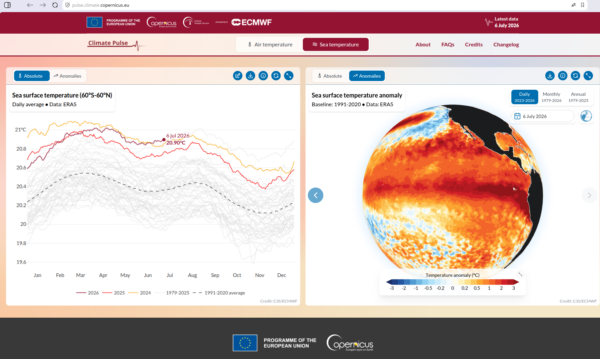
There is a new El Niño out there and it was officially declared already on June 11 by NOAA. This is both unusually early in the year and very soon since the last El Niño in 2023-24. Another remarkable thing is the seasonal forecasts, which for a couple of months have indicated that it may well be at strengths by the end of the year that we have not seen before. All these three aspects combined seem to make this El Niño different to the previous ones.

One question is whether such El Niño events, which is a phase of the El Niño Southern Oscillation (ENSO) phenomenon, is changing because of global warming.
ENSO is a natural phenomenon, but so is also the greenhouse effect. We know that exploitation of fossil resources releases greenhouse gases, such as CO2 and methane, which strengthen the greenhouse effect. This is well-established knowledge.
The first time I was confronted with the question whether global warming also may affect ENSO was back in the 1990s, when I did my D.Phil. on mechanisms responsible for ENSO dynamics.
It was also the time seasonal forecasting was established at the European Centre for Medium Range Forecasting (ECMWF), and it was very much focused on ENSO. Since then, the seasonal forecasts for ENSO have made impressive progress and are now quite accurate (see the graphic above).
One indicator central for ENSO is NINO3.4 which provides a measure of how much the average sea surface temperature (SST) over the region 5°S-5°N/120°W-170°W deviates from normal conditions. The latest seasonal forecasts for NINO3.4 are shown in the graphics above.
Jacob Bjerknes was a pioneer on ENSO and the first to realise that El Niño events were coupled with changes in the atmosphere, the Southern Oscillation. Since ENSO indeed involves a coupling between the ocean and the atmosphere, there are several ways that global warming plausibly may affect how ENSO behaves.
The mechanisms that drive the ENSO dynamics include cloud formation, how winds respond to temperature changes, and how Rossby and Kelvin waves propagate in the ocean. In my D.Phil thesis from 1997, I found that the propagation Kelvin waves is affected by changes in the temperature structure. There have been many studies since then, and different global climate model studies (GCMs) have pointed in different directions.
One problem is that the GCMs may not have had detailed descriptions of small-scale parts of the system with sufficiency accuracy to give a robust result, and a quote from the Intergovernmental Panel on Climate Change, assessment report 6 by working group 1 (IPCC AR6 WG1) sums it up:
CMIP6 models are able to reproduce most aspects of the spatial structure and variance of the El Niño–Southern Oscillation (ENSO) and Indian Ocean Basin and Dipole modes of variability (medium confidence). However, despite a slight improvement in CMIP6, some underlying processes are still poorly represented.
In this case, CMIP6 refers to the World Climate Research Programme’s (WCRP) Coupled Model Intercomparison Project phase 6. While the IPCC AR6 WG1 concludes that
There is no consensus from models for a systematic change in amplitude of ENSO sea surface temperature (SST) variability over the 21st century in any of the SSP scenarios assessed,
I still think that this question is not resolved, since there are also studies suggesting that the models indicate that a global warming may result in stronger El Nino events, e.g. Cai et al., (2014) and Fredriksen et al., (2020).

US medical drama The Pitt and comedy Hacks lead the nominations for this year’s Emmy Awards, America’s most coveted TV honours.
The Pitt has received 25 nominations in total, closely followed by the final season of Hacks with 24.
British stars in the running include Matthew Rhys – the only person to be nominated for two lead acting awards (for Widow’s Bay and The Beast In Me). There are also nominations for compatriots Riz Ahmed (Bait), Carey Mulligan (Beef), Gary Oldman (Slow Horses) and Rufus Sewell (The Diplomat).
However, there was no room on the best drama shortlist of the 78th Emmy Awards for the final seasons of hit shows Stranger Things or Euphoria.