
Taylor had an emotional reaction to being presented with the Icon of the Year award by Janet Jackson.

Taylor had an emotional reaction to being presented with the Icon of the Year award by Janet Jackson.

[noscript_1]
A four-time Olympian who revolutionised the health and fitness industry with his gym businesses has died aged 91.
Les Mills built his first gym on Victoria Street in central Auckland with his wife Colleen in 1968, after representing New Zealand in both the shot put and discus.
The business went on to become an international group fitness brand, known for its choreographed exercise classes set to music.
His son Phillip and his partner Jackie, were both instrumental in developing the music-driven group fitness model that drove its global expansion.
To this day, the former Auckland mayor’s workouts are used by clubs around the world.
Aside from his success off the field, he also competed at four Olympic Games; Rome 1960, Tokyo 1964, Mexico City 1968 and Munich 1972.
However, his best results were at the Commonwealth Games, where he won five medals include discus gold at the 1966 Kingston Games in Jamaica.
He also has three silvers to his name, two in the discus at the 1958 Cardiff and 1970 Edinburgh Games, and one in the shot put at the Kingston Games.
Les Mills launched his first gym on Victoria Street in central Auckland with his wife Colleen in 1968, after representing New Zealand in both the shot put and discus

The four-time Olympian who opened a gym chain that revolutionised the fitness industry was 91
He also claimed shot put bronze in Edinburgh.
He remained in the sport after retiring, coaching his compatriot Beatrice Faumuina to a world title in 1997 and Commonwealth Games gold in 1998.
Phillip, who joined the business full-time in 1980, paid tribute to him.
‘Dad was immensely strong, driven, and always cared deeply for the less advantaged,’ he said.
‘He left a lasting impression on everyone he met, and his spirit lives on in gym workouts around the world, continuing to help people fall in love with fitness.
Juliet Yates, who was on Auckland Council during Mills’s first of eight years as mayor, told Radio New Zealand ‘he was a very, very pleasant person to work with’.
‘At the time, I think the achievements of the council he was mayor of were benefiting the whole of the city,’ she said.
Mr Mills was made a Member of the Order of the British Empire in 1973 for his contribution to sport, and was later appointed a Companion of the New Zealand Order of Merit in 2002 for services to both local government and sport.

Martin Lewis is urging UK communications regulator Ofcom to ditch the new rules it introduced in a bid to rein in mid-contract price hikes for mobile and broadband customers. Fresh research from MSE has revealed the regulations may have actually left many customers worse off.
Ofcom brought the new rules into force in early 2025 after millions of customers saw their bills surge by as much as 17% mid-contract, owing to above-inflation linked increases. The new restrictions obliged providers to clearly state any price rises in pounds and pence at the point of sale, yet still permitted firms to hike prices mid-contract, provided they gave customers 30 days to exit penalty-free upon notification.
However, Martin described the outcome as “frustratingly predictable”, adding: “It’s time to just scrap these rules and do the bleedin’ obvious – ban above inflation mid-contract price hikes!”
New research by MSE examined more than 47,000 tariffs and discovered that the majority — three in every four — carried higher costs under Ofcom’s new system than under the previous inflation-linked rules. In almost every case, customers were faced with above-inflation price increases.
Those who opted for cheaper tariffs in an effort to keep their bills down may have borne the brunt of this shake-up. The MoneySavingExpert founder is set to give evidence to the House of Commons Public Accounts Committee on broadband, water and energy costs this afternoon, June 29.
Martin said: “This was frustratingly predictable. Let’s be plain, it provisionally looks like the regulator’s intervention resulted in most contracts costing more. Transparency only goes so far, we don’t want customers overpaying just because they were told about it first.
“The solution has always been bleedin’ obvious. Just ban above-inflation mid-contract price hikes.
“Of course, many, including me, would prefer a ban on any mid-contract rise, as the price you sign up for should be the price you pay over the length of the contract.
“Yet that risks possible market distortion, as firms may lift initial prices as a provision against unexpected costs mid-contract.”
He went on to explain that, as a result, if Ofcom had introduced a ‘no rises above inflation’ rule, it could serve as a straightforward compromise and would have resulted in lower rises for over 99% of customers had it been put in place instead of the transparency rules.
Martin continued: “There was a chance to fix this last year. The Government called Ofcom and providers around a table to write a ‘Telecoms Charter’ on the back of me and others shouting about O2’s outrageous ‘price hike on a price hike’.
“Yet all that resulted in was firms promising they wouldn’t do hikes on hikes. It didn’t stop the Sky carve-out, which lets it ignore transparency rules, so long as it lets people leave within 30 days of notification.
“If that rule must stay, at the very least there should be two windows – you should be able to leave within 30 days of notification and again within 30 days after the price rise, which is when many people actually notice it. Better still though, just scrap the whole thing and ban rises above inflation.”

The actress followed that by playing aristocrat Audrey, who was forced to sell her country estate following the death of her husband in To the Manor Born.
The last episode of the first series in 1979 received almost 24 million viewers – the highest audience for any non-live event on British TV in the 70s.
Dame Penelope won another Bafta TV award soon after, this time for best actress for The Norman Conquests and Saving It For Albie.
Her other sitcom credits in the 1980s and 90s included Executive Stress, No Job for a Lady and Next of Kin.
The much-loved actress succeeded Laurence Olivier as president of the Actors’ Benevolent Fund after his death in 1989.
This century, working largely in theatre, she played Madame Arcati in a 2004 production of Blithe Spirit and Lady Bracknell in a 2007 version of The Importance of Being Earnest.
She was a made a dame in 2014 for services to the arts and charity.

Dafydd Trystan Davies, who was appointed to the role last month, is responsible for supporting oversight of the cabinet office, overseeing the government’s priorities, and constitutional affairs.
Addressing Senedd Members on Tuesday, June 23, Dr Trystan Davies said: “Trust and confidence in government is hard-earned but easily lost. The Welsh Government, over recent years, has lost the trust of the people of Wales.
“There has been a perception that it is distant, talking rather than listening, promising rather than doing, and failing to reflect the priorities of the nation.
“This government is determined to reverse that trend, restoring trust by delivering on the commitments we have made and ensuring change that people across Wales can see and feel.”
He emphasised the importance of constitutional reform, stressing that it is not an “abstract concept” but is instead about “whether we have the powers, the resources and the tools to deliver better outcomes for our people.”
Dr Trystan Davies also discussed plans to establish a standing national commission on the constitution to “support informed, inclusive, and deliberative engagement on Wales’s future.”
He confirmed he will be heading to Belfast on Wednesday, June 24, for his first inter-ministerial standing committee, where he hopes to achieve “positive and productive conversations” with colleagues from all four governments across the UK.
Closing his statement to the Siambr, the minister said: “My aim is to turn purpose into progress, progress into better outcomes, and better outcomes into renewed trust in the government across Wales.”
Much of the discussion in the Siambr focused on Plaid Cymru’s plans for constitutional reform.
Reform’s Adrian Mason, who is his party’s shadow constitution minister, questioned the constitutional change proposed by Dr Trystan Davies
He said: “Plaid Cymru needs to understand that the people of Wales have had enough of constitutional obsession.
“They want shorter NHS waiting lists, they want better schools, they want decent transport, safer communities and an economy that works.
“They do not want public money, civil service time and political attention diverting to yet another stage of the separatist obsession.”
Noting he was a “little at a loss” at Mr Mason’s comments, Dr Trystan Davies said his priorities are forming a “better government” and “doing things differently”.

The insect Emily Hyde found on the sofa of her Middlesex home was no bigger than a drawing pin head – but despite its tiny size the bug would go on to affect every part of her life.
At the time – unsure what it was – businesswoman Emily, 45, took a photograph of the insect and sent it to a friend, who identified it as a tick.
Emily assumed it had fallen from one of her two dogs – Lucy, a springbatt, and Mike, a rescue dog from Greece – so she flushed it away and carried on with life.
But within weeks, she recalls: ‘I developed a sore throat, headaches, aching joints and flu-like symptoms.
‘I was in bed for an entire week, which was completely unlike me. I’m someone who always carries on, so I knew something wasn’t right,’ says Emily, who is married to Daniel, 52, a plumber.
Although the worst of the illness passed, Emily never truly recovered, and in the years that followed she developed a long list of other symptoms including muscle pain, brain fog, memory loss, tinnitus, sensitivity to light and sound, and pins and needles.
‘I could barely get out of bed,’ she recalls. ‘I wasn’t living any more – I was simply existing.’
A doctor diagnosed long Covid, while a specialist thought it was a thyroid condition. It wasn’t until last year she saw an expert who unearthed the true cause of her poor health.
A tick on 45-year-old businesswoman Emily Hyde’s sofa bit here without her realising and gave her Lyme disease
It turned out the tick on her sofa had bitten her without her realising – and passed on Lyme disease.
Around 5 to 10 per cent of ticks are infected with the Borrelia bacteria responsible. Once you have been bitten, the bacteria travel into the bloodstream, causing inflammation. Without treatment they can infect the heart and brain.
Many assume tick bites only occur during countryside walks in the Scottish Highlands, where there are many deer (which ticks favour to live on).
In fact, studies show there is a considerable risk even in urban green spaces.
One study, published in 2022 by the UK Health Security Agency, found that ticks are just as likely to be distributed in urban green spaces and woodland edges as in the heart of the countryside.
The risk of being bitten increases during the warmer months of April to October, peaking around now.
There has been a significant rise in cases of Lyme disease in the UK, with 1,168 people affected last year, a 22 per cent increase on 2024, according to official figures – and the true number may be even higher, as ’85 per cent of people don’t see the tick so they don’t know what to attribute the symptoms to’, says Professor Jack Lambert, a consultant in infectious disease at Mater Misericordiae University Hospital in Dublin and a leading expert on the disease.
‘So often Lyme disease goes undiagnosed for years.’

There has been a 22 per cent rise in cases of Lyme disease in the UK since 2024, with 1,168 people affected last year
Typically one of the first signs is a bullseye rash near the bite site that occurs within days. Other symptoms include general malaise, and aches and pains can follow.
As bites tend to peak at this time of year, symptoms do get confused for ‘summer flu’, says Professor Lambert.
However, he says ‘some people will get no symptoms at all’ or ‘won’t show symptoms for months because of a delay to their immune system producing antibodies’, which is what causes the symptoms. ‘And when they do experience them eventually, people don’t think back to a tick bite when that much time has passed,’ he adds.
What’s more, symptoms can vary from one person to the other, says Professor Lambert – fewer than 50 per cent of people get the bullseye rash, for example.
‘If they do get that rash, it’s often misdiagnosed as ringworm – a fungal infection – because it looks so similar,’ he explains.
‘GPs often misdiagnose it as a regular skin infection, cellulitis, and the antibiotics they give don’t treat Lyme.’
The tiredness it causes because of inflammation often gets mistaken by doctors for chronic fatigue ‘or other conditions such as fibromyalgia, which cause symptoms of pain and fatigue’.
Yet if treatment is delayed, or Lyme disease goes untreated, it can lead to painful joints, memory problems and other debilitating problems as the bacteria spread around the body.

Around 5 to 10 per cent of ticks are infected with the Borrelia bacteria which causes Lyme disease
‘Sometimes they get Bell’s palsy – paralysis of the facial nerve so one side of the face droops like a stroke,’ explains Professor Lambert. ‘If the bacteria travels to the brain it can cause numbness and tingling, insomnia and neuro-psychiatric manifestations – such as anger and rage out of the blue.’
Around 1 per cent of those affected will develop ‘late Lyme arthritis’ – ‘horrible intractable joint pain’ and severe swelling, typically in the knees, which can occur even years after the bite.
‘Lyme disease can go to the heart and cause Lyme carditis [when the bacteria invade the heart, interfering with the electrical signals],’ adds Professor Lambert.
Yet in most cases Lyme can be treated with a simple course of antibiotics.
It was shortly after finding the tick on her sofa in August 2019 that Emily developed flu-like symptoms. She was also losing weight without any change to her eating habits and permanently exhausted.
Emily was eventually referred to an endocrinologist (hormone specialist), who diagnosed a ‘thyroid storm’ (caused by Lyme – although doctors did not realise this at the time).
This is where the thyroid gland in the front of the neck becomes overactive and releases an excess of hormones.
‘I was treated for my thyroid, but despite the medication I still felt incredibly ill,’ says Emily. ‘Everyone believed a thyroid problem was causing my symptoms, but deep down I knew something still wasn’t right.’
As Covid hit, Emily’s health deteriorated further.
‘Our business closed during lockdown, which in some ways was fortunate because I was becoming so exhausted I could barely function.
‘I’d struggle through the morning, then come home early afternoon and climb straight into bed still wearing my coat because I was constantly cold,’ she says.
Doctors suggested she had long Covid but Emily felt there had to be another explanation.
Out of desperation she went to an alternative health practitioner who suggested she look into Lyme disease, which Emily ‘had never even heard of’.
After doing some research she came across Professor Lambert online and travelled to Dublin for an appointment with him.
By then she was so weak she could no longer walk more than a short distance.
‘He listened to everything I’d been through before asking whether I’d ever been exposed to a tick,’ says Emily.
‘Suddenly I remembered the photograph I’d taken years earlier. Until that moment, I’d completely forgotten about it.’
Professor Lambert diagnosed Lyme disease and began treatment with antibiotics, which she took for 11 months.
She says: ‘Gradually my strength began to return. First, I could get out of bed. Then I could walk again. Little by little, I started getting my life back.’
Often a Lyme disease diagnosis is made by a doctor listening to symptoms – NHS guidelines say that ‘if someone shows up with a bullseye rash following a tick bite then we should not wait for a blood test, but just treat with antibiotics,’ says Professor Lambert.
There is a blood test but it is not always accurate – especially in the early stages, he adds.
After diagnosis, the treatment is usually three weeks of the antibiotic doxycycline.
‘And then if you’re not better three weeks of amoxicillin – but I have people who have three weeks of this, get better, then get worse and are not given antibiotics because they’re told they’re cured,’ says Professor Lambert.
‘In my experience some patients need a longer course of antibiotics. The guidelines only cover early Lyme.’
Recent research suggests that psilocybin, the active ingredient in magic mushrooms, could also have a role.
In a trial published in the journal Nature in February, 20 men and women with lingering Lyme disease symptoms were given two doses of psilocybin a fortnight apart.
Symptoms such as pain, fatigue, mood changes, sleep problems and quality of life all improved substantially for at least six months. However larger studies are needed to confirm the results.
Emily’s experience demonstrates how life-changing a delayed diagnosis can be.
Her illness forced her to close their successful kitchen and bathroom showrooms to focus on her recovery.
A year on from her diagnosis, Emily still feels she is not quite her old self again but is a lot better: ‘I lost almost six years of my life to this illness. I can’t get those years back, but if my story encourages just one person to recognise the symptoms earlier, seek medical advice sooner or find support, then sharing it will have been worthwhile.
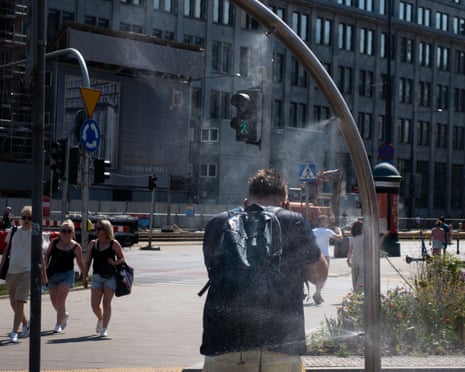
While some readers in western Europe may be thinking that the worst of the heatwave is gone, the latest AFP analysis shows that at least 130 million people are set to experience temperatures of 35C and above today.
It is (way) more than mid last week, when the heatwave peaked in Britain.

Key events
Meanwhile, Ukraine is bracing to absorb the impact of the heatwave on its energy network, already pummelled by Russian attacks over more than four years of war, AFP reported.
Grid operators in at least five regions – from Ivano-Frankivsk in the west to Zaporizhzhia on the frontline in the south – announced temporary restrictions on energy usage would be in force during parts of Tuesday.
The state weather service said the country would face “intense heat”, with temperatures of 35C-38C expected on Monday.
“The heat is also a serious test for equipment that has been operating under wartime conditions for more than four years and has withstood numerous attacks,” Sergii Kovalenko, CEO of the Yasno energy company said over the weekend.
He said that summer was the peak period for repairing the energy network, battered through the winter by repeat Russian attacks, meaning the grid was already “operating at the limit of its capabilities”.
Angela Giuffrida
Rome correspondent
Intense storms have struck Italy’s Alto Adige region, causing flooding and landslides, as extreme temperatures and humidity lingered elsewhere in the country on Monday.
In some areas of Alto Adige, 50mm of rain fell within an hour. Some residents had to be evacuated from their homes and firefighters rescued one person who became trapped in their garage after a river close to their home in Merano burst its banks.
There are flood warnings in Milan too as the latest heatwave begins to slightly subside.
Temperatures were forecast to reach highs of 37/38C in parts of Italy on Monday, potentially nearing 40C in the Po Valley and inland areas of Sardinia.
The heatwave is poised to break from the middle of the week, bringing more severe storms, according to forecasters, before the above-average temperatures return.
While some readers in western Europe may be thinking that the worst of the heatwave is gone, the latest AFP analysis shows that at least 130 million people are set to experience temperatures of 35C and above today.
It is (way) more than mid last week, when the heatwave peaked in Britain.
As a record-breaking heatwave swept across Europe, the Balkans remained on alert for sweltering temperatures on Monday, prompting health warnings and sparking wildfires, AFP reported.
Although heat was easing in parts of western Europe, temperatures were expected to climb again in the continent’s east on Monday.
In Croatia, as in most of the Balkans, authorities warned of dangerous conditions, with both Bosnia and Albania predicting temperatures of up to 40C.
After battling for days with a landfill fire near the Bosnian city of Mostar, which has poured acrid smoke into the surrounding area since last week, firefighters said they had largely managed to extinguish the blaze.
Elsewhere, emergency crews were also working to control fires sparked over the weekend but none was considered life-threatening.
Kosovo’s weather bureau said temperatures were expected to peak at 38C on Monday, and advised vulnerable residents to stay indoors during the day, AFP reported.
Like much of Europe, the Czech Republic has been grappling with an unprecedented heatwave for the past two weeks, AFP reported.
“We have seen the peak of an inflow of very warm air from the southwest so there is no wonder [Sunday’s] records were higher than yesterday,” CHMI said on Sunday.
It added that half of its 171 weather stations registered record-high temperatures on Sunday, while more than 95 percent marked a record for June with many beating Saturday’s all-time highs.
“We still expect hot weather in Moravia and Silesia (east) on Monday. A waving cold front will bring at least partial cooling to Bohemia (west),” CHMI added.
Prague is expected to see temperatures around 33-34C today, with thunderstorms later on.
Record-high temperatures were also recorded in Germany over the weekend, with reports of wildfires and Berlin police resorting to using water cannons to cool down the crowds.
In Gohrischheide, in eastern Germany, a fire broke out in a large forest that’s still contaminated with ammunition from the second world war, complicating efforts by firefighters, AP reported.
Similarly, a major firefighting operation was underway in southwest Germany near the village of Traisen, where the heat sparked a forest fire in an area that also contained unexploded ordnance. Some 650 people in Traisen had to leave their homes Sunday afternoon because the fire continued to spread.
Just like in France, the crisis also prompted some tricky questions about Germany’s preparedness as climate change means we should expect more of this sort of heatwaves in the future.
Over the weekend, multiple European train operators reported substantial disruptions as the extreme weather posed all sorts of logistical challenges.
Issues were reported with Czech, German and Polish trains, among others, with stories of stranded passengers, delays running into hours, and overcrowded trains with barely (or not) working AC.
The Czech operator České dráhy even published a helpful social media thread explaining some of the challenges it faced, including their response to the ever-present question of “why is the AC in my train not working properly” (tl;dr: it’s not prepared for temperatures of 40C).
It features this killer line:
“You might be surprised to learn that the goal isn’t to turn the train into a freezer.”
Worth reading the full thing.
Meanwhile, France is counting the human cost of the heatwave, which began in mid-June and ended (temporarily?) with violent thunderstorms over the weekend, AP reported.
Public Health France reports a surge in deaths, particularly among older people. Last week, deaths exceeded 1,200 on Wednesday and rose to over 1,400 on Thursday, AP reported, and Friday, hundreds more than usually.
The authorities expect these numbers to rise as more death certificates are processed, showing the very real and tragic consequences of human-made climate change.
The red extreme heat alert ends today, but the country’s prime minister Sébastien Lecornu will still chair a cross-governmental crisis meeting later today to discuss the events of the last week.
The meeting will also look to draw lessons that could help prepare for any potential future episodes, which, erm, may not be too far out into the future.
Jakub Krupa
Good morning, or dzień dobry, from Warsaw, Poland as the heatwave that affected much of the continent last week continues to impact central and eastern Europe.
It’s 9am local time and already 32C. I have seen two people cycling home with large fans, trying to get back before the heat hits the fan again. None of this is normal.
Czechia, Germany and Poland all broke their all-time records yesterday. You can catch up with the latest here:
Belgrade, Bratislava, Budapest, Warsaw are all expected to see temperatures up to 38C today.
And before you think you are glad it’s all over in Brussels, Paris, or London, all I am going to say is: don’t check the 10-day weather forecast.
I will bring you all the latest updates from across the continent as central eastern Europe sees the heatwave go and turn into violent thunderstorms this evening – as seen in western Europe earlier this week.
There is also some summertime politics going on, with Nato’s Mark Rutte meeting Britain’s outgoing prime minister Keir Starmer in London, EU trade commissioner Maroš Šefčovič hosting China’s commerce minister Wang Wentao in Brussels today and Germany’s foreign minister Johann Wadephul visiting Marco Rubio in Washington DC.
It’s Monday, 29 June 2026, it’s Jakub Krupa here, and this is Europe Live.
Good morning.

A doctor shared some vital tests women should get done to ensure their heart is healthy (Image: Getty)
A cardiologist has shared four important health checks women should have done when they reach 40. According to the expert, these could help identify any issues that might otherwise go undetected.
The British Heart Foundation (BHF) warns that coronary heart disease, which is the main cause of heart attacks, kills twice as many women as breast cancer in the UK each year. However, the charity says “many women” ignore the signs of a heart attack or report their symptoms as less intense than men.
Dr Francesco Lo Monaco, a preventative cardiologist and founder of The National Heart Clinic in London, says four important tests should be carried out to proactively protect heart health.
He said: “Heart disease remains a leading cause of death for women yet many are unaware of the risk.
“Regular checks are vital in identifying problems early, often before symptoms appear. By monitoring key indicators women can take proactive steps to reduce their risk of heart attacks, stroke and other cardiovascular conditions.”

High blood pressure increases the likelihood of serious conditions such as heart attacks or stroke (Image: Getty)
But he added: “These four tests should be carried out as standard once a woman reaches the age of 40 if they have no known risk factors. Earlier screening is warranted for anyone with a family history of premature cardiovascular disease, pregnancy complications, autoimmune disease, PMOS, or other risk factors.”
Dr Lo Monaco said: “Blood pressure is an important reading to take because it tells us the pressure of blood in your arteries. If the reading is high it can indicate hypertension, which is when blood pressure remains high even when at rest.
“High blood pressure can lead to arteries becoming stiff or narrow. This damage can increase the likelihood of serious conditions such as heart attacks or stroke.
“High blood pressure has no obvious symptoms so should be checked at least every year, and more frequently if the results are elevated or borderline.”
A lipid profile is a test that measures levels of cholesterol. Having high cholesterol can increase the risk of heart attack or stroke.
Dr Lo Monaco said: “A lipid profile or cholesterol panel should be done every five years if the results are normal, or more frequently if results are abnormal or the patient is high-risk.”
Fasting glucose and HbA1c tests measure the levels of sugar in the blood and are common ways to determine whether someone has diabetes.
“These should be done every three years if normal, or annually if the patient is prediabetic or determined to be high risk,” Dr Lo Monaco continued.
A BMI test measures body mass index and can help to determine if a person is a healthy weight. As the results are not always accurate, Dr Lo Monaco says a waist circumference measurement should also be taken each year.
He said: “A waist circumference greater than 35 inches (88 cm) can indicate increased risk of cardiovascular disease, so it’s also an important number to look at.”
Dr Lo Monaco says anyone with risk factors should look at having the tests more often.
He said: “Traditional risk factors which apply to everyone are hypertension, high cholesterol, diabetes, smoking, obesity, a sedentary lifestyle and family history.
“There are also women-specific risk factors which are often overlooked, including pregnancy complications such as preeclampsia and gestational diabetes, early menopause, Polyendocrine Metabolic Ovarian syndrome, autoimmune diseases and history of breast cancer treatment.
“Psychological and inflammatory factors also matter. Chronic stress, depression and anxiety, poor sleep quality and chronic inflammatory conditions also deserve medical attention as part of cardiovascular risk assessment.”
Dr Lo Monaco says that if you have persistent symptoms, even if initial tests come back as “normal”, don’t be dismissed. He added: “You are your best advocate. Persistent symptoms deserve thorough evaluation, not dismissal.
“It’s also important to understand the difference between heart attack symptoms in men and women. I tell every woman patient, ‘If you experience unexplained, persistent fatigue that’s not normal for you, especially if accompanied by breathlessness, nausea, or discomfort anywhere in your upper body, don’t dismiss it. Call your doctor. If it’s severe or sudden, go to A&E.’”
Other warning signs include:
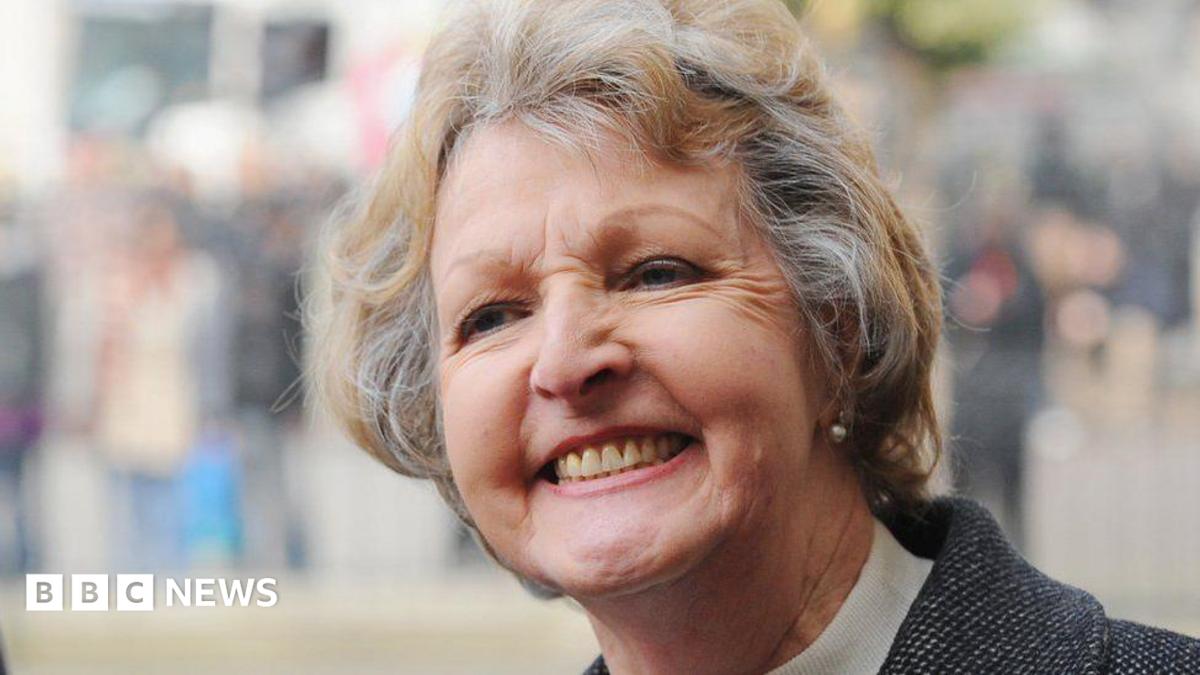
While Keith’s voice contributed to her success, it also gave a false impression of her background.
Keith (nee Hatfield) was from relatively humble stock. Born in Sutton, Surrey, in 1940, she grew up in Clapham, south London, in the thick of World War Two.
Her mother Connie worked as a hotel child entertainment organiser and was often away, so the young Penelope spent a lot of time with her grandparents.
Her father had left when she was very young and Connie later remarried, but although she took his surname, Keith wouldn’t talk about him.
Aged six, she went to a boarding school run by nuns, where the performing arts and elocution lessons were encouraged.
It became the happiest of times for the would-be actress.
“I apparently came home from school one day and sat in the bath and said to my mother that when I grow older I was going to be either a nun or an actress,” she told chat show host Michael Parkinson in 1977.
“She was a bit taken aback and said, ‘Darling, nuns can’t wear pretty clothes’. So I said, ‘Well, I’ll be an actress then.'”

Jones is the host of Morning Live on BBC One, along with the likes of Helen Skelton and Michelle Ackerley.
Jones has also been an ambassador for the Welsh Jewelry company Clopgau for nearly a decade.
Over the past eight months, the 48-year-old has been seen frequently wearing Clogau watches.
The 48-year-old has now reportedly received a warning for breaking BBC guidelines, according to The Mail on Sunday.
The broadcaster’s rules state that presenters “must not appear on-air wearing clothing or using products or services which they have been contracted to promote.”
A BBC Studios spokesman, speaking to The Mail on Sunday, added: “We have clear guidelines around presenters’ commercial activities, and Gethin has been reminded of these.”
Jones has been seen wearing a £550 Clogau watch with a stainless-steel case and black bezel more than 30 times on Morning Live (most recently on June 24).
The Cardiff-born presenter has also worn several other timepieces from the Welsh company on the BBC show, The Mail on Sunday added.
Jones has been approached for comment.
He is not the first presenter to be warned by the BBC for similar breaches.
Monty Don, Shirley Ballas, and Gary Lineker have all previously received warnings from the broadcaster.
Gethin Jones began his TV career on Welsh channel S4C, presenting children’s programmes, before, in 2005, he became a presenter on the hit BBC children’s show Blue Peter.
Since then, Jones has appeared on a variety of TV shows, including series five of Strictly Come Dancing ( in 2007), where he reached the semi-finals with professional partner Camilla Dallerup.
He went on to appear in two of the Strictly Christmas specials in 2009 and 2016.
The Welsh presenter is still part of the Strictly family, acting as a roving reporter for It Takes Two, a role he has held since 2016.
On top of all that, Jones has also made several appearances on the hit BBC sci-fi series, Doctor Who.
While Jones has been a host on Morning Live for more than five years, he has also been a guest presenter on This Morning (ITV) and The One Show (BBC).
He is also set to appear on the upcoming series of Celebrity Apprentice.
Along with his various television roles, Jones has featured on several radio shows throughout his career, including on Heart and Hits Radio.
Jones has also appeared in many theatre productions, been an Olympic Torchbearer (for the 2012 Summer Olympics), and appeared as a contestant on Celebrity MasterChef.
Have you spotted Gethin Jones wearing a Clogau watch while on Morning Live? Let us know in the poll above or in the comments below.
